



The affiliate market is always associated with numbers, quick results, and competition. Budgets here can skyrocket at a moment's notice, but this is not always enough to stay in the game for a long time.
There is another currency - reputation. It is not as visible and cannot be measured in analytics, but it determines whether a partner will trust you, whether the team will want to follow you further, and whether doors to new opportunities will open.
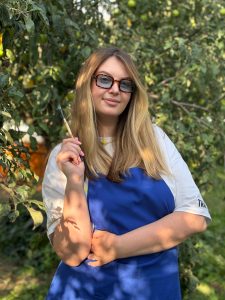
We talked about the value of this asset with Kateryna Savchenkova, BDM Team Lead at TraffTer. Her story is about people, about trust, and about choosing to play the long game, even when there is a race for quick results.
Childhood and youth
HWYD: Tell us a little bit about your childhood: where were you born, what kind of child were you, what kind of family did you grow up in?
Kateryna: I was born and raised in the best place on the planet, Solomianka in Kyiv. As a child, I was active and talkative, just like my whole family. We lived like a Mexican soap opera.
HWYD: Were there any character traits that have remained with you in your professional life today?
Kateryna: I have three brothers, so the minimum task in my childhood was to survive. And that meant being brazen, agile, and able to defend my own interests.
My parents did not praise me, so I was constantly trying to prove that I was good and worthy of praise. I needed almost all of this in the affiliate sphere to get results.
HWYD: Do you remember any dreams or plans from your youth that influenced your career choice?
Kateryna: I dreamed of driving a hearse) But, fortunately, it didn't affect me!
HWYD: Who or what shaped you the most in those years: family, school, hobbies?
Kateryna: I was an active child, always in search of myself and hobbies. The only constant thing was my family - it was they who guided me and set the example (how to do things and how not to do them).
HWYD: Looking back, would little Katya have seen herself in affiliate marketing?
Kateryna: I dreamed of driving a hearse, watching Winx, and collecting cat magazines. What kind of affiliate marketing?
But in high school, I was already interested in international relations and marketing.
Career start and experience
HWYD: How did you get into the affiliate sphere and why did you choose this particular direction?
Kateryna: When I was 19, I had an Instagram lingerie store. At that time, I was already studying targeting and Facebook to develop it.
Later, thanks to these skills and through acquaintances, I got into bingo and got acquainted with gambling (although at first I was very much against this niche).
HWYD: What was your path to the position of Team Lead Business Development Manager at TraffTer?
Kateryna: Long, thorny and with a pause for maternity leave.
But it was after that that my biggest professional boost took place. I joined a great big team, where I gained tremendous experience in all areas.
HWYD: What does business development mean to you personally - is it more about strategy, people, or numbers?
Kateryna: You can have clear goals and strategies, but you can't realize them without people.
For me, it is definitely about people who have ambitions and common goals. I've seen businesses stagnate because of people, and vice versa - with the right people, they grow rapidly. But this should also include a strategy and a vision for the development of each employee.
Reputation as the main asset
HWYD: Affiliate is often associated with fast money and aggressive competition. How does a long-term reputation become a bigger trump card than any budget in this dynamic?
Kateryna: The quieter you go, the further you will go.
I see teams shouting loudly about themselves, allocating huge budgets for marketing, and then quietly fading away because something was still missing.
I always talk about people and relationships with them. If you are not ready to compromise and negotiate, aggression will help only once - the first and last time.
HWYD: How would you define reputation for a company and an individual in the affiliate market?
Kateryna: Reputation for a company is the perception of its reliability, honesty, and professionalism by partners, buyers, and the media. In fact, it is the currency of trust, which directly affects the willingness of others to work with it.
For a person, reputation is the level of trust and credibility that he or she has gained through experience, knowledge, and ethics. It is personal capital that opens the door to profitable offers, partnerships and opportunities.
HWYD: Can reputation be measured? For example, in reviews, recommendations, repeat business?
Kateryna: Our sphere is not that big. Although the number of people is growing, everyone still knows each other. All the fakaps, gossip, and news quickly become known.
I don't know if it is possible to measure this with a clear criterion, but in aggregate, all of this forms an assessment of a person or company.
HWYD: Were there moments when a good reputation helped open doors where others could not?
Kateryna: Without undue modesty, I will say: constantly)
Challenges and value of trust
HWYD: Reputation takes years to build, and it can be lost in a minute. Have you personally observed such cases?
Kateryna: Yes, of course. I can't say that there are many of them on the market, but there are definitely a few.
HWYD: What mistakes do companies or professionals make most often that damage their reputation?
Kateryna: I can't say for sure, but I assume it's incompetence and overconfidence.
HWYD: Have you personally had a case when you had to "save" relations with partners or restore trust? How did it happen?
Kateryna: I don't remember. Maybe it was a long time ago.
I am usually honest with my partners and engage in a dialog if there are any disputable issues.
Human factor and personal brand
HWYD: You are in charge of business development. How much does a manager's personal brand affect the company's reputation?
Kateryna: I think it depends on what kind of person you are. In the words of Diogenes: "How many people there are, and how few men among them."
Expertise is important. But I know a lot of strong or media managers with whom it is uncomfortable to work. There has to be a balance.
HWYD: How do you manage to strike a balance: to remain professional and at the same time not to lose your true self in communication with partners?
Kateryna: Sometimes I'm super critical of myself for not being able to keep it up. But my partners, friends, and my team always support me.
HWYD: What do you think is the strength of female leadership in the affiliate market?
Kateryna: Initially, the female part of the affiliate community was perceived as a decoration that no one took seriously.
And then - bam! - there was a break in the patterns: women began to show how to work effectively, achieve results, and build from scratch.
We successfully combine emotional intelligence with business goals, creating trust and stable partnerships. But, of course, not all of us)

HWYD: What values do you try to convey in your work and in your team?
Kateryna: Honesty. Trust. Communication.
Perspectives and tips
HWYD: How is the perception of reputation changing in the industry? Is it becoming a more expensive "currency" than a few years ago?
Kateryna: There are more and more scams, so yes, it is becoming more difficult to have trust and reputation.
HWYD: What would you advise to newcomers who are just starting to build their way in affiliate marketing and want to lay a solid foundation of reputation
Kateryna: Don't start) There are already a lot of people.
HWYD: If you have to choose between immediate profit and long-term credibility, what would you recommend and why?
Kateryna: This is a very controversial issue. It all depends on the specific case.
I would advise you to decide whether this trust is worth it.
The final is personal
HWYD: What does it mean for you personally to have a "good name" in the market?
Kateryna: Not to make cringe, to choose where and with whom to work.
HWYD: If you imagine that in 10 years your colleagues will describe Kateryna Savchenkova in one word, what would you like that word to be?
Kateryna: "Kitty."
HWYD: And the traditional HWYD question: what would you like to say to your partners and colleagues right now, here and through us?
Kateryna: Don't be a poop, have a good time and live an interesting life!
Важливо
Editor's summary
Talking to Katia is a reminder that there is always a person behind any deadlines and metrics. A person who has gone through doubts, stereotypes, internal struggles, and learned to keep a balance between professional and personal.
Its story is not about formulas for success, but about simple principles: honesty, communication, willingness to defend your boundaries and support others. These are the principles that create the reputation that cannot be bought or measured in reports.
And perhaps the most important thing in this interview is the feeling that a "good name" is formed not by loud words, but by small steps every day!
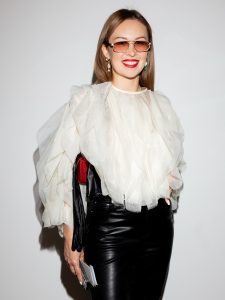
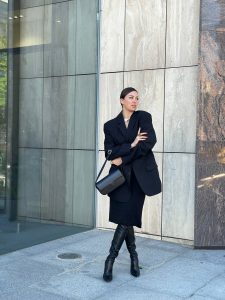
I hadn't met Anastasia personally, but I've long wondered who the mysterious person is who selects the most influential women in the industry's most charming looks. These ladies definitely don't have a lot of time, and their bright and beautiful minds are obviously busy with a bunch of other strategic processes, so presumably the process of selecting outfits is delegated to a specialist. But who do girls trust with their beauty and effectiveness? Our editors conducted a little journalistic research and found out who is behind the WOW effect...
HWYD editor-in-chief Kostya Golubev.
Personality.
HWYD: Tell us about your childhood: where, in what family were you born?
Nastya: I was born in Kyiv into a family of doctors, thanks to whom I have a strange sense of humor and am not afraid of blood))
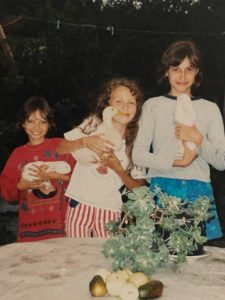
HWYD: What were the first manifestations of your desire for style in clothes and images from your childhood (maybe dressing up dolls or something? - describe this memory)
Nastya: I always say that deficit is the father of creativity. I grew up in the 90s, and in order for me to look stylish, my mother would look for friends who brought clothes from Poland or look for them in second-hand stores. I am very grateful to her for that. ❤️
HWYD: What did you dream of becoming and why? Did you consider becoming a stylist back then and why?
Nastya: When I was little, I dreamed of becoming a meat seller 😂 We didn't eat meat every day and it was considered a festive dish. That's why saleswomen in puffy oilcloth sleeves and gold rings on each finger seemed to me to be the rulers of the world. My love for fashion came later, when I had already eaten enough meat))
Youth
HWYD: How did you gain your professional experience? Perhaps you studied somewhere or absorbed images from glossy magazines or TV?
Nastya: I have always been interested in fashion because it was a world of beautiful clothes, graceful shapes, and as soon as I learned to draw, I drew clothes for some reason, and all my family was sure that I would become a fashion designer. Maybe someday I'll live up to their expectations (spoiler alert - no).
HWYD: How did you approach your own style? How did you experiment? With what exactly? How did you choose your outfits and looks and what did you decide on?
Nastya: I thank my family for their unquestioning acceptance of my stylistic expression; I was literally allowed to wear whatever I wanted and was not corrected in any way, for which I often received flak from the school administration and sometimes from classmates who did not have such freedom. I remember when we were allowed to wear business suits and were told that the color didn't matter (before that, we were required to wear dark green jackets). I came to the first of September in a bright pink pantsuit with white stripes. You should have seen the surprise of my class teacher when she heard that this was not only a costume for the holiday, but my school uniform from now on))
Professional activity
HWYD: Describe your first professional commission: what kind of image was it? Who were you doing it for? How nervous were you? Would you change anything about it now?
Nastya: I received my first order while studying to become a stylist, it was a wardrobe revision and shopping, I warned the girl that I was still studying, but I was incredibly excited.
HWYD: Where and how I spent my first earnings
Nastya: Frankly, I don't remember now.
HWYD: How did you gain popularity? How did you become a sought-after master?
Nastya: I have not gained any and do not have such a goal at all, I strive to be professional, I am constantly working on it. Perhaps, as my skills grow, my recognition will somehow grow organically, and I take it as a nice bonus))
HWYD: How did you get into traffic arbitration?
Nastya: It so happened that my best friend, Olga Sapogova, has been working in this field for more than 10 years, and gradually her friends began to approach me. For which I am very grateful to them all ❤️
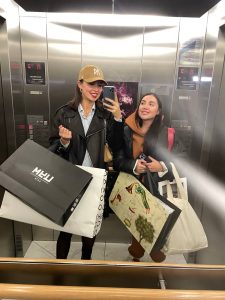
HWYD: Who among the famous personalities in our field have you made insults to?
Nastya: Unfortunately, I can very rarely show or tell about the people I work with, except for those who mention me in publications. But I can say that I worked with girls from the following teams: Dephouse, G Partners, AFFHUB, Traffic Devils, Moon partners. It seems to be obvious which vertical I like to work with 😂.
HWYD: How do you find working with girls in affiliate marketing? Are there any peculiarities and subtleties in the work that distinguish girls from the industry from other girls?
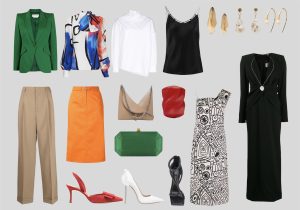
Nastya: The peculiarities lie in the position the client holds. Because the style of an affiliate manager, CEO, or media buyer is significantly different, as job responsibilities and lifestyle have a significant impact on the wardrobe. The most prominent feature of all "arbitration" wardrobes is high stylistic flexibility. Simply put, a wardrobe should be able to quickly transform from casual to evening wear and be appropriate for a conference and an afterparty in a few hours.
HWYD: What are some of the most embarrassing moments you can tell us? For example, putting it together in the car on the way to a gala event in 20 minutes, or picking it up from your own things in the wardrobe, or running to buy something at the nearest store, etc.
Nastya: About two years ago, I received a request for a look for a theme party in Ibiza. I had to come up with the image, create it and send it in 3 hours, as it was the only way to deliver it to Spain as soon as possible. The fashion designer sent the dress from the workshop, which is located far from Kyiv, by some minibus, then I met the dress at the train station, handed it to the driver, who took it to Odesa, and the next day - to Moldova, and finally to Spain. In short, that dress had a very busy schedule and itinerary)) Most often, requests: "for yesterday" are for some themed parties or holidays like Halloween. And I love such tasks, because the less time you have to complete the task, the higher the price 😈
HWYD: How much do your services cost now? What do you base your price on?
Nastya: Currently, a wardrobe revision costs 300$, shopping - 200$, for those who are not yet financially ready, I have a consultation that costs only 100$. I have a very affordable price for a specialist of my level and experience. The price is formed according to experience and various forms of advanced training. That is, if I invest 1500$ in my training and professional growth, my time is already worth more, because I can already give more to my client than before training.
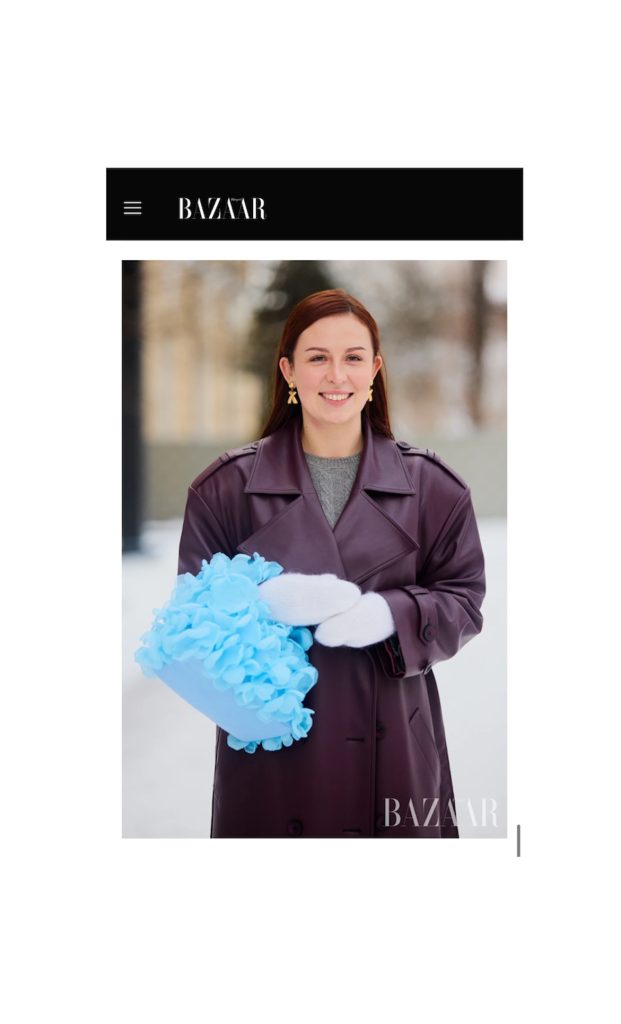
HWYD: How competitive is your specialty in our niche? Are there any of your colleagues whose work you don't like and why?
Nastya: I always say that I have no competitors - only colleagues. Some are more experienced than me, some are less, some are on the same level as me, but have a different "handwriting" and, accordingly, clients who like this "handwriting". And some people only like the way I work. And I usually reciprocate. ❤️
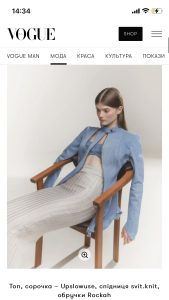
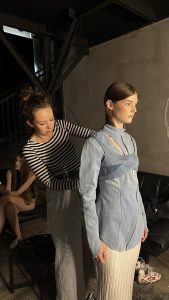
HWYD: Have men ever approached you? With what kind of request?
Nastya: To a greater extent, I still work with women, but lately men are increasingly delegating their wardrobe to a stylist because it is very rational in terms of financial literacy and time management. And men are prone to a rational approach and optimization of all processes. In this regard, it is very easy to work with them, and they usually trust more)
HWYD: How would you generally comment on the average images of the so-called arbitrators, summarized in the "expensive-rich" category - balenciaga sneakers, Louis or Gucci T-shirt with a print across the chest, stone island jackets and off-white hoodies?
Nastya: I can only say that, according to my observations, the higher the position of a specialist, the less prone to logomania he is)) But I do not condemn such manifestations, everything has its time and age, the "Philip Plain" phase must also be passed))
HWYD: What advice would you give to guys and girls in the industry who don't yet have the opportunity or need to hire a personal stylist?
Nastya: There's a good joke about this: "Advice is free, consultation is for money. My advice to you is to go for a consultation." Seriously, mindlessly buying clothes is much more expensive than going to a stylist and rationally allocating the most modest budget. To do this, I added the "consultation" service, after which you can put together a cool wardrobe even at a second-hand store.
HWYD: And for those who have such a need and opportunity, how do you choose a stylist to walk proudly on the red carpet of nominations?
Nastya:
There are a few points that need to be addressed:
- Education. Because a stylishly dressed person or a person whose style you admire will not be able to express you properly through your clothes if they do not have the appropriate knowledge.
- Look through the works, it's cool when a stylist has his own "chips", the main thing is that he does not dress everyone "like a copy", or the same as himself. A professional stylist should be flexible and work on your request, not implement their own vision.
- If you hear from a stylist: "How to look expensive/cheap", "How not to look like a collective farm" - run away as soon as possible, a stylist who operates in such categories is unlikely to have a positive impact on your style. The main thing in cooperation with a stylist is trust, if for some reason the specialist does not inspire it in you, look further ❤️
Важливо
We thank Anastasia for her trust in How Was Your Day Media and wish her bright tasks and challenges! And dear readers, we advise you to contact Nastia for professional advice or image selection whenever you need it - you will definitely get the desired effect. Be stylish and feel the beauty in you. Remember, the most important beauty is inside, but with the right stylist, you can emphasize it elegantly.
Valentyn and I were introduced by Maria-Victoria at Sempro in Kyiv. He immediately struck me as a deep and sincere person at the same time - he made very subtle jokes and spoke so expertly about work, but not in clichéd phrases, but by sharing his own experience, and such a diverse one that it would be a crime not to share it in How Was Your Day.
If there were no etiquette, I would most likely interview Valentyn with my jaw open - there was so much in his life: dubious companies, the harsh 90s, and communication with which could have had a sad ending, and her majesty Fate, who gave him the person who helped him turn off the fragile path... And then - working as a security guard, a loader, and, in contrast, his own steps in affiliate marketing in solo, bringing 700$/day, which disappeared at the moment
And finally, the founding of MAKEBERRY AFFILIATES... I definitely recommend this interview for reading! There is a lot to learn here.
Childhood.
HWYD: Tell us about your childhood: where, in what family were you born?
Valentin: I was born in Konotop into an ordinary family. My mother is a nurse, and we had our own house there - even half of it - we shared it with a pensioner. At some point, she forgot to turn off the gas, and our house exploded. After this event, my mother went to the mayor for six months, trying to get us compensation in the form of an apartment, and eventually she succeeded - we were given an apartment, which, in fact, is where I lived before moving to Kyiv.
My mother divorced my father, and he later sued us for half of this apartment, barricaded it and locked the door. All this time, we did not communicate with him until I bought the apartment.
I had a stepfather. He worked as a driver all his life until he died. Now my mom lives in Ireland - she left the shelling after a year of war. Now she's almost married there, she's adjusted, she's doing well - she's finally traveling and seeing different European countries step by step.
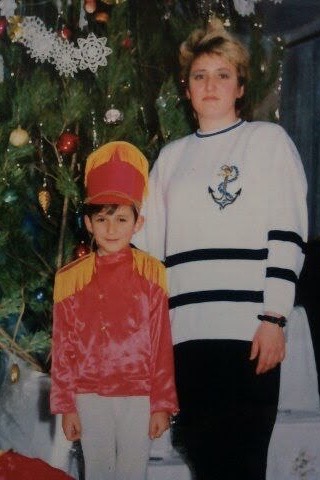
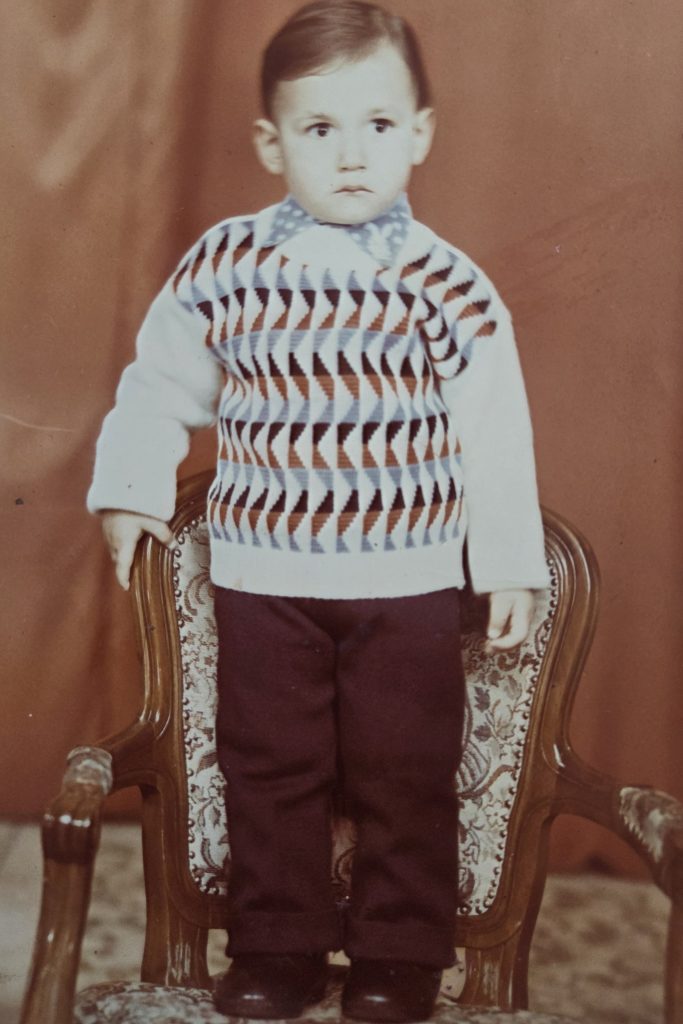
HWYD: Describe your most vivid childhood memory
Valentin: If I think back to the earliest memories, perhaps my first memory is of Muscovy, the circus, bears riding a unicycle, and me in a scratchy sweater. And this memory is the most vivid because when I returned home later, I burned that sweater - you can imagine how much I hated it 🙂.
Youth
HWYD: Tell us about your youthful days. How did you spend your time in Konotop in the 90s?
Valentin: In the 90s, we had what we called a "brawler city. I grew up in dubious companies, mostly hanging out with wrestlers. It was my cover from the gypsies and from representatives of other neighborhoods, with whom I was constantly going to the mahacha. I can say right away that I am a completely different person now.
Much of the credit for my choosing the right path, and not ending up somewhere in "remote places" with rings on my fingers, goes to my now godfather, and then just a friend. I was 14, he was 16 - he was a nice, well-traveled guy with tattoos at the time, and I had a choice: either endless fights and arguments with the company, or hang out with my cousin in the company of girls, talk about something other than "neighborhood to neighborhood" topics and have fun, not aggressive. Of course, I chose the second option.
HWYD: And what about your studies - did you manage to attend school in such conditions?
Valentin: I did not study regularly, but I managed.) I studied on average, and I adhered to the position that I communicate normally with everyone, both outsiders and school coolies. This allowed me to feel comfortable at school, which also had its own laws among children of that time. But, let me remind you, I still had friends who were wrestlers, so I wasn't picked on 🙂.
In terms of subjects, I was good at everything except law, history and math. I didn't turn out to be a great mathematician, but my teacher saw potential in me, and I tried. I finished school with C's and went to college.
Students
HWYD: Tell us about your admission to the institute.
Valentin: I came to apply to KI Sumy State University (Konotop Institute of Sumy State University). I looked next to the guy who was filling out the application forms and saw that it said "Electronic Devices and Instruments". Okay, I'll have that too 🙂 And then, in fact, it turned out that there were 4 mathematicians, 2 physicists... And I realized that I was definitely in the wrong place, so a year later I left this direction and changed it to "Management of Organizations".
This story suited me better - to be honest, I didn't study anything, I didn't bring money to anyone, I could pass everything with logical thinking (well, except philosophy, ethics - everything that required terminology, of course) - I just described what processes should take place, what needed to be done, and, in principle, I passed my exams.
HWYD: Did you combine your studies with work?
Valentin: After the first year of studying, I found a job in Kyiv, so I quit full-time and came to the institute only to pass the exams. At first, I worked as a security guard on a two-in-two-out basis at construction sites. But I didn't stay in that job for long, because the 2/2 schedule simply doesn't give you a chance for a personal life - you get enough sleep the day after your shift, get ready for your next shift the next day, and I lived in Konotop and had to allow time to get to Kyiv and back by train.
Then there was the store - a sales assistant, and then there was setting up office equipment, installing Windows, flashing, changing the matrix, etc.
A little later, I opened my own service with an acquaintance. Everything was fine until my partner decided that it was his service and I was his subordinate. It's an "interesting" story, but the site was on my hosting, so I took it back. Most of the orders came from the site, and I consider this moment to be the first step of a kind of affiliate marketing. I had an acquaintance with his own service, and I gave him the leads that came to me from his own service via RevShare. This way, I earned several thousand hryvnias a month just on a liability. But back then, I didn't know what affiliate management was.
HWYD: Do you remember where you spent your first paycheck and what emotions you felt at the time?
Valentin: If I take the first one directly, it was actually when I was 13 years old. I got a job at a wholesale building materials base unloading trucks, where I worked for a week. I spent it on some kind of party, I don't even remember exactly what it was.
Career in arbitration
HWYD: How did you first learn about affiliate marketing and realize that this is the area you want to develop and build a career in?
Valentin: After Kyiv, I decided to temporarily move back home - let's just say I went through a black patch in my life that lasted almost a year. I broke up with my girlfriend, my business went under, my stepfather died of cancer, and I was completely overwhelmed. I came to Konotop, studied Manual QA to distract myself from my thoughts, and went to the gym to gain weight - I treated not only my soul but also my body. It paid off - in a year, my mental state recovered, so I returned to the capital and got a job as a PPC specialist at Svitsoft, where I was engaged in advertising in various areas. I gained previous experience on my own - I had an online sportswear store, and my partner at the time worked as an Inbound Calls specialist - receiving calls, communicating with customers, and handling logistics. So I knew how the mechanisms of working with PPC work and had practical experience.
HWYD: What was your first position and what were your responsibilities?
Valentin: I was engaged in Kyivmiskbud, in all the areas that were available, including the sale of parking lots, commercial premises, and, in fact, apartments. This gave me an understanding that there was a lot of money in marketing, because a lot of money was going through this Google Ads account, I was managing it myself, doing something unique every month, and I realized that I was starting to do a lot of work, but the company could no longer pay me for it. By the way, it was at this job that I met my future wife.
MAKEBERRY AFFILIATES
HWYD: How did you end up at MAKEBERRY AFFILIATES?
Valentin: When I decided to enter a stable story, I first went to buy into the Offer Leader FB team - my first steps in iGaming. But after six months, I realized that I was treading water, not growing or developing. And then I met the company that later opened Makeberry to the world as one of its manifestations, which we worked on creating side by side.
HWYD: How has your career developed at the company, and what are your current responsibilities?
Valentin: I have been with the company for more than 4 years now, I came to the position of Affiliate manager for my own products and was engaged in attracting partners to work with PPC and themes. I bought traffic and showed results. In fact, I was lucky that my then manager was promoted to the position of Head of Acquisition, so they saw the potential in me due to proactivity and efficiency, and made me a team leader.
At that time, I was buying more traffic than our in-house buying was buying! And now I'm paying attention - ten times more! Now in-house buying has grown by 30-40 times, so it makes me very happy, and I can afford to share the story of how it was in the beginning.
And then a full-scale war broke out. We were forced to reduce the volume of external purchases somewhat, we quickly sold the CIS products, and with the proceeds we created the RocketPlay project, which is currently ranked, as far as I know, in 2nd place behind the SoftSwiss platform in Australia. That's when we became big and definitely recognizable throughout the market.
HWYD: How did you decide to sell traffic?
Valentin: During the first months of the war, in between alarms and shelling, I worked as a canner - we made this decision to keep the company from sinking. And I must say, I was quite good at it. That's when we thought, why shouldn't we sell traffic if we can generate it...
I was offered to develop this area - even then it was unclear in what position and with what title. The budgets were floating, but "go for it, man! It took us about a year to get used to it, to get established, to sell traffic, and then the logical decision was to formalize the whole thing and create a brand. That's how MAKEBERRY came about!
HWYD: How many regular advertisers does MAKEBERRY AFFILIATES have now?
Valentin: We have about 30, maybe 40. These are the ones we work with adequately, who understand the value of our traffic. Sometimes things happen: sometimes products stop converting, sometimes our traffic doesn't match the products, sometimes there are seasonal drops, but the main point is that we don't have enough traffic to meet all the needs of all the advertisers we work with. Roughly speaking, we can easily sell 5 times more traffic with a team of business development and advertisers - we literally have a queue of ads for which we need to firstly fill their caps, and secondly, test them. That's why there is most likely not enough traffic to cover all the ankups (for example, we put 200-300 deposits on an ad, and he says "Let's have 1500"), and we could take them from someone, but they also want 1500, and we have to say "No, sorry, we will pour one and a half, but we are focused on the capacity that we can really pour on you". So I try to maneuver between all the factors: from payback to risks. It would seem logical to give everything to one advertiser, but at the same time, it could happen that the ad agency will simply collapse or close the geo - no one is safe from this. That's why diversification is extremely important in my work. Something converts better, something converts less, but we don't completely merge everything into one ad.
Currently, we specialize exclusively in tier-1, but we are forming a team for tier-3. Hopefully, we will gain a foothold there. We understand how to scale up there, we already understand some products that can handle these players properly (payments that do not drop every half hour). So we plan to expand to Africa and Asia.
On the innovative side, we will soon launch a system of pre-executions - analytical calculations based on various metrics of how much money we can bring to the partner. And based on these pre-decisions, we plan to negotiate based on specific numbers and expectations from both our side and the advertiser.
HWYD: MAKEBERRY AFFILIATES can often be found with various manifestations at conferences - stands, sponsorship, participation, raffles, etc. What is the main purpose of such activity, what do you personally invest in it as a brand?
Valentin: I'll draw an analogy with Coca-Cola - everyone knows about it, everyone drinks it, but this drink is constantly advertised around the world! In marketing, you should always be visible, because as fast as brands grow, they are forgotten if they fall out of the information field.
We also spread the message through PR that we have the best FB traffic on the market. We confirm and argue this in live conversations at events and conferences. And another 20 percent of our partners come to conferences because of recommendations, because the turnover rate in the market is high, we could drive traffic to a company from which employees left for other companies, and now representatives of their new employers are coming to us because they were recommended us as a quality assurer with whom they had previously dealt.
HWYD: What distinguishes MAKEBERRY AFFILIATES from other companies in the same field?
Valentin: We are always working on a win-win story, our FB traffic is 40 percent more expensive than the market average, but our players come and play for the long haul. This is not a story where you pay off in the first 2 weeks and then don't play anymore - no. We are talking about players who come for the sensations, deliberately to lose money. We are a direct advertiser of WinSpirit and RocketPlay casinos, we know how to work with them, what kind of traffic to drive there. As a conclusion, we don't buy bullshit for ourselves and neither do external advertisers.
In addition, we have our own analytics. At the beginning, we immediately stipulate with the advertiser that if we start cooperation not on the test cap, we will connect you to our analytics, where we see the activity of players, how traffic pays off, how it performs kpi, and how it lives on. This is in order to stop buyers, funnels, reconfigure something in time, etc.
HWYD: What are your future plans for MAKEBERRY AFFILIATES?
Valentin: I want to close my own gestalt - build a system that will work autonomously. Integrate all the new features - AI, make all the databases, and develop buying to the volumes we have planned with several large advertisers who want 10 million monthly traffic from us. And on the basis of 40-50 million/month turnover, we scaled up additional departments. That's how we eventually got our own YouTube production and SEO department. We would like to launch Tik-Tok, Twitter, Tg, but we don't have these tools yet, we're going for the classic tools: Google, FB, In-app, a little bit of SEO. So here, too, we would like to capture a little more markets and eventually make MAKEBERRY-2, MAKEBERRY-3... 🙂
Важливо
HWYD: And finally, what would you recommend to people who are just entering the field, as a person who once mastered affiliate marketing on their own?
Valentin: The most important thing is to fully understand what you are selling! Because if you don't understand all the subtleties, don't have a base of buying functionality, it will be difficult for you to sell this traffic. At the very least, you should know the acquisition cost of traffic, how it is generated, and what expectations products have - that is, what products want to get from it. This traffic has to play, and not for a month or two or three, but for six months to a year, so that investors of the products to which you sell this traffic receive their dividends.
The easiest way to get started in the industry without any experience is to become an affiliate of an affiliate program, join the industry, understand how teams and products work, and then choose something that resonates with you. No one took me by the hand at the time, I gained all the experience on my own, because one of the most important factors is to be sincerely interested. I used to watch courses after work, and now there are a lot of them, so choose, try, and don't be afraid.
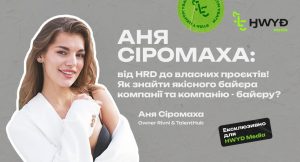
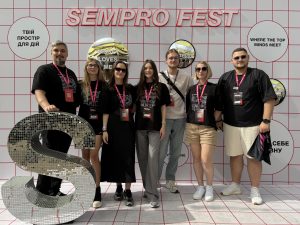
We have known each other in absentia for a couple of years - we constantly crossed paths at various affiliate events, even stayed in a hotel in Warsaw in neighboring rooms once 🙂 we said hello, but, as often happens, we never had a chance to meet in person until the RIVNI project brought us together, for which I had the opportunity to thank Anna personally at Sempro Fest in Kyiv. A sincere, always smiling and sparkling girl - who she is and why candidates trust her with their fate, I decided to find out personally, and How Was Your Day came in handy for this! So, stock up on tea (or whatever you have there? - prosecco) and read the long interview, because Anya and I talked about her and her unique experience for more than an hour... I promise it will be interesting.
Kostya Golubev is the editor-in-chief of HWYD.
Childhood.
HWYD: Tell us about your childhood. What kind of family did you grow up in? When were you born?
Anya: I was born and raised in Kyiv at the end of the 90s 🙂 My whole childhood was filled with love and adventure, my parents are doctors. We are all very family-oriented and spend a lot of time together. This is my first priority, my great pride and love.

HWYD: Describe your most vivid childhood memory.
Anya: To be honest, I had a wonderful childhood and have many such memories. I ate dry mulberries in my grandmother's yard, climbed mulberries, traveled, read O. Henry, went to the theater regularly, and played Cossacks the Robber with the boys in the yard.
HWYD: What did you dream of becoming when you grew up? Why?
Anya: I don't remember wanting to be anyone in particular, except maybe an actress, as is often the case with girls. But I do remember that I dreamed of being famous since I was a little girl, and from the age of 3 I imagined my biography being studied in literature class (my grandmother and I always studied the biography of authors before reading their works).
Youth
HWYD: How did you study at school? What subjects did you like the most? Which ones the least? Why?
Anya: I did quite well in school, but I was not an excellent student. In the subjects I liked, I was always among the best in the class. My favorite subjects were math, literature and all languages (Ukrainian, English, German).
HWYD: What clubs/sports did you attend?
Anya: As for my extracurricular activities, I was engaged in and adored ballroom dancing, and, of course, I actively learned languages. I also went to art school! And tennis. And I loved horseback riding, which, unfortunately, was not so much)
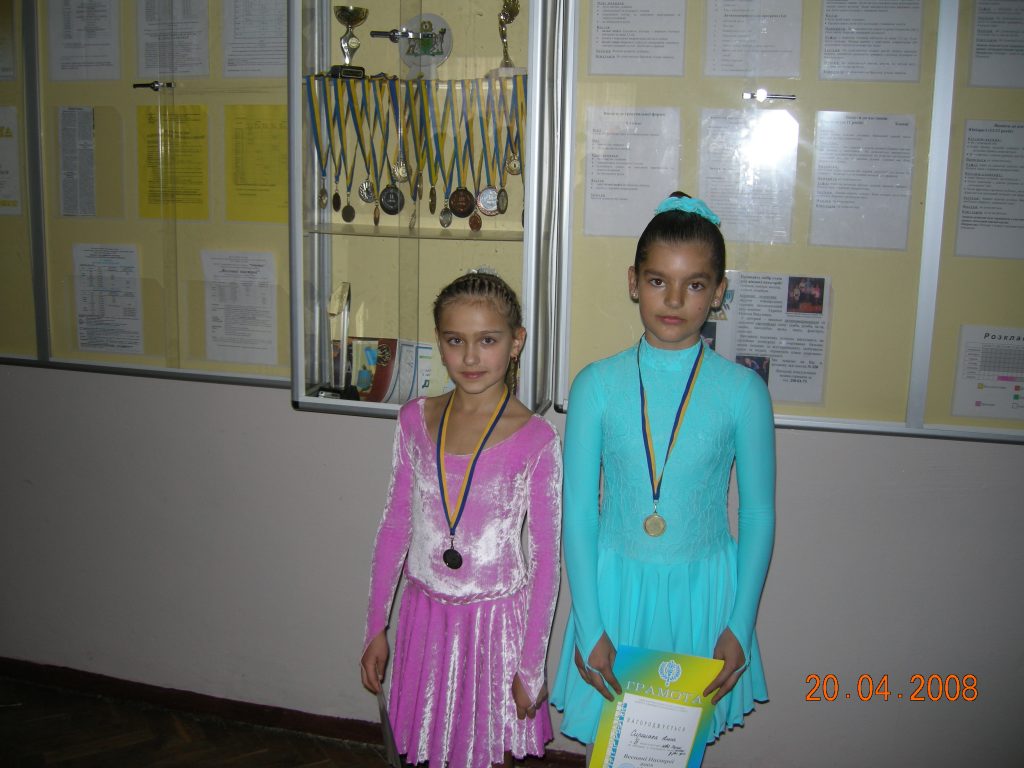
HWYD: Describe your most vivid memory from school.
Anya: At school, I was the biggest activist 🙂 I was the head of the senior student council, the eternal headman, and participated in the leadership of the district. I seemed to communicate with the whole school, opened a radio station, organized events, went on a model UN trip, and, of course, was at the epicenter of all school stories. Oh, how many interesting things I learned about myself from Gossip Girl) I remember how the 5th grade choir congratulated me on my birthday in the 11th grade) Touching moments.
I love school! It's my favorite time. Even when I was finishing the 11th grade, I realized this when I was crying at the line. 117 ❤️
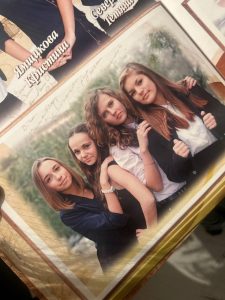
Adolescence
HWYD: What university did you graduate from? Why did you go there?
Anya: The situation with higher education is a bit more complicated, but very interesting) I graduated with a bachelor's degree from the Institute of International Relations of the Kyiv National University of Shevchenko, majoring in International Business. At school, I had to study really hard, intensively, and actively, so I found it too easy and, to be honest, not very interesting at the institute. I missed school a lot, but in order not to waste time, I started working in my first year. I tried different things and I think it's great! When else but at the age of 17 or 20 to look for yourself, agree to completely different offers and say yes to everything? I worked as a journalist's assistant on TV, and as a social media manager for a clothing brand for cooks, and I was a sales manager and a green manager in household chemicals. my first serious job was at the charity foundation "Your support". I was in charge of affiliate marketing:))) I offered conscious businesses to join the charity, and not just "give money", but together with the team I created and implemented various promotions, the profits from which went to help children. It was an incredible, very difficult, but such a valuable experience!
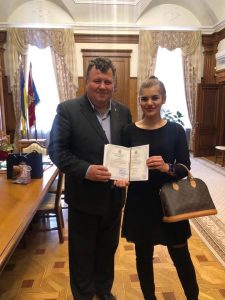
HWYD: How did you spend your first salary? What was it like?
Anya: I spent my first salary partly on my family (I had to "show off"!)), and partly just on living. It was something around 100$, I don't remember exactly :)
HWYD: Did you continue your education after realizing your lack of interest in the institute?
Anya: Yes, I finished my studies and entered the master's program. I liked the master's program much more! I graduated from it with a degree in business administration at KNU and also in Italy, Macerata. It was an incredible time that I often remember, and a space where many friendships, adventures, and experiences were created.
Then I swore that I would never study again, yeah))) With the start of the full-scale program, I went to the next higher level))) And I graduated from KNU once again, the Faculty of Psychology.
By the way, my journey in recruiting and HR began in the 3rd year of my bachelor's degree 🙂.
The scope of arbitration
HWYD: How did you find out about the industry? What was your impression of it?
Anya: Life has often led me around Affiliate Marketing! First, I helped a young eco-network as an influencer manager (I didn't know what I was doing at the time, but I learned all the metrics, terms, etc. thanks to that job), then I worked as an HR in an SEO company. But the HRD position became a full-fledged entry into affiliate marketing. I already had about 2-3 years of experience in HR, and I was the first HR specialist in the team.) I came a long way there in 1.5 years, I joined the team when there were about 40 employees, and when I left there were already about 130 of us.) And it was a very bright, high-quality experience that taught me a lot of things, for example, that a successful business is based on 3 pillars: drive, speed, and energy. Then I went to a large holding company as a CVO to open a new vertical for them:) We worked together for a long time, until I started my independent journey...
Your own way
HWYD: Tell us about your own recruiting agency, job search site, and intensive.
Anya: In early 2023, I started my own business. At first, I worked on one project, now I have three, and they developed organically one after the other. Two of them are now in the active phase: RIVNI, a website for finding jobs in affiliate marketing, my pride and know-how that the market has been waiting for for so long, and TALENTHUB, an affiliate recruiting intensive suitable for both beginners and experienced professionals.
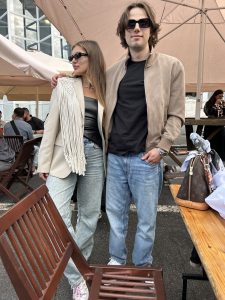
I really like that my projects were created to meet people's needs. I saw the "gaps" and filled them with the necessary business units. So, recognizing the need for a specialized recruiting platform specifically for this market, one day I came up with rivni. Receiving a lot of requests for recruiters' advice and complaints about their lack from employers, I created an intensive course that incorporated the experience of 5 years of work and training of recruiters in the affiliate.
The first public stream of the intensive is taking place right now. I love teaching so much! I was also very lucky with the group, very cool proactive students. So I think we will launch more than one stream. I already have ideas and new tricks:)
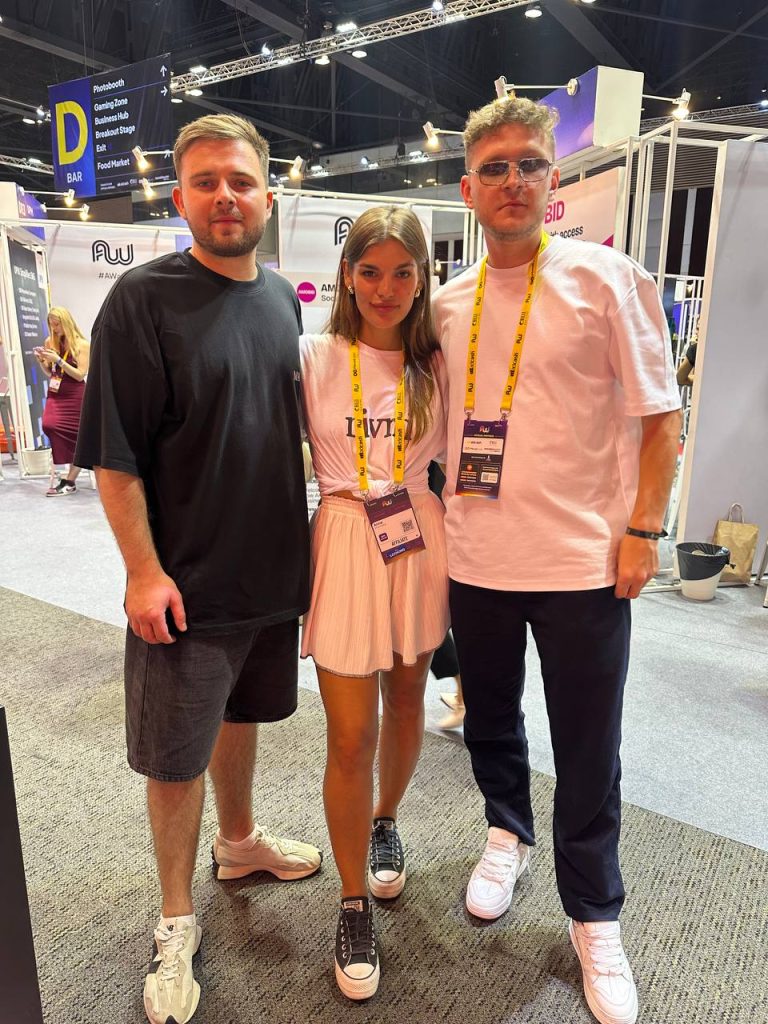
HWYD: How do you recruit visitors to the event? How did you gain/are you gaining trust among the community?
Anya: Although half of the affiliate's media figures talked about the intensive on their resources, to my surprise, most of the students are my subscribers!) Or friends of friends or partners. By the way, it's a great idea to send your own recruiter to our intensive to improve their skills, some have already done so smartly) So, recognition, community trust, and personal brand are very important.
HWYD: What are the most difficult vacancies on the market? Which of them did you manage to close?
Anya: The most difficult position is always a media buyer. I always say this. There are a lot of them, but few specialists. There are also few methods to verify the authenticity of skins and results. It's almost always a pig in a poke, and everyone always needs it. But I believe in the best and always have a positive attitude. However, I have my own tricks and methods of checking. Of course, over the past 8 years, I've had a lot of cases in recruiting and HR, both great and failed. From assembling teams from 0 to hundreds to closing incredibly difficult vacancies. I even managed to work in a German web3 project, where we hired people from Amazon and Microsoft. But that's another story)))
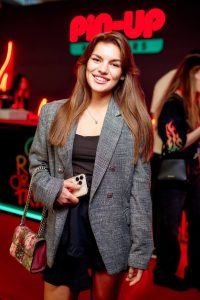
The final word
HWYD: What would you wish to companies that cooperate with recruitment agencies? And to candidates?
Anya: I wish candidates to work with agencies and rivni! It greatly increases your chances of a perfect match, because you communicate once and immediately get to 10+ relevant teams. This is at least 7 hours of time saved! Can you imagine?
I would like to thank the companies for their trust, openness and responsibility. It is so pleasant and at the same time responsible to fill really worthy businesses with qualified specialists!
HWYD: What does he look like - an ideal candidate for a recruiter and an employing company at the same time?
Anya: The ideal candidate = the one who gets an offer during the interview. Where there is no doubt and an absolute match. Sometimes I hear "this is exactly what we were looking for!" and that's the most important thing.
HWYD: How and where do you see yourself and your business initiatives in the near future?
Anya: So far, my plans are to develop the existing projects, which are really professional, cool, and very client-oriented. I want to attract more people, help more businesses and job seekers. And I plan to be more creative 🙂.
Thank you very much, Kostya, for the invitation and the great opportunity to review my life by writing a kind of autobiography.
I am always happy to answer all the questions of the readers of the wonderful How Was Your Day Media.
I leave my contact information for communication:
- https://t.me/rivnikyiv
- https://t.me/Talent_Hub_Support
Важливо
Outro from the editor-in-chief of How Was Your Day
The aftertaste of a conversation with Anya is like an energy drink that has been maxed out - she has so much vigor, sincere confidence in her own business, and fire in her eyes! Her work is exhausting, but it does not exhaust Anya! This explains why both candidates and companies come to Anya for quality and compliance - because Anya Siromakha is a brand that has created itself and made a name for itself! Thank you so much for this conversation, Anya! I'm sure your case will inspire our readers to believe in themselves and do what they love, no matter what. And I personally wish you to develop all the directions you have started and grow more than one business giant in our market thanks to your professionally selected positions!
Важливо
The topic of being "sucked in" by the market for life has long been discussed in the community. According to our observations, most people believe that once you're in a niche, you can't leave it. Money, status, acquaintances - all this does not let go.
However, there are opposite cases.
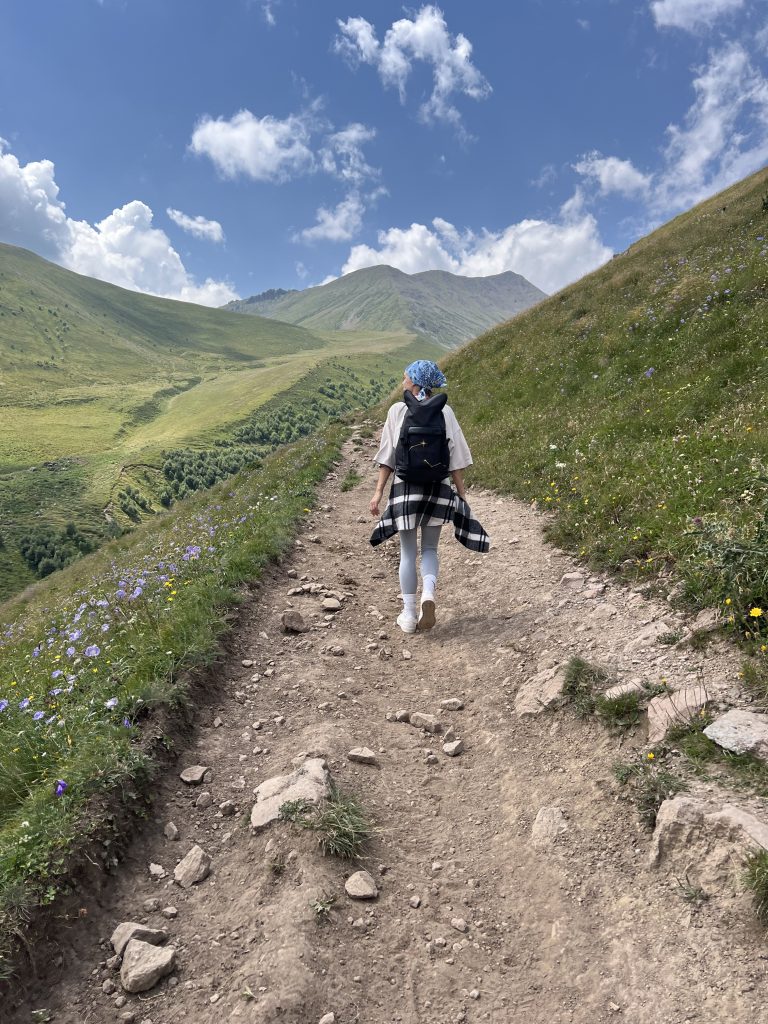
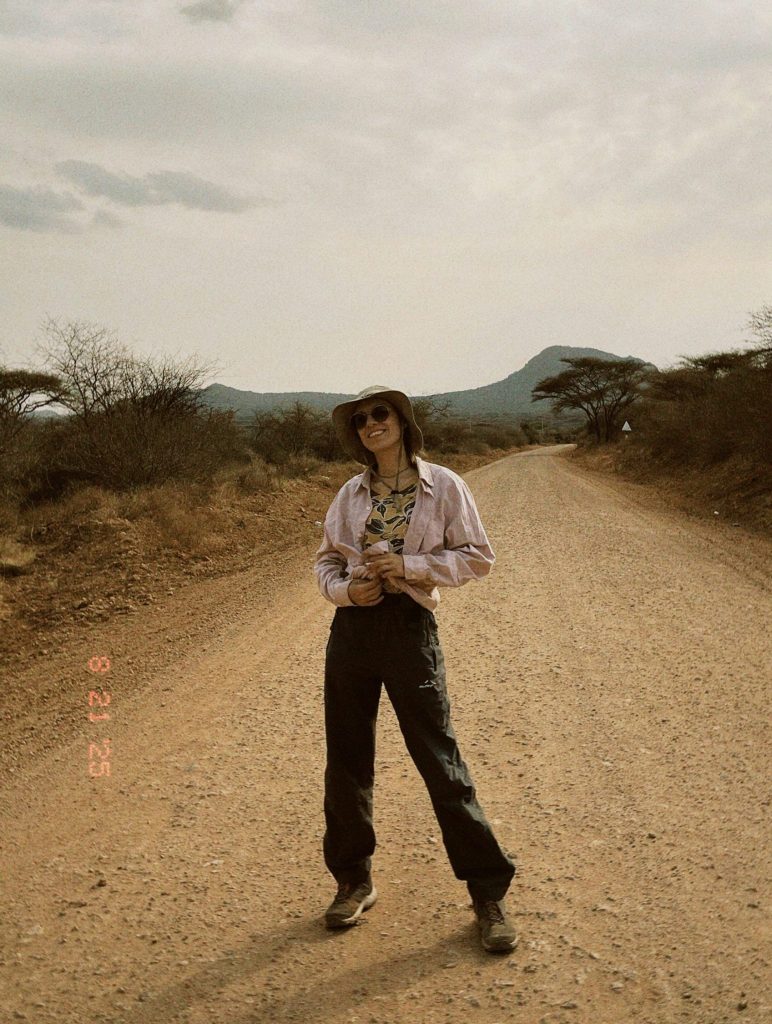
HWYD editors talked to Vita, an ex-Marketing Team Lead at the reseller partner. Nowadays, Vita crosses the desert dunes in Oman, travels among the islands of the Raja Ampat archipelago by kayak, climbs the mountain trails of Georgia, and recently went on a motorcycle expedition in Africa with her boyfriend.
She plans to write her own blog and create unique author tours. Read how she managed to do it and whether she regrets her choice in this article from the narrator's own mouth.
Kostya, editor-in-chief of HWYD
Vita: Oooh, where to start 😅 In fact, quitting my stable job and plunging into complete obscurity was one of the best and at the same time one of the most difficult decisions of my life!
Behind this were doubts, fears, love, big dreams and ambitions. That's why my little confession is for your attention.
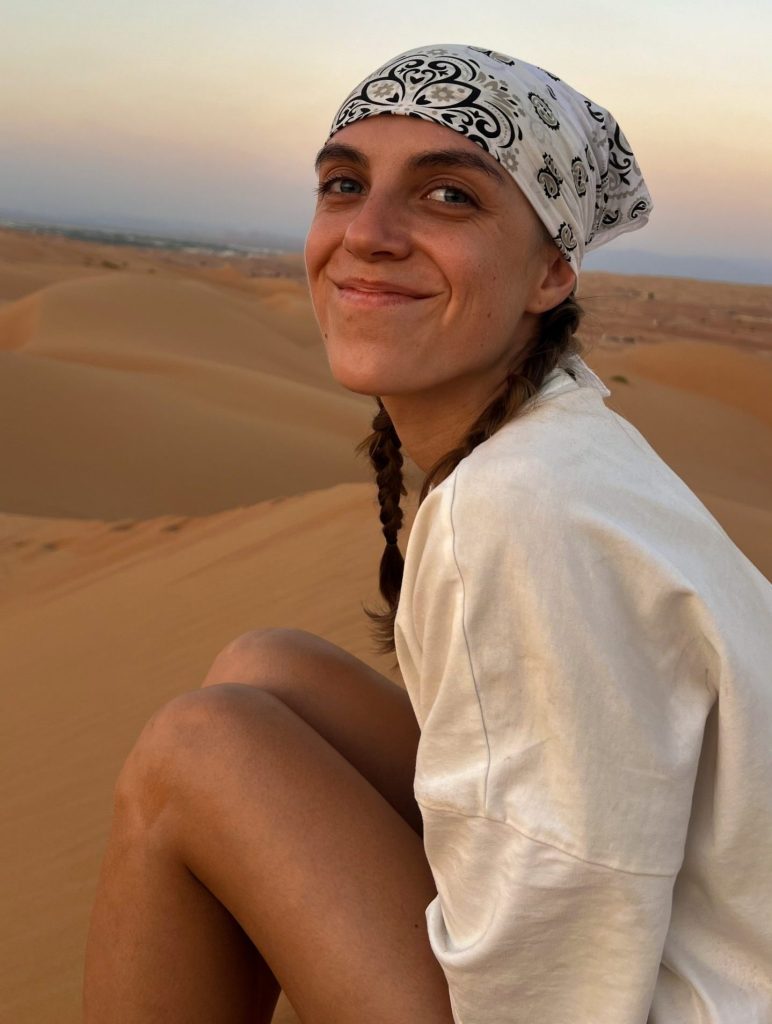
HWYD: How did you get into the industry?
Vita: It all started with the fact that I came to this market without having any idea what affiliate, traffic, verticals, and gambling were. It was a dark forest for me. I accidentally came across a vacancy for an SMM manager and decided to give it a try. I had 6 years of experience in different, dissimilar jobs and a 100$ SMM course that I bought during Covid to change my life😂. Oh, and a marketing degree, which I have never been asked for).
I've always been an idea person, so a small salary didn't scare me - the main thing was to have the opportunity to learn and grow in a new field. They believed in me (or I convinced myself 😅), and as a result, I was hired for a project that had just launched and was actively developing. My own growth occurred simultaneously with the project's growth.
Over time, I came to understand the stereotypes that money is flowing here and that this is a fairly developed and charged area in the CIS space. But a good picture does not come by itself. To achieve something, we needed the EBU. And given that the project was quite young, we had to be a universal soldier and work for three people. I don't know why, but from the very beginning, there was no desire to dive too deep into the market. It was always more appealing to be behind the scenes, but to raise the project and realize career ambitions. Perhaps because somewhere inside I felt that this broadcast lifestyle was not quite my thing.
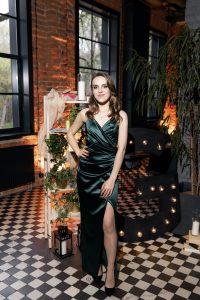
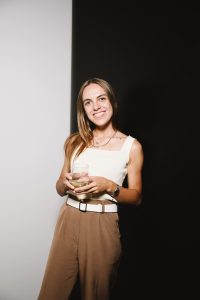
I immersed myself in the processes - at some point, this work became my whole life. My social circle, topics, tasks - everything was somehow related to work, displacing my own preferences and dreams that made me me. Over time, I became a team leader, was helped with relocation (for which I am grateful separately, as it was a life-changing move), and raised my salary. It seemed that I had achieved everything I wanted. But there was a constant feeling of dissatisfaction inside.
HWYD: Why did you decide to quit?
Vita: In fact, my first thoughts came during an English class. What is the connection, you may ask. Once, in one of the classes, the teacher asked a trivial question: "What would you do if money didn't matter?"
And I answered without a shred of doubt: "I would travel the world, make videos about it and show them to people. And at the end of my life, I would make a big autobiographical movie in which I would try to convey how important it is to listen to yourself and live your life the way you want to, not the way it was imposed on you." When I left the office, I realized that I was not living the life I dreamed of. It sounds a bit pretentious, yes, hahaha. But I realized that I was at work solely for the money, although I have always been and remain an ideological person. So I made a decision to be myself and not change my principles.
Yes, I was actively developing in this area, and I could most likely have reached great heights. I had money and recognition. But did this success make me me? At the age of 25 (perhaps it was an age crisis), I began to think more and more often that I was not following my soul's call and doing something wrong. The business Olympus no longer attracted me, and climbing the career ladder turned into a grueling cardio workout.
All these deep reflections on life were greatly influenced by the war and then the move.
At that time, I had already lived in Warsaw for six months. As I said above, the move was life-changing for me. Hearing my thoughts, whether the universe helped me or it was just a banal coincidence, it was at that moment that I met my future boyfriend, who began to broadcast to me that work is work, it should not be the meaning of your life. And we met him, by the way, at work (ahahaha, and this is another reason why I'm grateful to her). At first, I was skeptical, convincing him that he needed to run, reach the top, make more money, more money, and then more money. And then I thought - money and success are all great, but ask representatives of the field what, behind all these daily checks of wealth and office work, made them childishly happy the last time, and I'm sure most of them will not be able to answer this question.
So I quit my job. By the way, there's a little story behind that, too. My boyfriend persuaded me to quit because he was quite traditional and my career ambitions did not impress him. But I, being "strong and independent," was afraid to depend on a man and said that I would not quit until I had saved a certain amount of money. I gave myself six months to do it. But it was not to be. One evening, he took a glass of wine for himself and handed me another, and made a toast: "To your release!". At my surprised expression, he showed me my Binance, which had the amount I had announced 😂 Under his "well, you promised", I wrote to my manager about my resignation.
Before that, we each had a pool of countries visited, and we realized that this was our common passion, which we wanted to spend the coming years on and which we could monetize. By the way, he eventually quit his job as well. So, taking our pillows, we started traveling the world.
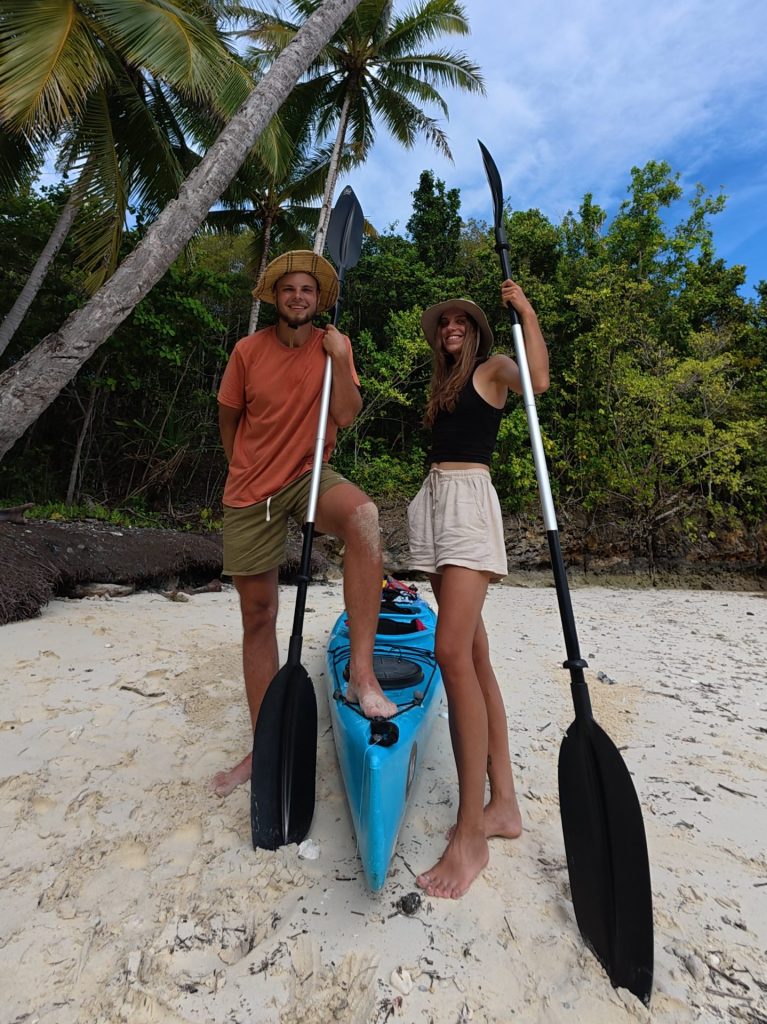
HWYD: Do you regret your decision?
Vita: Absolutely not. On the contrary, I am grateful to myself for it. Now we are completely absorbed in traveling. We try to choose the most remote and least touristy parts of the world. The very thought that we are making our own dreams come true gives us goosebumps and makes us ecstatic. Constant adventures, trials, interesting acquaintances with completely different cultures and people, exoticism and asceticism - all this has become the rhythm of our life.
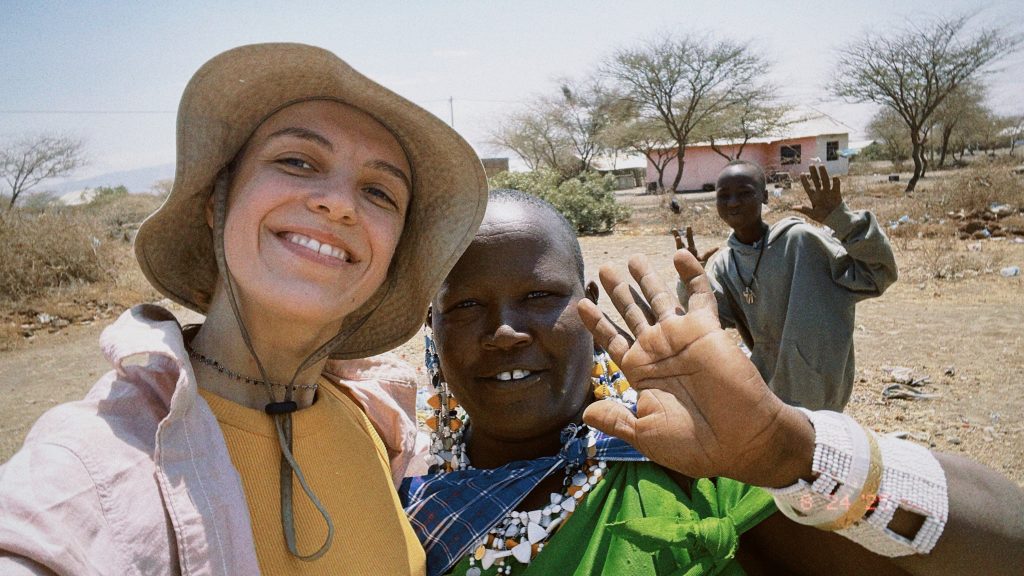
We have already completed a two-week ocean kayaking trip on the Raja Ampat Islands, explored green oases in the heart of Oman, conquered the mountain peaks of Georgia, and visited many more interesting places that would not be enough for an article. By the way, we are currently on an expedition in Africa. We are going to ride around the continent on a motorcycle in 365 days. This is the confirmation of the right choice for me personally.
Here, somewhere not always in comfortable conditions on different parts of the world, I feel truly and unquestionably happy. I want to experience these emotions here and now, to memorize and engrave every moment in my memory. You can feel life here.
HWYD: A slightly immodest question - what do you travel for?)
Vita: In fact, this is probably the question I hear most often. Yes, in practice, things are not as simple as I described above. Unfortunately, money does not fall from the sky like tropical rains)
Now we are traveling on the capital of a guy who has been saving it since he was 18. As for me, I'm not sitting still either. And now there will be an answer to the question whether it is possible to leave the arbitration world forever 😂
In the spring, Kostia, whom I met at my previous job, approached me with a proposal to use my marketing skills and help launch the project. The concept of media really appealed to me. But with my lifestyle, it was difficult to promise anything. We agreed that I would launch the project, take care of all the operational processes, and then transfer the media into safe hands. But it didn't happen as expected. I got sucked in 😂.
But with the only difference being that now I'm prioritizing my life correctly. And as I wrote above, I'm an ideological person, and HWYD is an unrealistically soulful media outlet, just like the idea to create it. That's why it's a pleasure to manage the operational processes here. I've recruited a great team that works like clockwork. And now we are developing a story together, in the success of which I believe as much as anyone else. Well, except for Kostya)
So, nice to meet you, I'm Vita - COO at HWYD.
Is it difficult to combine everything? Yes, it is. But I love my life very much now and what is happening in it. I am sure that in my old age I will definitely have no regrets. If I live, of course, because in Africa, you know how much danger there is...
I also have an incredible amount of support. So, most likely, after some time, when I can let go of HWYD, I will pass it on to good hands. But for now, I'm here.
To summarize, I will try to convey one idea to HWYD readers: I am in no way convincing you to change the direction of your business, I am only showing you that it is possible! But remember: when you think that the company can't do it without you, you're just imagining things 🙂 Whether you're an ordinary manager, a team leader, or even a head of hundreds of processes, you will quickly be replaced, no matter how valuable you are. Because the main task of a business is to make it work, and with the help of whom is a secondary issue.
Важливо
And your main task is to live your life the way you want to, not the way society or an Instagram picture wants you to. Therefore, focus your creativity and mind on what you are truly passionate about and what you do best, what will drive you throughout your life.
In the meantime, subscribe to Instagram and witness my new story.
Важливо
Generations in teams is a topic that always causes controversy. In practice, we see not caricatured differences, but different rhythms and expectations.
Millennials are looking for stability, structure, and predictability. Zoomers are looking for speed, flexibility, and instant feedback.
These contrasts should not be seen as a problem. In fact, they create a field of opportunities. After all, a team becomes stronger when it has both the experience of long marathons and the excitement of experimenting here and now.
We asked industry leaders how they work with the mix of generations in their companies. Each has their own observations, but they all agree on one thing: balance is possible.
Stability vs. Flexibility

Alyona,
Head of Media buying, Traffter
Millennials are more focused on stability, clear tasks and predictable development, while Zoomers prefer flexibility, diversity and quick feedback
For the former, clear plans and long-term projects work best, and for the latter, creativity and modern work formats work best. My team consists of people from the age of 18, and I always find an approach to everyone, taking into account the characteristics of the generation.
A generational mix works best when roles are properly assigned: millennials can lead large, structured projects, while zoomers can generate new approaches and test them. The combination of these approaches creates a powerful balance of experience and new ideas, and proper communication helps to maximize everyone's potential.
Involvement vs Predictability
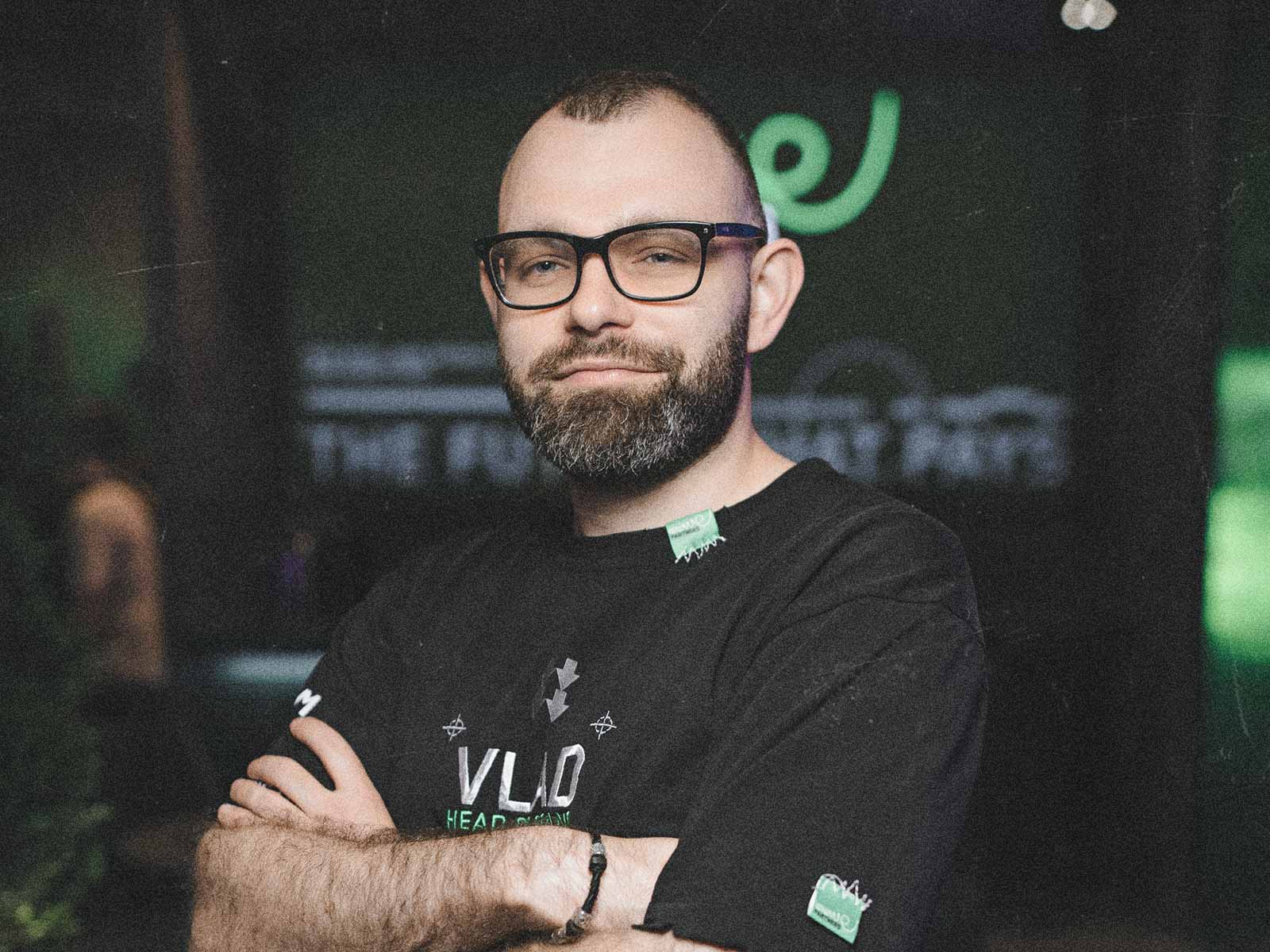
Vlad,
Head of Brand, Growe Partners
When I started thinking about generational issues, I decided to look at what research says. In its 2025 Gen Z & Millennial Survey, Deloitte notes that both generations seek a balance between financial stability, meaningful work, and psychological comfort. However, they choose different ways to achieve this, and this is felt in their work every day.
At the same time, it should be understood that in reality, many people are at the intersection of generations, and we at Growe Partners always approach both our colleagues and partners individually. The division into Gen Z and millennials is more of a guideline than a clear line
Gen Z is emotionally sensitive, responsive to change, and values transparency and honest dialog. Support, a sense of involvement, and quick feedback are important to them. This generation grew up in a world of instant communication, so they expect this pace from both their employer and business partner.
Millennials are about stability and predictability. They feel more comfortable working when they see a clear plan, realistic deadlines, and confirmation of agreements in actions, not just words. The key for them is to understand the long-term strategy and feel the impact of their work on the result.
At Growe Partners, we take this into account. We give our Zoomers regular 1-to-1s, quick updates, online and offline meetings where they can freely discuss both new ideas and work issues. It's important for millennials to have a clear roadmap and a transparent strategy - we provide planning and keep our promises.
The principle is the same with partners. Zoomers appreciate an individual approach and constant dialog, while millennials appreciate clear KPIs, fixed terms, and a clear framework.
The balance is simple: Gen Z needs to feel involved and supported, while millennials need to see progress and confidently plan for the future. In the end, the main thing is not labels, but the ability to find an approach to everyone, and then cooperation becomes clear and comfortable for all parties.
Stability vs. Momentum
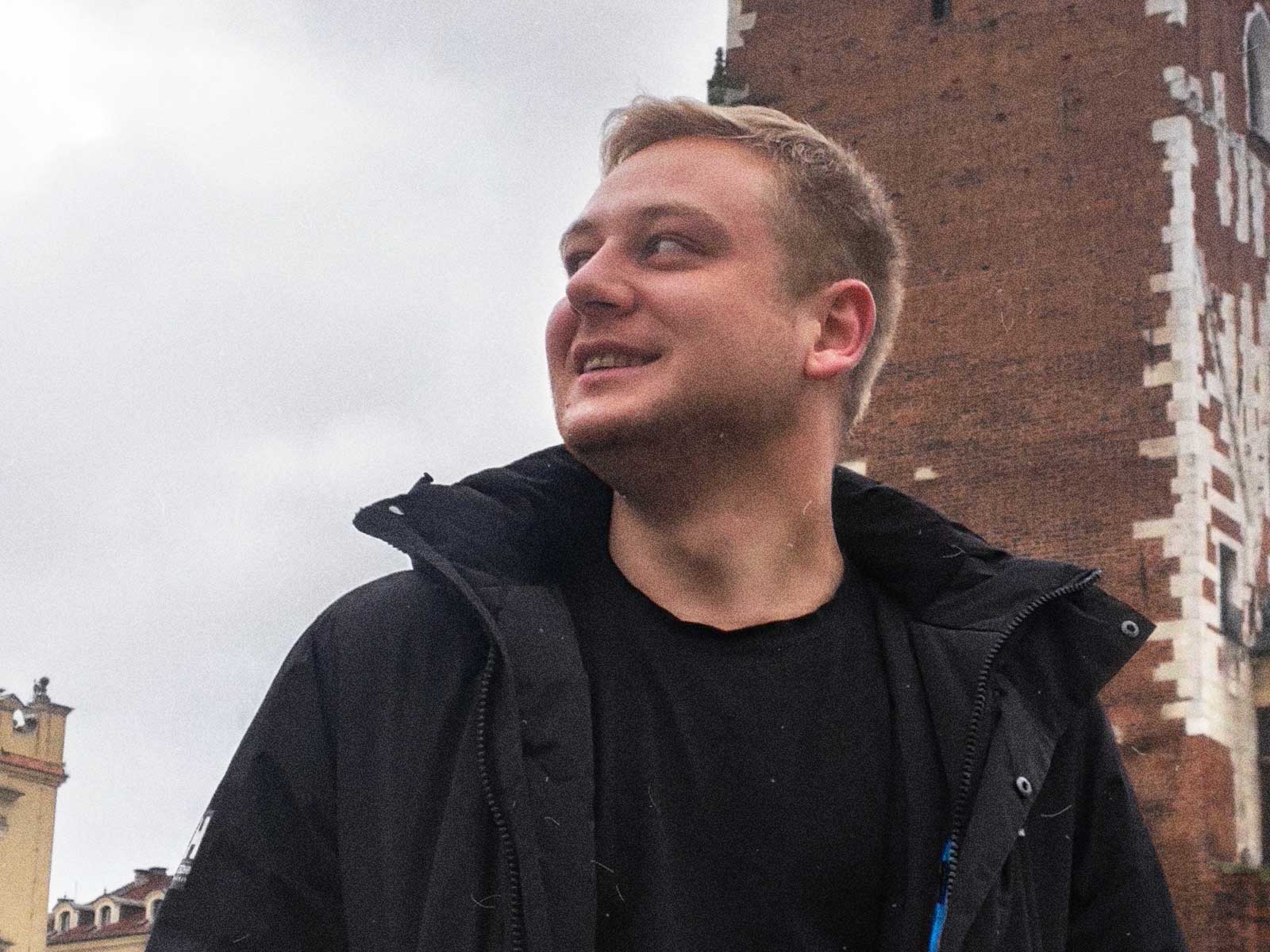
Misha,
Head of Tequila
Today, a leader must be flexible. The right balance = a strong team.
Stability versus the moment. Clear conditions are important for millennials. Zoomers need short projects with quick results. Bureaucracy vs. experimentation. Millennials will check everything ten times, so they need standards and instructions. Zoomers need freedom and space to experiment.
Corporate culture vs. recognition. Millennials value corporate values, stability, and career growth. Zoomers need frequent feedback and public recognition.
Attitude to mistakes. Millennials have a harder time dealing with serious mistakes, so it's important to support them and explain that it's a learning experience. It's enough to show them that it's important to draw conclusions and move on.Don't forget about Coca-Cola in the office for the zoomers. And for millennials, a relaxation area after focus work.
At TEQUILA, we know how to unite generations for a common goal.
Hours vs. Results
Nasa,
Brand & Communication Head, Gorilla Partners
The topic of the difference in generational approaches is both relevant and hackneyed. The market is now clearly showing points of misunderstanding, and they arise even before the offer is signed - during interviews or meetings with HR or business leaders.
Millennials, who were raised in the old school, tend to have a classic view of work: hours in the office = discipline and efficiency. They value control, structure, and presence even at unnecessary meetings. Often, this is where the demands start that the buzzers also sit from 9 to 19, even if the actual productivity in the morning is zero. For them, hours are an indicator of loyalty and teamwork.
Zoomers, on the other hand, are increasingly thinking in terms of concrete results, not process. They are not interested in how long they have been pretending to work. What matters is whether they fulfilled the KPI, brought in new traffic, or closed a partner for a larger volume. They are often more effective in the afternoon, can be distracted by anything in the office, and therefore produce results faster and better during the remount.
And here the key role of managers is to understand these differences and adapt. The main question is: what is more important to you - adherence to discipline or results that really move the business forward?
Mature management is all about flexibility: seeing the strengths of different generations and creating an environment where results become the key criterion.
My principles are simple:
- recognize generational differences as a resource, not a problem;
- create an environment where everyone is comfortable - the office and the remodel;
- evaluate work by KPIs, not by the number of hours;
- do not confuse control with results.
Marathon vs Sprint
Valeria,
Head of Adv, DepHouse
Millennials are stable, but they have a can-do attitude. This is a person who will hear a task and say: okay, we'll figure it out. They are executive, reliable, and a bit like a meme: "I don't know how, but it has to work - and it does." Their style is a marathon: long, steady, with coffee and faith that the finish line will be
Zoomers approach their work differently - "where is my manual?" They work in the vibe of the YouTube tutorial "5 Steps to Success". If a manager does not give step-by-step instructions and does not promise financial freedom tomorrow, then he or she is not "sharp". This is the generation with the TikTok meme "explain it to me as a person who has just been assembled."
Their strength is speed and creativity. Their weakness is impatience. They want results right away, not always realizing that great stories take time.
Together, it's a mix of stability and speed, experience and experimentation. This is where the magic of modern work is born.
Важливо
The generational difference is not a problem, but a tool.
Millennials add structure, stability, and longevity.Zoomers bring speed, freshness, and courage to experimentation.
A strong leader does not look for who is better. They build a system where both approaches work together. Strategy and flexibility, control and trust, marathon and sprint are not contradictions, but two sides of the same team.
The future lies in this combination. Because the market is not driven by labels, but by those who know how to create an environment where different styles of work form a single result.
Важливо
The air is always thicker on the eve of a new event. The night seems longer, the coffee stronger, and the silence louder. Someone is working on the last edits, someone is excitedly flipping through the list of to-dos so as not to miss anything, but everyone feels the same way - something important is going to happen tomorrow.
And when the day finally comes, excitement gives way to drive, and fatigue to a sense of meaning. Because an event is not just a day in the calendar. It's an experience and a feeling that lives in the memory much longer than the event itself.
AFFHUB events are always more than just conferences. It is a space where casual conversations become the beginning of partnerships, where ideas are born that change the direction of an entire industry, and where people's energy sounds louder than any microphone.
We talked to the team to convey this atmosphere from the inside - in their words, emotions, and feelings.
Sasha,
Head of AFFHUB
HWYD: What does a successful event mean to you?
Sasha: For me, a successful event is not just a packed hall and good reviews on social media. It's when you see people who didn't know each other yesterday discussing joint projects over coffee. When speakers share insights not only from the stage but also in the corridors. And when the team has a feeling after the event: "Yes, we have done something important for the entire industry."
HWYD: How do you support your team when the tension is high?
Sasha: At times when everyone is on edge, it is important to remember that we are not machines. I try to be the person who not only distributes tasks, but also notices when someone needs a break or a word of support. We can go out for coffee together, joke around, and remember why we are doing this in the first place. Sometimes one sincere conversation does more than a whole day of planning.
HWYD: How do you get inspired for new ideas?
Sasha: Inspiration always comes from people.
I communicate a lot at conferences, listen to what my colleagues are experiencing, what drives competitors. I analyze global trends and think about how they can be adapted to our audience.
HWYD: Have you already had the best event or is it yet to come?
Sasha: I believe that our best event is always ahead.
Each project brings new challenges and new insights. But every time we finish a conference, I see pride in the eyes of the team and realize that this was our peak.
And then we raise the bar again.
HWYD: Your team called you the "heart of AFFHUB" - what does this role mean to you?
Sasha: For me, it's about putting a little bit of myself into every detail every day - from the big strategy to the little things in preparing the hall.
Being the "heart" means not only leading the team forward, but also feeling for everyone in it. It's about caring, inspiring, and lending a shoulder in time.
And, perhaps, about loving what we do so much that every participant in our events feels it.
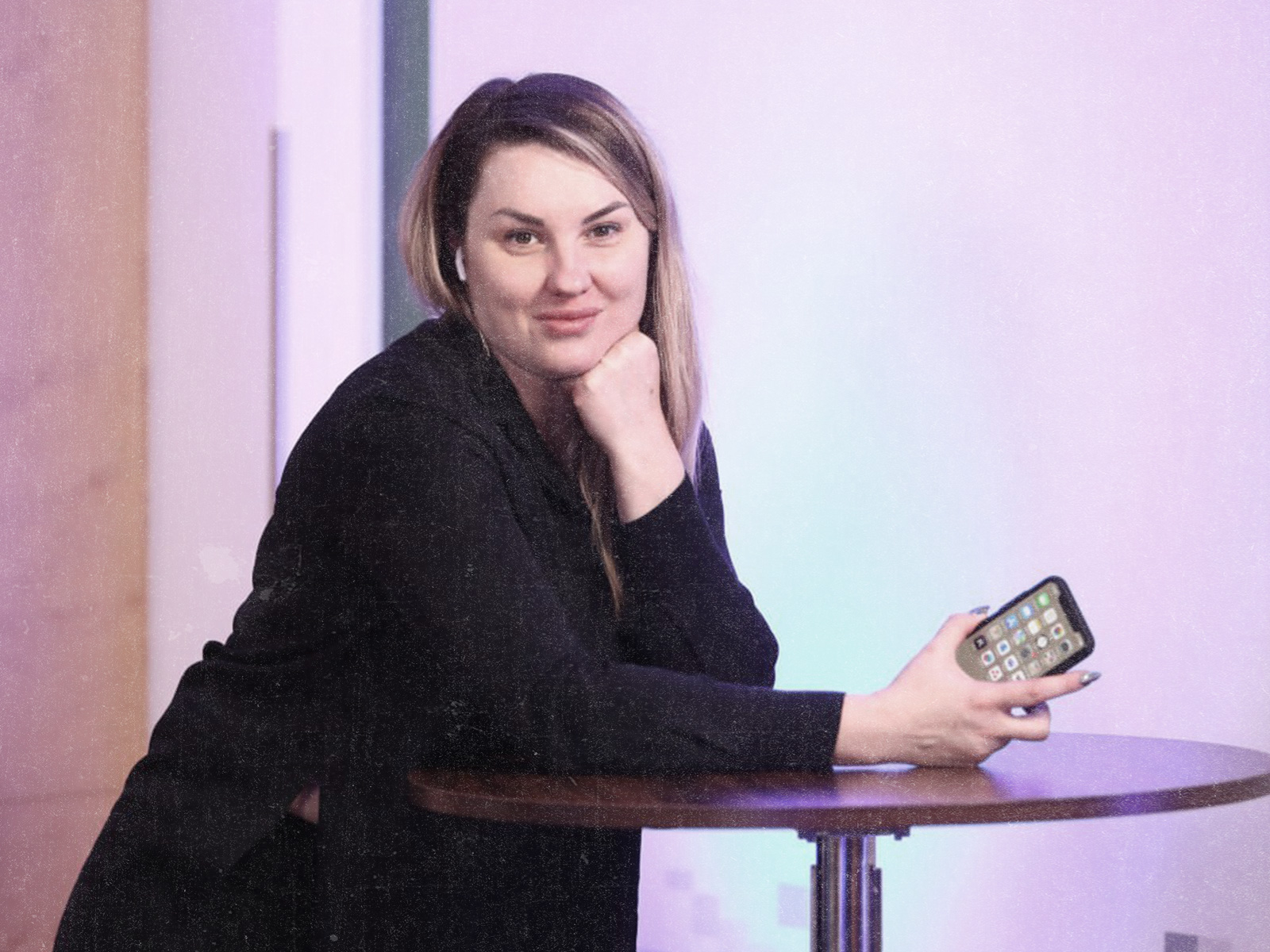
Katya,
Event Team Lead
HWYD: Why did you choose the event industry?
Katya:
I can't advise someone to create events.
To live the result - yes.
Working because "I need a job" is not.
To be an artist, engineer, strategist, creator - yes.
Doing "just to be done" is not.
To live with emotion - yes.
Enjoy the result - yes.
HWYD: What key challenges do you see in the final phase of the event preparation?
Katya: It's not about work - it's about life, about meanings, about something more than hookah, whiskey, or a party. It's about energy, synergy, discovery.
HWYD: What helps you stay calm when everything is on fire?
Katya: Challenges, difficulties, what helps, what inspires - these are all the secret secrets of the "event manager's book of magic".
HWYD: What was your fastest and coolest "plan B" that saved the event?
Katya: A lyrical response from a practical event manager:
I can't advise someone to create events.
To live the result - yes.
To be a part, to be a whole, to be a universe, an atom, everything and nothing at the same time - yes.
To be is to create, not just "to be"!
Life is so strange, changeable, incomprehensible when you create a space of emotions. Have fun at AFFHUB events - advice from a mercurial team leader on antidepressants.
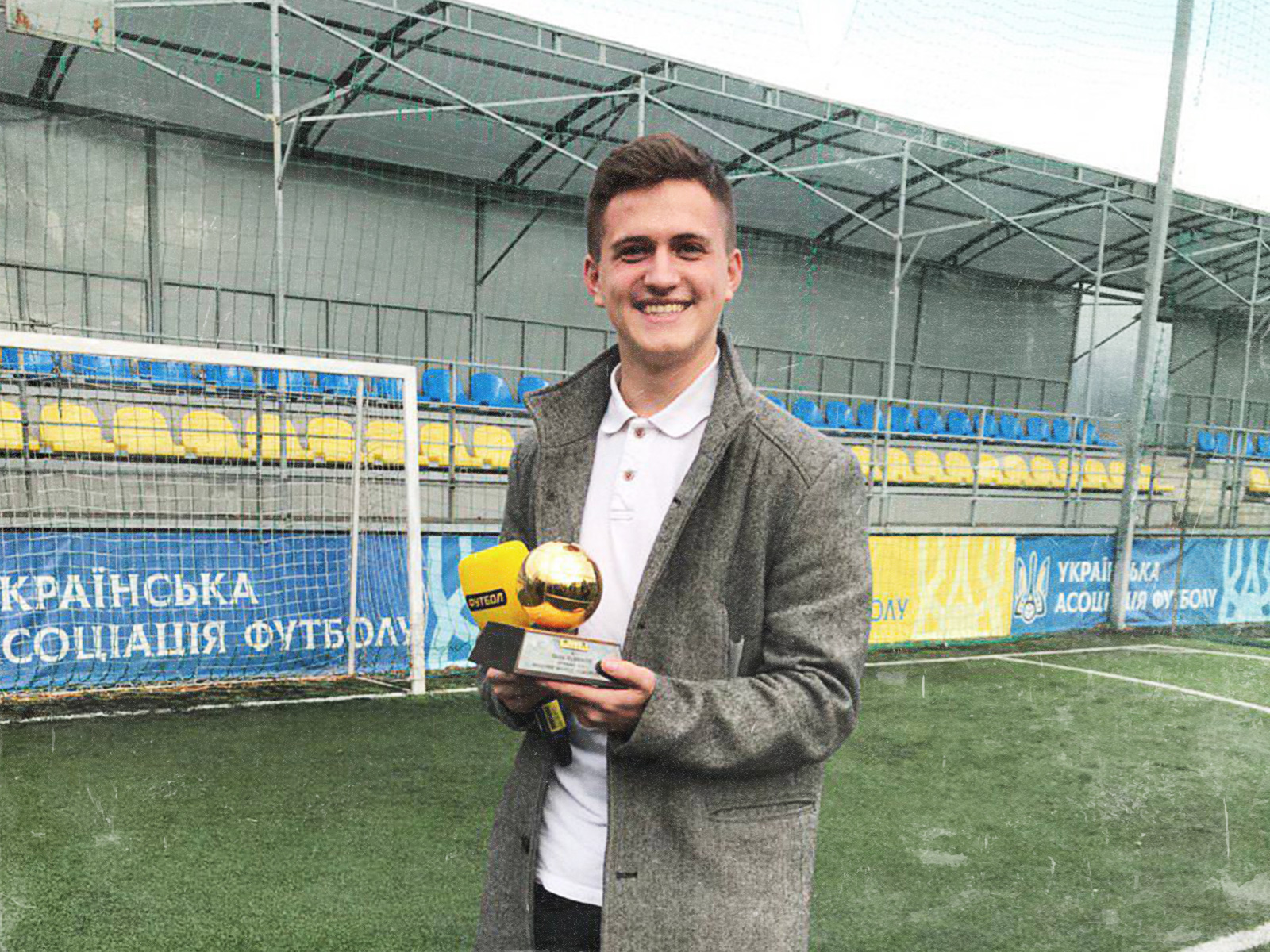
Nikita,
Project Manager
HWYD: What is the most interesting case study or story related to the event that you could share?
Nikita: In fact, each event is a separate case and story. There have been a lot of them during my time in the industry, but none of them was like the other. Perhaps the most interesting thing at events is meeting people you met outside the industry. For example, you studied at university, saw them at training, or lived in a dormitory. It's cool to realize how large our industry is when you can see the most unexpected people here.
HWYD: Was there ever a time when you did something "in a hurry" but it turned out better than you expected?
Nikita: This is probably the title of the video report from last year's AFFHUB conference in Lviv. I didn't know until the last moment whether I was supposed to shoot it. It's a good thing that the experience took away my fear of the camera, otherwise I don't know what would have happened.)
HWYD: What is the most difficult part of your job?
Nikita: Explain to my grandmother what I do)
But seriously, we need to look for topics. In fact, tens of thousands of texts have already been written in our field. And finding something new in the seemingly familiar is always difficult. Every time I create a content plan, I spend a lot of time and resources. But when I see the result and receive comments from people, it's worth it.
HWYD: What tricks or techniques help you create content that really touches the audience?
Nikita: The main feature I mentioned above is to look for something new in the ordinary. Explore new verticals that few people know about. To look for new approaches, life hacks for webmasters, to come up with new formats of texts, collaborations - all this helps to create unique content, which is why AFFHUB Media is loved.
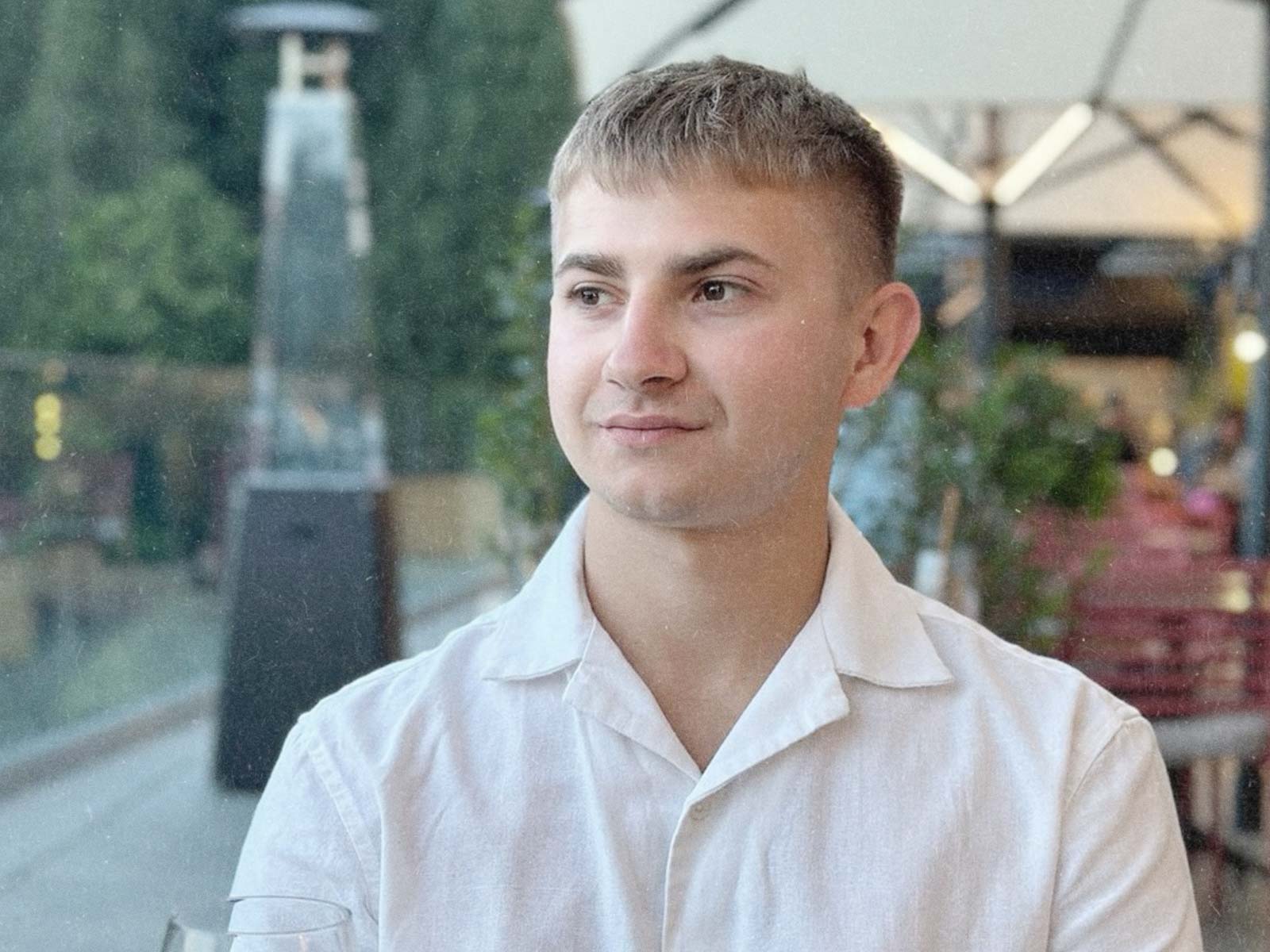
Dmytro,
Sales Manager
HWYD: The most interesting/unconventional sales story.
Dmytro: Once a potential client said that he had no budget for participation at all, but I felt that he was very interested in the project. We talked for several weeks, and I shared ideas. As a result, the day before the deadline, he found the money and bought a participation package for our event. Once again, I was convinced that you should always believe in the value of what you offer and not give up even when it seems that all doors are closed. And after the event, his company was able to find partners with whom it launched several successful products and started working with a new CEO.
HWYD: How does your contact database help you in such stressful situations?
Dmytro: My contact base includes people with whom we have already completed more than one project together. I always know who I can turn to or through whom I can find the right contact in a difficult situation to quickly find a way out or the right solution.
HWYD: What is the "secret ingredient" that helps you keep in touch with such a large database of contacts?
Dmytro: Sincerity and attention. Very often, partners become good acquaintances and friends. Then there is no longer any "secret ingredient", but just a human, real relationship. This is what keeps the connection alive and makes it possible to maintain it even when everything changes. For me, it is a great indicator when a person leaves the project and our partnership does not end there, but continues in another product.
HWYD: What do you like most about your job?
Dmytro: The drive and challenges of every day are what energize me. My partners are a special love and inspiration. The best moment is when they say: "This was the best confab ever". I get high when I see the acquaintances that started at our event turn into real deals and long-lasting partnerships. That's what motivates me more than any KPI and makes the work real.
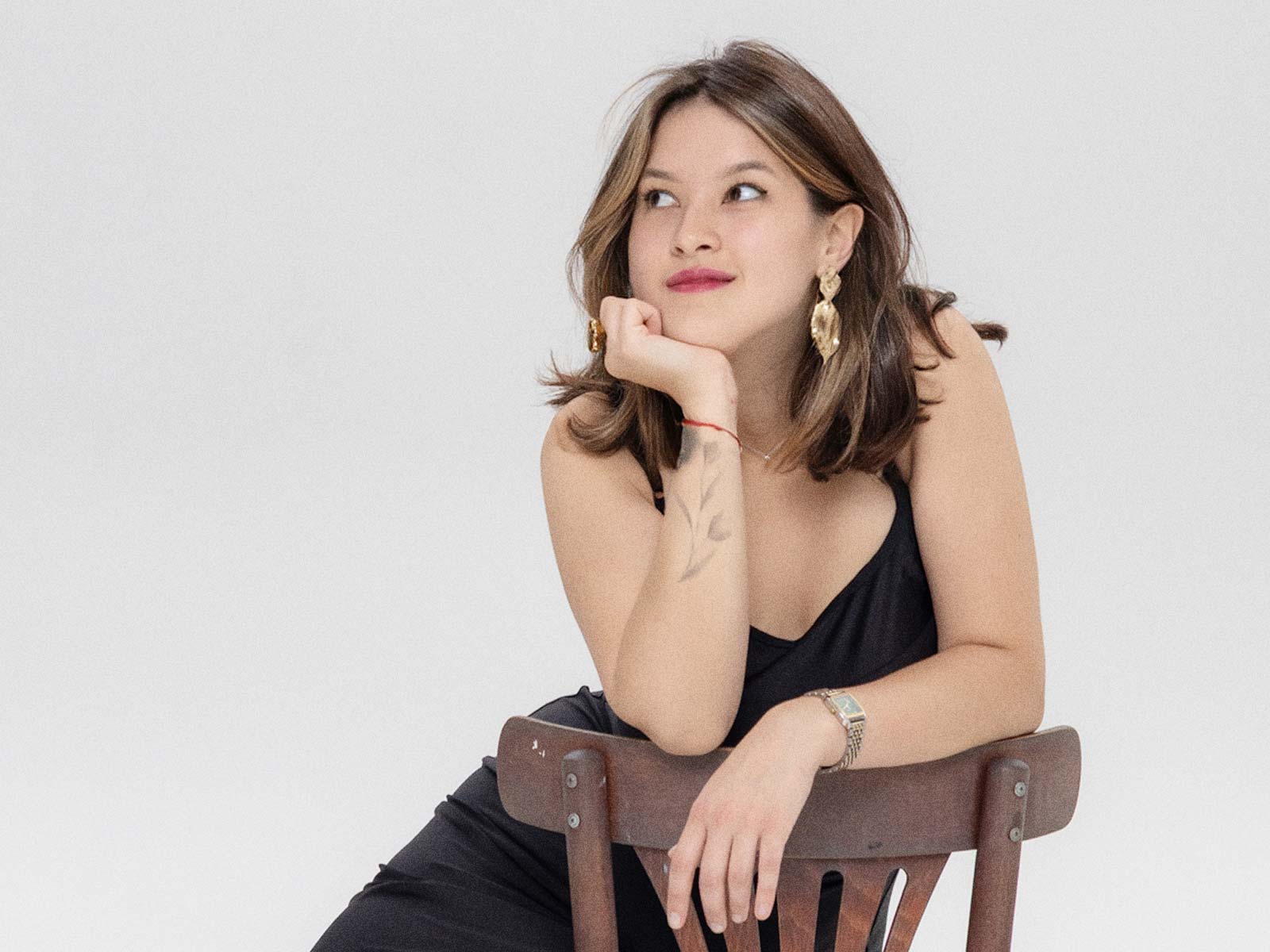
Victoria,
PR Manager
HWYD: What is the most difficult part of event promotion?
Victoria: Memorize all the nuances and details that are constantly changing, and at the same time retain a huge amount of information in your head. It's like trying to put together a jigsaw puzzle when the picture is changing right in the process.
HWYD: What helps you not to get lost in the flow of information and stay creative in stressful moments?
Victoria: In my opinion, creativity can get lost in the flow of information. This is quite natural. The main thing is to be able to switch off, turn off your head from a thousand messages and focus on creating an idea. In fact, magnesium from Perla Helsa helps a lot, and the SMM Manager we work with helps a lot - he takes away a lot of the guesswork, which is very valuable to me.
HWYD: What do you value most about your job?
Victoria: What I value most is the opportunity to build genuine connections with people from completely different fields - from marketers and creatives to techies and business owners. My phone book is a small universe of talented and motivated people who I can turn to for advice and new partnerships. I also appreciate that each project is a new experience, new insights, and lessons that help me become better at my job and find innovative solutions faster.
HWYD: How do you feel that your work "came through" and helped the event?
Victoria: I feel this way when I see the lively emotions and sincere reactions of the participants - when they share their impressions, make posts on social media, and recommend us to their friends. It is especially valuable when people write after the event that they have learned something important, found new partners, or received an impetus for development.
For me, it's an indicator that the energy and creativity I put into it really works, and that I helped create not just an event, but a useful and inspiring experience for the community.
Важливо
In conclusion:
When you listen to the AFFHUB team, it becomes clear that events are not just parties, burning deadlines, and checklists. These are live stories that are born in the process of preparation, a drive and shared energy that unites the team, speakers, and guests into one big community.
And yes, perhaps each event is exhausting, taking away strength and nerves. But at the same time, it gives you the most important thing - the feeling that you are doing something that makes sense. That you are creating a space where people meet, find partners, get new ideas, and stay charged with this experience for a long time.
This is the true energy of AFFHUB - the energy that cannot be measured by any KPIs, but which leaves a mark in the heart of everyone who has ever been a part of this story.
From affiliate mentors to those who are just starting out
There are things that can never be measured in ROI, digitized in a spreadsheet, or budgeted for.
For example, care. Especially the one that comes in the form of simple words from those who have already gone a little further than you.
This article is about such care. We asked women who have been working in affiliate marketing for a long time to write a few words to girls who are just entering this field. It turned out to be not about instructions, but about experience. Not about rules, but about feelings.
Важливо
This is not a manual, but a hug.
It's easy to get lost in our field - between numbers, deadlines, and quick decisions. Inna reminds us that real power is not in imitation or numbers, but in being yourself, honing your unique voice, and appreciating your femininity.
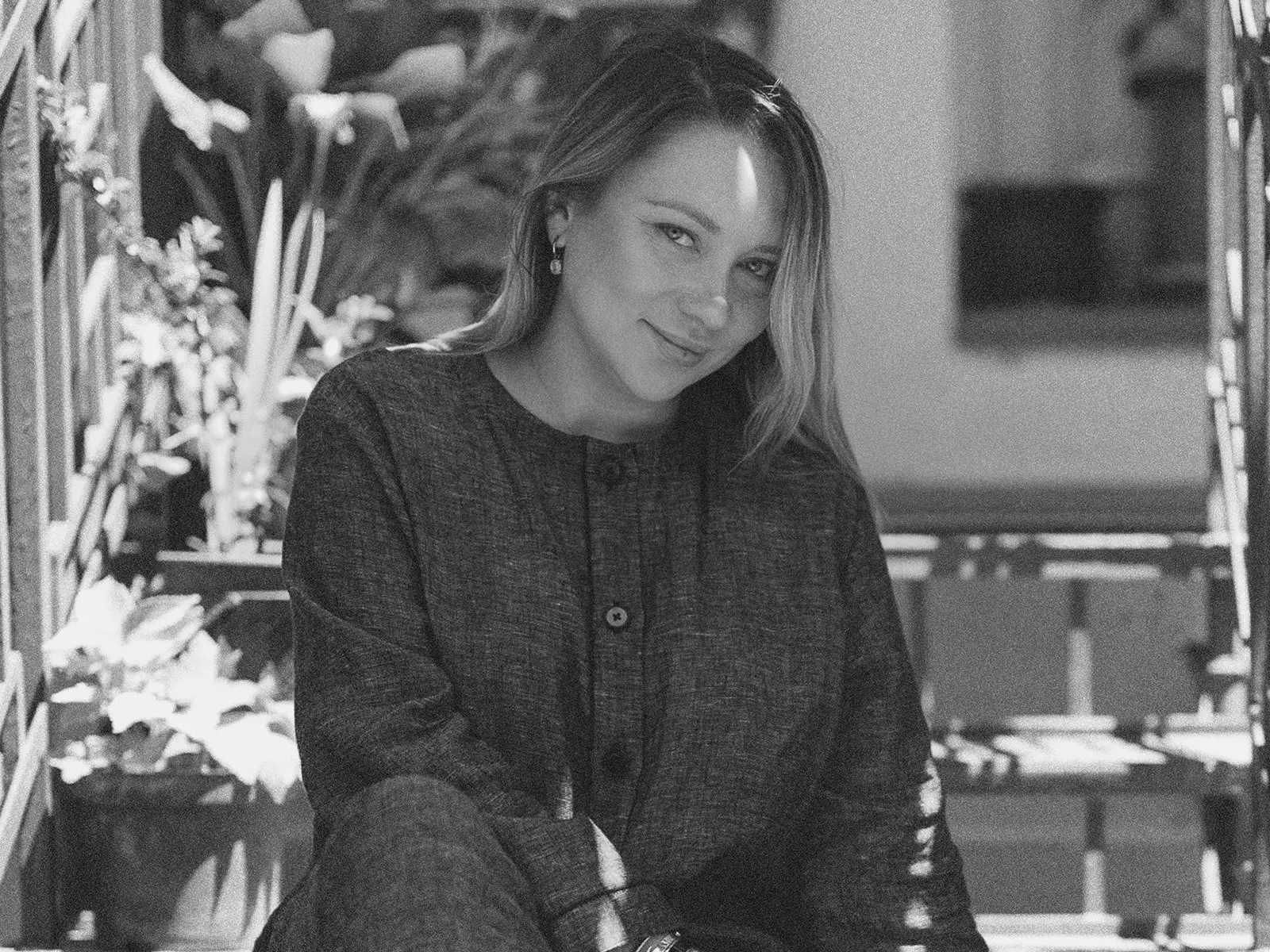
Inna,
Founder of G.Partners
Hello, dear 🙂
You are entering a game that is not about slots at all. It is about choices, character, and nervous system. Where you can lose not only your budget but also yourself among KPIs and split tests.
You enter a world that flashes digital signs like neon over a city at night: bright, noisy, disturbing. A world where algorithms outpace intuition and decisions are made before your heart can whisper: "is this really mine?"
You enter a space where everything is based on performance, ROI, and terms that don't smell like anything alive. It seems that in order to survive, you need to make your voice rougher, your back straighter, and your heart less trusting.
But this is a trap. Your power is not in imitating, but in sounding like yourself. Don't put on other people's manners - hone your own presence. Be soft, but not spineless. Don't turn off your intuition - it's your analyst better than any BI. And don't be shy about beauty - it's part of your brand. Don't lose your femininity even in a room full of men. This is not about a dress. It's about a voice that speaks sincerely. It's about a look that sees beyond the numbers.
The main thing is to find your own.
People with whom you don't need to play a role. They exist in this sphere. Sometimes they just hide behind nicknames, avatars, or nervous emoticons in chats. Choose a team that sees you as more than just a function. Those who are not afraid to learn, take risks, win. And to lose, too. Let the team be an environment - not a stock exchange.
Being a woman in business is not a role. It is a depth of attention, clarity of vision, and the ability to keep the light on, even when it seems that everything is built on shorts and conversions. Yes, our business is cynical. Here, time is currency and attention is an asset. But there is something that cannot be digitized. This is you.
If you are reading this, you are already one of us. And yes, there is room for your truth.
I have been here for a long time. I know for sure that this market is driven not by budgets, codes, or trackers. It's people. And you are one of them.
You are not traffic. You are a source.
It's never easy in affiliate marketing: new words, pace, numbers - everything seems to be working for survival.
But even in such circumstances, there is always room for humanity. That is why Anna's words are a reminder that this market is based on people. This means attention to detail, courage to speak up, and simple sincerity.
Anna,
Gentle Partners
Hello, girls who are just entering the field of arbitration!
I'm Anna Shemyakina, Head of Accounts. I've been working with partners, advertisers, and teams for many years now, and here are a few tips I always give to our newcomers:
🧠 Develop your memory. This is a super weapon in negotiations. It will save you in a crisis.
👀 Be careful. Everything is in the details: whether the KPI is clear and transparent, whether the agreement on rates and payments is fixed. Whether the links are issued correctly, postbacks are installed, etc. It's like driving a car - you have hundreds of processes involved in automated operation, and the main thing is that you are attentive and keep an eye on everything around you. It is the same in our work.
💬 And most importantly, don't be afraid. Ask for a bet, write to managers, make acquaintances. There are people on the other side just like you. And every investor or CEO also started out once.
Good luck, dear girl. You will succeed 💚
Sometimes you want to hear something very simple but powerful. Something like: "You will succeed". Maryna writes in this way, as if she is hugging the self with whom it all began. And these words fit each of us. Regardless of whether it's been a week or a decade.
Marina,
CMO of BigDeal Partners
A letter to myself - and to you. Love, 10 years later.
You can do a lot in 10 years. For example, you can buy bitcoin for $465 and sell it for $120,000. But we girls are not about that. We are about the path, growth, and inner strength. So here are a few thoughts I would have told myself back then. And maybe they will resonate with you now.
- Say no without guilt.
Your energy is not for everyone and not for everything. - Don't compare yourself to others.
Your road is unique. And it leads to where you feel really good. - Take care of yourself.
Sleep, rest and silence are also productive. - Move forward.
Even if the step is very small. The main thing is not to stop. - Trust the numbers.
When things get confusing inside, do the math. Numbers are honest, and they help you see the bottom line without the noise. - Value your loved ones.
They are the ones who will be there for you in difficult moments. Don't hesitate to tell them how important they are. - Dream big.
You can do more than you realize now. And these are not empty words.
And if I could, I would have hugged the me of that time. But now I'm just passing it on to you.
Warm regards, Marina
Some letters are like an internal monologue. It's as if someone voiced their own thoughts, only a little wiser, from experience. Anastasia wrote such a text. It is about the balance between ambition and ethics, about choosing a team, about a healthy pace. It is about growth, which is possible only in a long-term mode.

Nastya,
Head of PR&SMM, DEPHOUSE
Hello, dear!
Welcome to a new level, to an incredibly complex, sometimes stressful and interesting field that will take a big place in your life.
First of all, I want to tell you not to be lazy and not to lose your perseverance, because in this field, you can experience both a rapid fall and very rapid growth, and with it, great opportunities.
It is also always worth doing a little more than you are required to do, don't hesitate to ask questions, take an interest, learn new things, study terminology, indicators, offers and processes in your vertical. Social capital is more valuable here than gold. People here are eager to share information and help, so you shouldn't be greedy in return, but you should definitely remember about business ethics, corporate culture, and NDAs!
You shouldn't jump around on projects every few months, as there is a chance of burying your career rather than finding yourself. If you're lucky enough to work for a large holding company, you'll get a better base than an average business school in operations, people management, and management.
Everything will work out!
And sometimes, instead of writing a letter to someone, you want to write one to yourself. To the future. Such a letter is no less valuable. Because it contains loyalty to yourself and clear confidence in the path you choose.
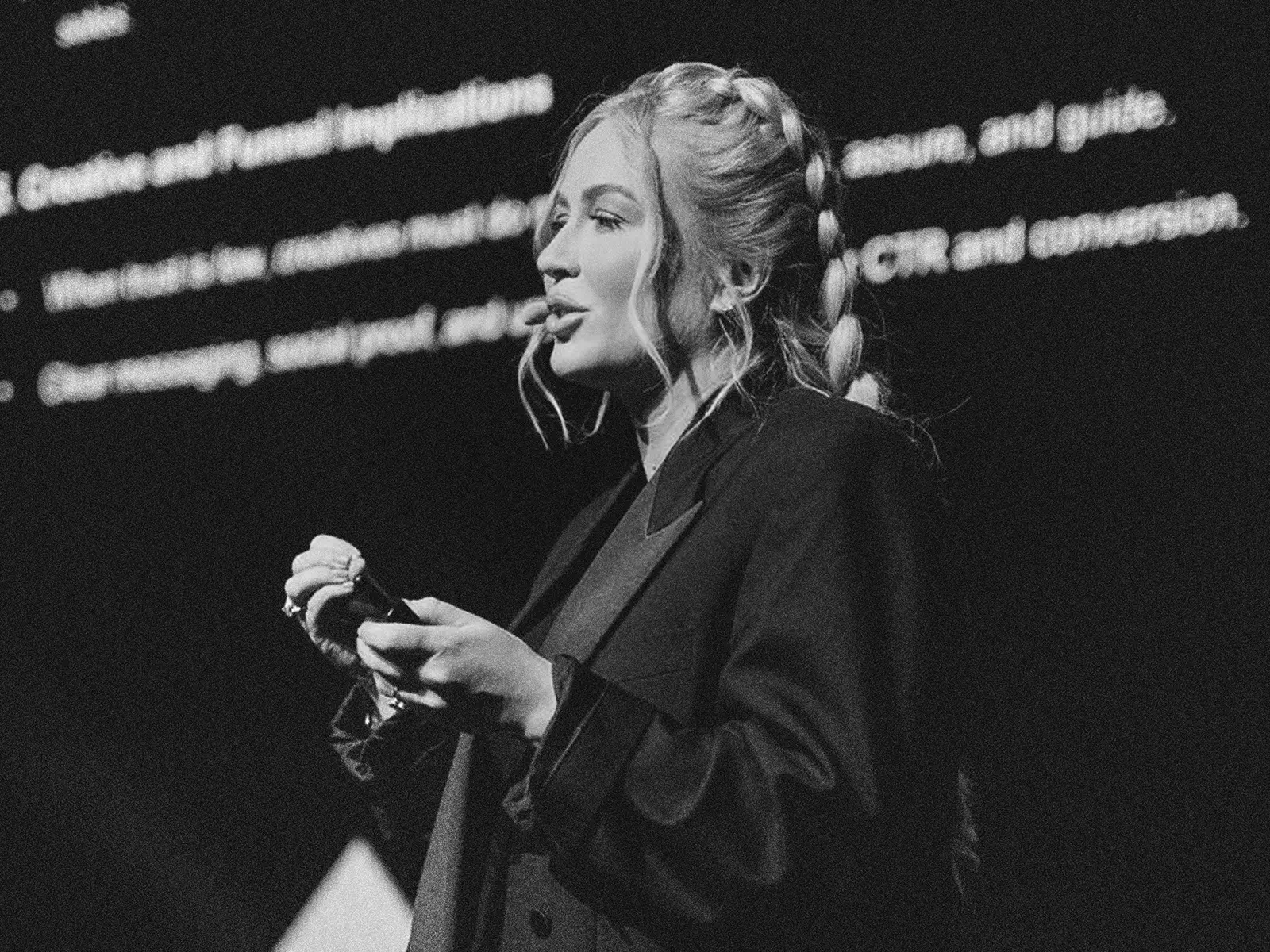
Lana,
CEO & Founder Conversion Conf
Dear Lana,
You're doing great. You are on the right track!
Remember one thing: never miss an opportunity. Communicate. Make friends. Make new acquaintances. Learn new things. Realize yourself. Believe in yourself. You will definitely succeed.
Know and always remember: affiliate marketing is all about people. And your success will always depend on people - those you work with, those you meet on your way, those you let into your professional reality.
I would like to wish every girl in our industry to be a true specialist in her field. This is the most important thing. Don't be afraid to experiment, to go beyond, to do things differently, to take risks - with your money, your position, your vision. There is still room for talented, brave, and smart people in this field. That's why I love this industry - fools don't fit in here. They just can't.
You are one of those who have every chance to make your mark. And I believe in you.
With love,
your Lana (after 10 years 💛)
Важливо
If you are reading these lines, consider that you are no longer alone.
These letters have been left here so that you can return to them in moments of doubt and joy, first victories and first failures.
And even if there is still a lot of unclear ahead, there are already those who have traveled this path and left a few words for you.
In letters wrapped in care. 💚
This interview should have appeared a long time ago. But Kostya is not one of those who likes to talk about himself. He is always on the move, in a whirlwind of creativity, in a dialog with someone else - but not about himself. But the HWYD team decided that it was time to stop being silent. It's time for you to know the story of the man who came up with the most sincere media in the affiliate market - How Was Your Day.
We wanted to tell more about Kostya. Not as a creative director or a specialist, but as a person - real, real, funny, vulnerable, multifaceted. That's why we sat down to talk to him not "for content" but for real: about his childhood, books, first kisses, losses, punk rock, tattoos, and, of course, fatherhood.
A very personal interview. With sincerity that cannot be faked. Read it and find out who Kostya is behind the scenes of big projects.
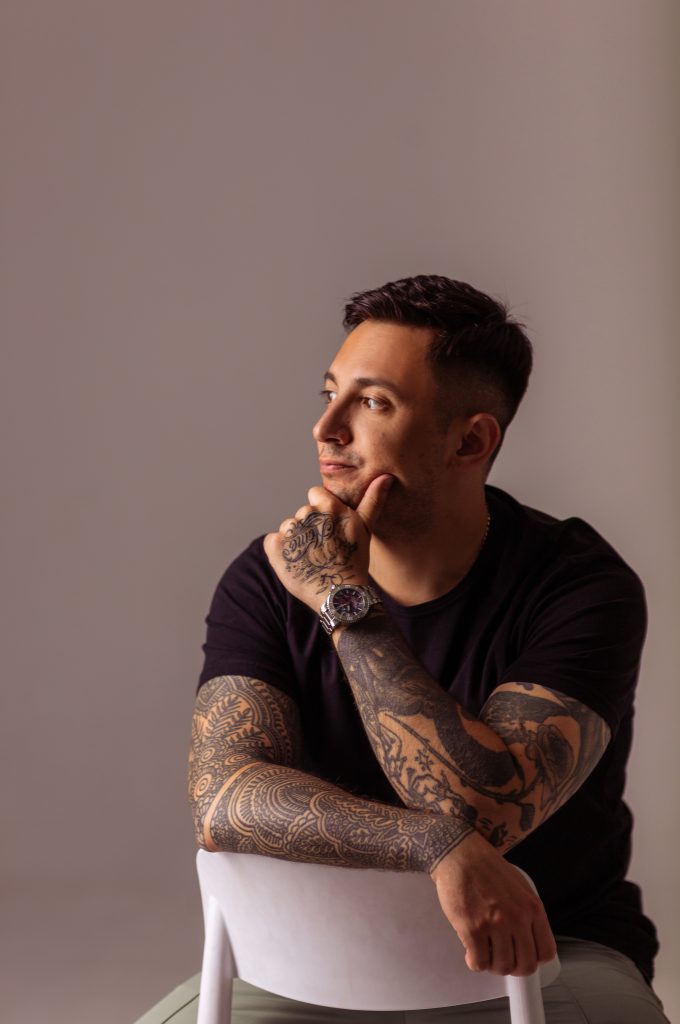
Childhood and school years
HWYD: Tell us about your childhood, what kind of family were you born into?
Kostya: I was born in the city of Kherson into an ordinary, average family, but to extraordinary parents. My mom is an example of true femininity, wisdom and love, and my dad is an example of courage and character. My mother was a pharmacist by profession, working in the production of pharmaceuticals at a tuberculosis hospital, and my father was a master of sports in pentathlon, playing for Dynamo, and because back then, to be a Dynamo player, you had to be a police officer, he served and had a rank:
HWYD: How were your school years?
Kostya: I'm a real nerd and I'm not ashamed of it. I have loved learning since childhood and I still love it today. The best day off was to go for a walk with my mom in the city center on Saturday morning, make sure to go to a bookstore, buy a new book, and then celebrate this event in a cafe with a glass of milkshake and a cake. The book would be read in a week or two, and then a new one would be bought again. And so it was throughout my school life. Even now, unfortunately, when I don't have much time to read, I can't pass a bookstore without buying something and putting it in my library at home - paper books are a big fatiche for me.
From the first grade, I was enrolled in karate and swimming. I didn't have any extraordinary successes or stars from the sky, but I liked such a tight schedule of combining studying and training even then. I remember that the sixth grade was a record-breaking year in this regard: full of lessons, swimming on Monday-Friday, karate on Tuesday-Thursday, and basketball on Wednesday-Saturday. Although karate did not make me a fighter, it gave me many vivid memories - every summer we went to a sports camp in the city of Skadovsk - a regular camp, like everyone else, only with training. There was my first love, my first kisses, friendship and all the romantic things that little me lived and dreamed about.
HWYD: What did you dream of becoming as a child?
Kostya: "Up until the 9th grade, I dreamed of becoming a surgeon - I wanted to save people. But then the Orange Revolution took place in Ukraine, and the then very progressive Channel 5 appeared, broadcasting live reports from the Maidan, and I realized that my true calling was journalism.
Since then, I started preparing in advance for admission to Taras Shevchenko National University of Kyiv - I dreamed of Kyiv and this particular university, although most Kherson boys at that time chose to become sailors (like most of my classmates and childhood friends), but I, like a true Capricorn, persisted.
HWYD: Study is studying. And how did you rest? Was it just books?
Kostya: No, not only) We, the people from the South of Ukraine, are sea people. I am still indifferent to the mountains, but the sea is my everything. Every summer we went at least twice to the Arabatska Strelka boarding house on the Azov Sea - a shallow sea with waves like lambs, a thrill! By the way, as a reminder of those times, I have a tattoo on my leg in the shape of the coast with the inscription "Arabat Spit" - I love this place so much. Unfortunately, it is now under occupation. Music also played a big role in my life at that time-it was the heyday of subcultures, I was into punk rock, I loved emo, my friends and I attended rock shows that took place every 2 weeks. I remember the first time my parents let me go to such a concert-I had seen videos of concerts full of people, slamming, stag-diving, and so on, so I was a little scared in the bus and thought I would stand somewhere on the edge. But as soon as we got there, I saw that the stage was the stairs of some kind of a concert hall, and under the "stage" there were probably 15 people, and the fence between the "fan sector" and the "stage" was a stretched rope, but it was still cool.
My parents didn't allow me to stand out too much, no matter how much I rebelled, but we tried to look canonical-my friend wore a mohawk, I had emotional bangs, and the like. That's why we often had to deal with hooligans, explain something to them for a long time, sometimes fight or run away.
And there was also a period of passion for skateboarding, but not for long)) The pop-punk era gave rise to a trend of skaters in our country. I wanted to do it too, because they looked cool. We didn't have the money to buy a cool board, and try explaining to our parents that a wooden thing on wheels could cost so much. So my mom helped me save up a little bit, and we bought a simple skateboard at the Virage store. I tried to do an "ollie" and broke the deck in two on my first attempt. Then I hid the halves of the skateboard under the bathtub so as not to upset my mom.
HWYD: How were you brought up?
Kostya: I grew up a real dreamer. Perhaps this helps me to remain a child now and not limit myself in creative fantasies. My mother's love taught me to love this world, to respect and look for something good in everyone, to value myself and the people around me. My father taught me to be fair. Of course, it is somewhat difficult to live in such paradigms (that the world should be perfect), because every time something happens that is not in accordance with one's conscience or is dishonest and unfair, it seems as if everything on which your inner world is based is destroyed. But my faith in goodness and in people does not subside. And no matter how much it hurts sometimes, I like this trait in myself.
I remember a story: every summer, an amusement park came to our neighborhood and was located near my house-the neighborhood was new and there was a vacant lot nearby that was convenient for the amusement park. Accordingly, in addition to visitors, there was a variety of rabble hanging around. I was little, and I heard something happening in the kitchen-my mother saw from the window how some convicts came up to the boys and girls from our house, who were sitting on a bench under the porch, hit ours, and tore off a chain from someone's neck. My mom shouted at them something like "What are you doing?!" but they ignored her and walked toward the amusement park. At that moment, my dad came running home from training, sweating and disheveled. He saw my mom crying, quickly asked what happened, and left. That was the first time I saw my mom pray. As I found out later, my dad found them - he knocked one of them out and dragged the other one along the ground to the nearest police station for a broken finger. Then I thought that when I have a family, I want to give the same warmth as my mom and be as strong and reliable a protector as my dad.
Student years and first job
HWYD: Let's talk about admission and student years.
Kostya: Ohhhh, we don't have enough space here to write about this) I'll try to be brief, although this is not my best trait))
I entered the Institute of Journalism at Taras Shevchenko National University of Kyiv. I studied really well, probably only for the first year and a half, hoping to transfer to a state-funded program. I entered the contract, and then I had a conversation with my father: "Either you will be at Chevy, where you wanted to be, I will pay the contract, but we will limit your pocket money, or you go to the National Academy of Sciences (at the same time I entered the state-funded "banking" program at KNEU just in case, just to anchor myself in Kyiv), where there is a budget, a scholarship, and my mother and I will still give you pocket money." But I chose what I wanted.
There, at the institute, I met my best friends, with whom we are still friends to this day, though not as often as I would like. One of us was killed at the front, and this is an incredible loss that hit all of us very hard. Max is still missed and will be missed.
It was a real student life, and I'm not ashamed of it. I lived it the way I had to and the way I probably wanted my children to live their student life. Everything here is like Remarque's: friendship, love, sincere, genuine emotions, songs with a guitar in the dormitory. Oh, the nostalgia)
HWYD: Tell us about your first earnings.
Kostya: Literally the first time I took roasted seeds and a stool from home and started selling seeds next to the old ladies.) Business was not good, and then my father came and bought me a 50-kopek glass and took me home.
In my second year of study, I had a summer job as a secretary of the Lithuanian delegation during the anniversary congress of the Bank for Reconstruction and Development in Kyiv, and with the money I earned, I immediately went on my first ever European bus tour.
HWYD: After college, you worked as a flight attendant! How did you end up there?
Kostya: It was my fifth year, and my dad told me that I had a month to find a job, and he wouldn't give me any more money. I started actively looking for something, but what could I expect with no experience - either an internship or a job at a newspaper for a pittance. Then I saw photos of a friend on VK who was abroad almost every day. We messaged each other and he offered me a try. I came for an interview at Aerosvit Airlines, and then I took three months of training. I still consider that training to be the best and most useful in my life - from etiquette, knowledge of serving food and wine segregation to extinguishing fires, rescuing drowning people and organizing evacuation actions. I flew like that for 2.5 years. I flew everywhere - both long-haul flights across the ocean and short flights to Europe and Asia.
HWYD: Why did you decide to quit aviation?
Kostya: I have a lot of respect for all my colleagues in aviation, including flight attendants. But personally, I no longer saw any prospects for myself - yes, it was really cool, I was 21 years old, I had seen almost the whole world, and I was making good money. But unrealized ambitions were eating away at me. I started to remember why I moved to Kyiv and what I really wanted to become.
I remember we had a flight, and I was upset because on that day my classmates were celebrating their graduation from the university-the end of their 5th year. And I had a flight to catch. My colleagues found out about it, and to cheer me up, they arranged a surprise - on descent, I was called to the cockpit, and I spent the entire landing on the jump seat in the cockpit. The emotions and impressions were fantastic. So I was very grateful to aviation and my colleagues for such an incredible experience in my life, but I had to move on.
Work on television
HWYD: Is the TV era about to begin?
Kostya: That's exactly right. I have already talked about this in many places, so I don't want to repeat myself too much. I was the first to be hired by "Facts of the Week with Oksana Sokolova" as a trainee journalist. I'm still grateful to Oksana Mykolaivna for her faith in me. And then it went from there: editor at "It concerns everyone", editor-in-chief at the New Channel and STB. Towards the end of my television career, my clients gave me turnkey projects - to develop a concept, write a season arch, conduct casting, recruit participants, write scripts, implement, edit, and get a finished show. Somehow I had 6 projects going on at the same time, and I was burning with it, not burning out.
It seemed that I had found myself and my place. Finally, I was doing what I loved, what I was good at, and I was getting paid for it. Poverty was over, we could dream and plan for the future... But the Russian Federation decided to teach us how to live and to denationalize us - before that, no Ukrainian went to bed or started the day without throwing a ziggy. Ugh, in short, a full-scale war came.
There was no time for entertainment in the country, and I lost my job. For some time, I helped as an information networker. Together with former Minister Borodyansky, we collected and recorded all the crimes committed by the Russian Federation, so that we could have a structured evidence base for The Hague or whatever else we needed. But the financial cushion was quickly running out, and I had to find something quickly, because I felt responsible not only for myself but also for my family and friends.
That's how I wrote to Inna Gagarin, my old friend from my college days and dormitory days. I thank Inna to this day - I believe she saved me at that moment, and also gave me a ticket to the world of affiliate marketing, and acted as my protégé, which greatly simplified my entry into the field.
HWYD: You've grown tremendously in this area as well, eventually becoming the Creative Director of Wild Wild Group! How do you feel about working at the C-level?
Kostya: I adore Wild Wild! I have my hands completely free here - I was called to this position as a qualified and experienced specialist, and I am given the opportunity to be so! This is the most valuable thing in my job! I remember our first communication with the CEO of the company - it was supposed to be something like an interview, but we were so enthusiastic and talked to each other about everything in the world so enthusiastically that we didn't notice that almost 2 hours had passed before we moved directly to WWG, and I was very much supported by Katya, Head of Sales WWApps. I've known Katia for a long time, she is a media person and a very respected person in the community, but she wrote and supported me so sincerely that I felt I would feel comfortable here. And so it happened. That's why it's only in such an atmosphere - I emphasize - EXCLUSIVELY IN SUCH AN ATMOSPHERE AS THAT NOW EXISTS IN THE WILD WILD GROUP - that all these crazy ideas with horses, stands where you can draw, westerns, and much more are born.
Life outside of work
HWYD: It's clear about work merits. But what about your personal ones? You're a father - tell us about your own fatherhood.
Kostya: I am the father of a beautiful, best daughter in the world, Mayechka. She is my heart, my soul, my greatest love in the world! It so happened that her mother and I divorced when Maya was 1.5 years old, but we communicate well, maintain friendly relations, and I hope this will not affect the child in any way.
Since Mayusha was two years old, we have been going to the seaside with her all the time) this has always aroused genuine interest among the other vacationers - our company consisted of my grandfather (unfortunately, my mother died 8 years ago), me and a little girl. Everyone asked, "Where are your girls?" But we got along well with three generations of Golubevs.
Maya has become my best friend. We talk about everything like adults. We can fool around as if we were both 9 years old, not just her, we recently bought cherries and I showed her how to shoot the pits, as you can imagine, we were all covered in cherry stains, but happy. I really want to maintain this relationship with her in the future, not to be shy and to be the dad a girl dreams of - a friend, protection, support.
HWYD: And finally, about HWYD - how did you come up with it?
Kostya: We created HWYD together. One day I was walking with a friend and grumbling a lot about niche media - this is not so, that is not so. She suggested that I stop grumbling and create my own media. I looked at her in confusion and asked her how I would do it. She replied: "I'll invest in it - you're responsible for the idea, concept, structure, and content." And that's how we got into it. It looked like I was being weak.
At first, everything was going very slowly and it seemed like the whole idea was just an illusory fantasy. However, one minute the website was ready, the next the brand book was ready, the next the domain was bought... Pooh-pooh-pooh - there was no turning back. When I first clicked on the site and realized that it was my brainchild, I immediately wanted to improve, popularize, make it better and more recognizable!
This is how we became who we are. We have recruited a small staff - now we have about 10 people, each of whom is as talented as possible in their field - it's a kind of Talent League. That's why I can safely entrust all operational processes to the team and take on the role of an ambassador for recognition or engaging experts for our materials.
Важливо
HWYD: What would you like to wish our readers?
Kostya: I wish you never to lose your humanity! To always be open, as far as the situation allows, to look at the world through the eyes of a child, to allow yourself to think and create a little bit "with a twist". And I am sure the world will open more than one door for you with such sincerity!
"I want to conquer Mars" is a dream that sounds like a scene from a movie about the future. But for Mila, this is a very real goal.
She doesn't just set ambitious goals - she plans them, lives them, and turns them into concrete steps. Her path is an example of a bold choice of the "unknown," faith in herself, and willingness to learn when it is difficult. From summer vacations in Western Ukraine to the strategic development of a Tier-1 partner, Mila has proven that even a seemingly crazy dream can become quite achievable if you make it your point of attraction.
This is a story about a girl who abandoned her stable plan to become a tax officer to plunge into the fast-paced world of affiliate marketing. It's about a girl who dreams not just of a successful career, but of her own product, travel business, and a ticket to Mars.
Does it inspire you? Of course it is.
How my childhood was spent
HWYD: Tell us where and how did you spend your childhood? Describe some of your most vivid memories.
Mila: I was born in the Chernihiv region. My childhood was very warm and cool. My most vivid memories are that every summer I went to Western Ukraine. Just every summer.
HWYD: What did you dream about when you were a little girl?
Mila: When I was little, I dreamed of a cool red car, a sports car, and becoming a diplomat.
School years and student life
HWYD: How did you study at school?
Mila: I did very, very well at school. My favorite subjects were history, Ukrainian language, Ukrainian literature, English and foreign literature.
I liked humanities subjects-everything related to reading and languages.
HWYD: What clubs/sections did you attend and what successes did you achieve?
Mila: I attended an art school in parallel with a regular school. I didn't achieve any special success at the art school, but I had a lot of success at the general school. I often won prizes at district competitions.
HWYD: Where and why did you decide to study after high school?
Mila: I enrolled as a financier, or rather, a tax specialist. This is basically a basic education that will always come in handy.
HWYD: What were your student years like? Describe some of your most vivid memories.
Mila: They were very, very intense. The brightest moments of my life are associated with students. I really liked team activities, especially the Faculty Day, Mr. and Miss Faculty, and all kinds of events like that.
HWYD: How did you earn your first money? What did you spend your first salary on?
Mila: I started earning my first money at school. I worked in the summer in my friends' business - we made wooden puzzles for children, like handmade. I painted and drew them. I spent it on clothes - on cool clothes.
I also won my first money in the lottery. They bought me a ticket, I won x30, and of course, I felt like a rich bitch.
It was my first experience of "my" money. Before that, I was just given it, but here I won it. And I remember when I was a kid, I had such a nice "cutlet" of cash.
Mila in the affiliate industry
HWYD: How did you get into the affiliate industry?
Mila: At first, I just learned about the position of affiliate manager, started looking into it, and found out that my friend had an open position in the company.
But I made the choice to become an affiliate manager back in my third year when I was analyzing what suited me best: a job in finance or something new and unknown.
I chose the second option, although the first one still haunts me. Maybe someday I will try myself as an auditor, for example, or use my knowledge in my own business.
HWYD: What position did you first hold, how did you learn about the field and the specifics of work?
Mila: At first, I was a junior affiliate manager. I learned the industry through practice - I had a lot of communication with websites and partners even before I got to international conferences.
I was immediately immersed in the work as much as possible - the pace was fast, and it was difficult at first. It still is sometimes. But at the beginning, I was lost - I was confusing concepts, didn't fully understand how to use slang correctly and what sources there are, how they differ.
HWYD: How did you move on, what companies did you work for, and what experience did you gain?
Mila: After my first strong experience, I decided that I wanted to try myself as a direct advertiser. I joined GGBET, which is a direct advertiser with three directions and several licenses.
The experience was very interesting. That's how I got a strong "product" base and grew rapidly. We were marketing to Brazil and Asia, and I was on a business trip to Brazil - and for the first time without a stand. At one time, we were very active in buying traffic to Brazil. We also had expertise with the Baltic countries and Tier-1 strings. In other words, we covered many locations.
Later, we received a Ukrainian license and also bought large volumes of traffic. It was very interesting to track the performance and payback of geo, which was quite new and with an empty base at the time. All of this was complemented by a strong media company, which, in turn, affected various metrics.
Esports is a separate story. GGBET has a very strong esports line, and at the time, they were leaders in this area. There is a different payback, a different player psychology - not the same as in classic verticals. Therefore, it was very interesting to work with them.
HWYD: Now you work at BigDeal, tell us about the company and yourself. What do you do and what prospects do you see?
Mila: BigDeal is an affiliate program focused on Tier-1. We have two products: OnlyWin on a self-serve platform - it focuses on Canada, Germany, and Australia. And WishWin, which has a wider geo-reach.
I handle the entire CPA department - all sources except SEO and streaming.
I see a growth perspective for myself as a team leader - to grow a team, fill it with people, and develop our products through this team. And this growth is not only in terms of affiliate business, but also in terms of products, technology, and even media buying. It is absolutely comprehensive development.
And there are a lot of prospects. It all depends on me - on how I invest and how fast we move.
HWYD: What's next? Staying in this field or making radical changes? What do you dream about?
Mila: In fact, this can change at any time. But for now, yes, I am here.
From dreams. I often write down my dreams, which turn into goals: global and intermediate ones. This is even more than just writing them down. When we write down a list of our goals on paper, it helps us build a plan and a clear timeline. Here are some of my goals: my own product in Tier-1 and the travel business. In general, there are a lot of them. They inspire and make every move meaningful.
I also want to visit Mars. And all the countries of the world. I want to visit non-touristy, completely unpopular locations. I dream of going on some kind of expedition.
Life outside of work
HWYD: How often do you go on vacation and how do you spend your time there?
Mila: In fact, I have never been on a full vacation. But I need to go somewhere for a weekend every month. That's how I recover, and with some dynamics, I can do my best in 100%.
At these moments, I try to disconnect from the "easy dopamine" and take my eyes off my phone. Most of my friends are not from the industry, and it's important for me not to stay plugged into the work context. It's important to really relax mentally, and that's the main thing.
I also like to walk, try to visit interesting places and places, and often go to museums and exhibitions in my free time.
Outside of work, I try to read more and learn French. It's important to switch gears and unload your brain. In my opinion, this is the only way to preserve and increase the amount of energy, while maintaining the "rhythm" of life.
HWYD: How did you find the move to Warsaw? Do you see this city as a second home?
Mila: At first it was difficult - the process of moving is complicated, and for various reasons I couldn't get to Warsaw for a long time - I was constantly stopped by something: either I was sick or there were some force majeure events.
I felt as if this city did not accept me. But over time, I got used to it. I formed my own social circle, and I feel comfortable here. Warsaw has become my second home.
HWYD: What is the situation with the development of the Ukrainian affiliate community in Warsaw? Is everyone friendly and welcoming to each other? Where do you meet, what do you do together?
Mila: The Ukrainian affiliate community in Warsaw is very strong. Everyone is friendly, open, and welcoming. We play padl, mafia, go for coffee, to the movies together. In general, we hang out everywhere.
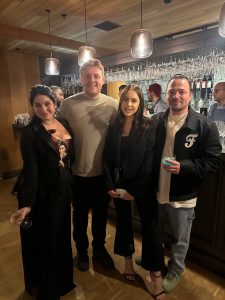
Важливо
HWYD: What are your wishes for the readers?
Mila: I wish to always hear myself, not external noise. And always go for your goal.
Never give up. Because if you really want something, you can't just give up. The inner desire to achieve something will always bring you back to the initial or intermediate point.
So you either do it the first time or the hundredth time. But you will do it. Giving up just doesn't make sense. That's all.