




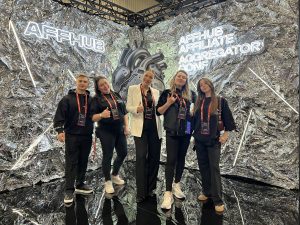
Sasha is just leaving on the Warsaw-Kyiv train, and I'm already texting her "How was it?" (when the phrase "How Was Your Day?" really works) - I didn't want to distract her during the event, then Sasha went to a ball, and now I can finally ask her.
We start chatting, and I read her lively, enthusiastic responses - clearly still on adrenaline after such a grand event. We exchange a few messages, and suddenly I realize that these answers are a great opportunity for a hot blitz report for HWYD, as they say, in a fresh way. I offer Sasha to take our correspondence to the media, get the green light, and here it is, our new material 🙂 voila.
Kostya Golubev, editor-in-chief of HWYD
"AFFHUB GLOBAL: new formats and European experience"
HWYD: Sasha, how did the conference go for you and AFFHUB in general?
Sasha: The conference was great, I would say enchanting. But there were still a lot of nuances, because this is a new GEO for us.
HWYD: Some people don't know that this is not the first AFFHUB GLOBAL conference in Europe. Tell us about your previous experience. Please compare them with each other. What are the main differences?
Sasha: The previous AFFHUB GLOBAL conference abroad was organized by the "old team". Now we have a new team, so it is very difficult to compare. We are testing new formats, discovering new GEOs and improving ourselves.
If we compare conferences in Europe and Ukraine, there are many differences:
- In Ukraine, it is easier because there are no such restrictions at the legislative level.
- We have our own contractors who have been tested over the years and will do a good job." - Also, the audience - we are used to it and already know what will work and what will not.
But Europe is still at a certain level of testing for us. We need to get to know people better and understand what formats they like best.
Preparation for the conference and new acquaintances
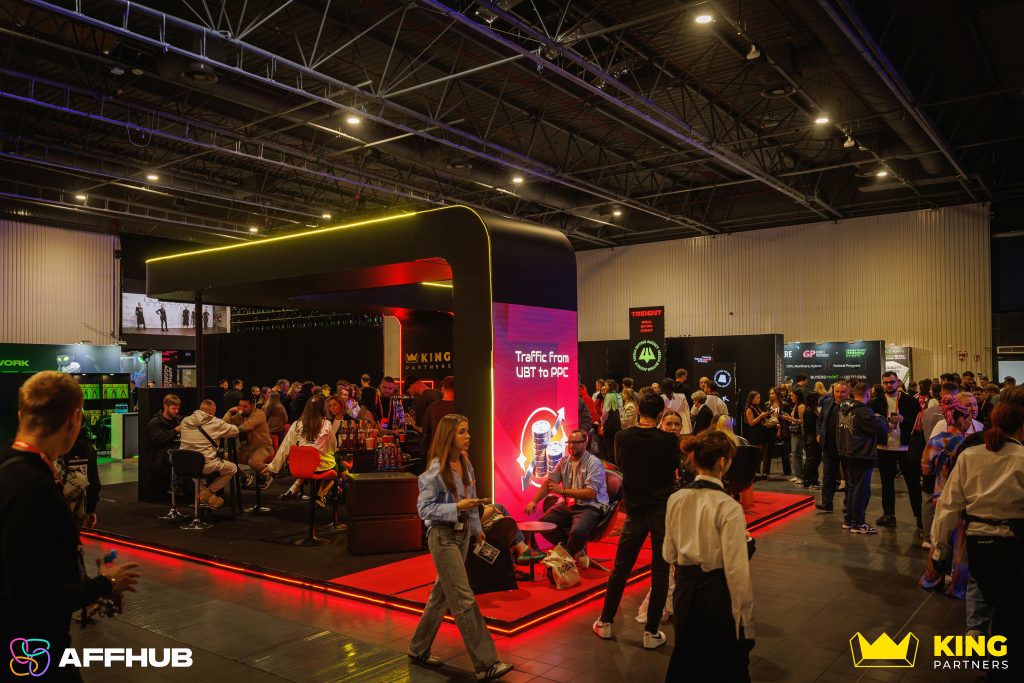
HWYD: How far in advance did you start preparing the conference? What were the biggest challenges you faced? How did you overcome them?
Sasha: We started preparing 3 months before the conf. There were difficulties with legislative issues. Polish legislation is tough on iGaming companies. In general, organizing an event abroad requires more time and effort to prepare. It is about finding a location, communicating with partners, and other organizational issues, etc.
HWYD: What was the format? How many visitors/speakers did you manage to gather at the mastermind and stands?
Sasha: About the format. As you all already know, AFFHUB always surprises, raises the bar, and comes up with a new concept for each event. In the modern world, an arbitrator is not just a person. This is a complex mechanism assembled from hundreds of interconnected parts: knowledge, skills, tools, and flexible strategies. He is constantly learning to integrate all of this inside himself: to be both an analyst and an artist, a strategist and an executive, a researcher and an engineer. It assembles itself bit by bit - from split tests, cases, failures, and triumphs - turning into a mechanism that knows exactly where to find traffic, how to convert it, and where to pour the next wave of the budget.
Affiliate-Aggregator Conf- is a space where arbitrators "upgrade their hardware": add new knowledge modules, improve their skills, and synchronize with others. Here everyone gets new parts for their internal mechanism: fresh insights, schemes, approaches and useful contacts. It's not just a conference - it's an upgrade lab!
A place where you - the mechanism of the future - get fuel for uninterrupted work and new victories in the world of arbitration. This time we managed to gather up to 1500 people. We had up to 40 stands and 33 top experts.
HWYD: How does organizing a conference in Ukraine differ from organizing one in Europe?
Sasha: The organization is fundamentally different. As I mentioned earlier, in Poland there are many difficulties with legislation and many other requirements. In Ukraine, it is easier to negotiate with contractors because we are on the ground and we know everything here. So to speak, it is native, so it is easier here.
HWYD: In your opinion, what was the most impressive for visitors?
Sasha: In general, visitors were pleased with the interactive zones and the appearance of the confab. A lot of people praised our stage (to be honest, I'm delighted with it myself). I received a lot of positive feedback about the new format of the conference for the burgeoning burj market - masterminds. People liked the fact that they could communicate directly with an expert and ask everything they were interested in.
HWYD: Did you manage to see any new faces among those you don't usually see in Ukraine? Are these new partnerships? New guests? New acquaintances? Who did you meet in person, who you knew only in absentia?
Sasha: Yes, I managed to meet a lot of new people. A lot of influencers. For example, I am very grateful to Inna Gagarin, Victoria Tikhacheva, Rostyslav Potapenko, Victoria Bakalova, Andriy Dosha and many others for finding time to visit us. I don't see them in Ukraine, so I was very happy to meet them.
Важливо
HWYD: What are AFFHUB's future global plans?
Sasha: We are planning to scale up, discover new GEOs, and conquer the world of arbitrage in the burgeoning market. We will definitely take into account all the suggestions after AFFHUB Affiliate Aggregator Conf and come back to you with something even more powerful! Stay tuned.

Важливо
South Korea is one of the most technologically advanced but also closed markets in the world. In such conditions, iGaming companies have to look for new formats to gain the trust of the audience.
Parimatch Affiliates is the official affiliate program of the international iGaming operator Parimatch. The brand is entering the Korean market in a big way: with global sponsorships of UFC Asia, Manchester United, and Leeds United, as well as a large-scale tournament Top Gea Korea.
Global brand strength
Not every operator can boast of such a background. Parimatch - is the official partner of UFC in Asia, Manchester United in different parts of Asia and the Middle East and North Africa region, and Leeds United - three icons of world sports.
For the Korean audience, this means:
- international level of trust;
- prestige;
- associations with global sporting events.
This background immediately increases the conversion rate and simplifies the work of webmasters: users do not need to explain who is behind the tournament for a long time.
Top Gear Korea tournament
Важливо
The tournament with the main slogan will run from August 3 to December 21:
Main prizes:
- Porsche 911
- Rolex Daytona
Tech prizes and cash:
- iPhone 16 Pro Max, Samsung Z Fold6, MacBook Pro M3, PlayStation 5
- $60,000 weekly for top 100 active players
The mechanics are simple: participants complete weekly quests (deposits, activity, winnings), receive tickets to the main lottery, and the more tickets they get, the closer they are to a Porsche.
Ideal conditions for arbitrators
For Parimatch Affiliates, this campaign opens up continuous opportunities:
- A wide mass market: Porsche, Rolex are status symbols that are perfect for the Korean target audience.
- Retention is built into the mechanics: quests, cashback, weekly bonuses.
- Anyone can win: it opens the door to massive traffic.
- Different channels of the bay: Push, TikTok, YouTube, messengers (Telegram, KakaoTalk) - each works in its own niche.
- A clear deadline: the user sees the final date and does not postpone participation.
Важливо
To participate, register at link.
English football as a bridge to Korea
Football is one of the most popular sports in South Korea. And while Manchester United has long been associated with global greatness, Leeds United adds another powerful channel of emotional connection with fans to the Parimatch brand.
For the Korean audience, it is:
- the history and traditions of the UPL, which is actively watched here;
- different fan bases: from the millions of Manchester United fans to the younger, more local audience of Leeds;
- associations with legendary Asian footballers (Park Chi-Sung at Man Utd, Son Heung-Min at Tottenham - and a bridge to modern Korean realities);
In this way, Parimatch emphasizes not only the global nature of the brand, but also its "humanity" - its closeness to fans and different football cultures.
Важливо
Conclusion.
Parimatch enters South Korea at the highest level:
- global sponsorship with UFC, Manchester United and Leeds United;
- a large-scale Top Gear Korea tournament with a Porsche 911;
- an ideal funnel for arbitrageurs;
- football emotion as a cultural bridge for the local audience.
This is a rare case that combines a strong brand, simple mechanics, and a long time perspective. And if you work with Korean traffic, you shouldn't miss this chance.
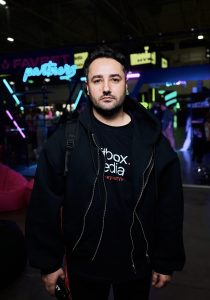
Arthur is a PR specialist in the field of arbitration, whom I met about 3 years ago. He immediately captivated me with his deep, sincere, wise eyes and friendly smile. I am glad that over the years Arthur hasn't changed - he hasn't wasted his unique qualities of friendliness and intelligence. The only things that change are his projects, in which he grows, which he leads to leadership positions and which he is passionate about. The last time we met was at Conversion Sport Games in Kyiv. I was leading a discussion panel in which Arthur participated. As usual, it was interesting and productive, and afterwards we had a few words, and I realized that the experience of the specialist who once led AFFHUB and now TRIANGLES to market leaders would be interesting not only to me but also to HWYD readers! So, here are the fruits of our agreement with Arthur - a biographical article in the tradition of HOW WAS YOUR DAY - from childhood to the present. Read it and find out how a guy from a village of 800 people became a political, ministerial and, eventually, an affiliate PR specialist.
editor-in-chief of HWYD
Childhood.
HWYD: Tell us about your childhood. What kind of family did you grow up in? When and where were you born?
Arthur: I was born in a small village in the Kherson region. It's called Lyubymivka. At the time of 2021, there were 880 residents there. Imagine me and only 800 people around me. AFFHUB conferences gather people like my two native villages. It was the most vibe place ever. You just go outside and there is only a field and a horizon around you. Unfortunately, now my home village is occupied by orcs.
And it's important to understand that it was the 1990s, a village. My mom was a nurse, my dad was a physical education teacher at the time. My grandmother was a school principal, and my grandfather was an engineer. But a good family did not save us from poverty in those years. Everyone was probably living on the edge back then. But I have only good memories of my childhood. I had enough of everything. Always broken knees, bicycles, friends, I was an excellent student at school. I was constantly surrounded by books. My mom and grandparents had entire libraries, and I was always reading something. Because where else in the village could I get information about the outside world?
And in general, I loved my native village very much. A place of strength. I used to go there all the time. I love the fields, the open space, the wide horizon and the tomatoes from the garden))) It's very cool there!
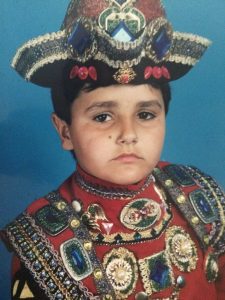
HWYD: Describe your most vivid childhood memory.
Arthur: Apparently, it was always about going to the nearest town. It was cool to go for a ride to Nova Kakhovka, Henichesk, etc. By the way, I also caught the Tavrian Games. It was a really cool festival. We also went there, but it was already in school years. And also, these are trips to the sea. Because I grew up 30 minutes from the sea. It's beautiful.
HWYD: What did you dream of becoming when you grew up? Why?
Arthur: I didn't dream of becoming anything. I just loved something less, something more. The only thing that was clear was that I was more interested in the humanities. And I wanted no math in my life.
Youth
HWYD: How did you study at school? What subjects did you like the most? Which ones the least? Why?
Arthur: In elementary school, I was a total honors student. Then, in the 6th or 7th grade, I accidentally skipped class and realized that the world didn't collapse after that. So I started doing it systematically. I was a total "C" student. Favorite subjects: Ukrainian and foreign literature + history of Ukraine. I didn't like world history. These Egyptians and Romans were boring.
HWYD: What clubs/sports did you attend?
Arthur: I did karate for a long time. I went to competitions, even got some medals. I went to basketball competitions. Then I started smoking and drinking Baltika 9.
HWYD: Describe your most vivid memory from school.
Arthur: Definitely a graduation. I finally got out of that shit. I don't understand why they keep people there for 11 long years!
Students
HWYD: What university did you graduate from? Why did you go there?
Arthur: I studied at Zaporizhzhia National University, majoring in Advertising and PR. My sister was studying there at the time. She said it was fun. And she was right. It really was fun. And I didn't care what I was going to study. The main thing was that I would never have to deal with math again in my life. In general, it was very cool at the university. Except for the fact that they keep people there for 5 years. It's absurdly long!
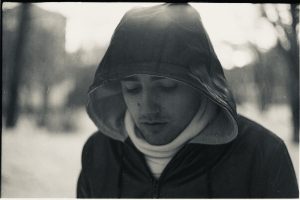
HWYD: What was your first job?
Arthur: It was a financial company. It was a great job. There were constant business trips. I traveled all over Donetsk and Luhansk regions, as well as other regional centers.
My first job was in my specialty. I worked in the marketing department. I was engaged in creatives, advertising, articles, etc. I was looking for a job after university only in my specialty. It was my 5th year of study. I realize that in a few months I will get my diploma, and what should I do next? I had no idea what to do, except become a PR specialist. I thought, well, since I will have a diploma, let me do PR. What does it matter what you do?
HWYD: How did you spend your first salary? What was it like?
Arthur: After graduation, I was earning decent money at the time. Something a little more than 1000$. I was absolutely satisfied with everything. I probably spent the money on an iPhone 5S, a trip to Georgia, and regular trips to Kyiv and Lviv.

HWYD: What did you do and where did you work later (until you got into arbitration)?
Arthur: Oh, a lot of things happened next. Especially when I moved to Kyiv. These were interactive TV services, IT companies, the Ministry of Health (after which I realized that I didn't want to have anything to do with the public sector anymore), political projects (this is the most interesting). I worked for a large media holding and one of the largest agricultural companies in Ukraine.
Arbitration area
HWYD: How did you find out about the industry? What was your impression of it?
Arthur: We used to work together in the same office with Vitaliy Sitovsky (CEO of Traffic Squad). It was from him that I first heard this phrase - traffic arbitrage. It was 2018. And I read a bit about Oleksandr Slobozhanko. At that time, there were a lot of publications about him in various media (not arbitrage). But I still didn't fully understand what it was.
HWYD: What position did you take in the industry? What kind of company was it?
Arthur: It was AFFHUB. There I was a project of AFFHUB Media for two years.
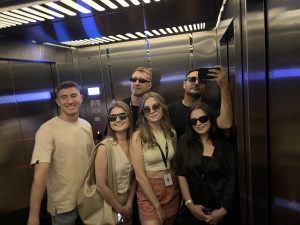
HWYD: How did you continue to move up the career ladder? In which project did you feel your own realization and competence? And why did you decide to leave AFFHUB?
Arthur: We started developing the AFFHUB Media project almost from scratch. We had a very strong desire to become the TOP-1 media on the market. With great content, partners, etc. Initially, we worked with Victoria Maslova (ex-Head of AFFHUB), invested a lot in media, and came up with different ways to become number 1. And we succeeded. AFFHUB Media was and is now the total market leader in all respects. And after that, under the leadership of Oleksandra (Head of AFFHUB), we consolidated the success and leadership of AFFHUB Media.
That is, I have reached the logical conclusion of my participation in the project. I did everything I wanted to do within the project. Then I called Oleksandra and said that it was time for me to move on. I am very grateful to AFFHUB for everything.
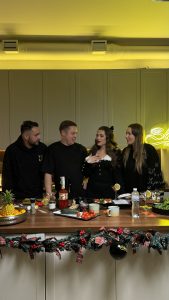
HWYD: How did TRIANGLES come to be? What is your involvement in this project?
Arthur: When I was still working at AFFHUB, I was introduced to Alexander Makedonsky, CEO of TRIANGLES. And after AFFHUB, we talked to Oleksandr and I moved to the position of PR director in the project. Now I'm in charge of all the marketing activities at TRIANGLES that we have, that you might have seen, or will see in the future.
HWYD: Who and how do you see yourself in the industry in the future?
Arthur: No matter who I am, no matter what I do, I am a PR person first and foremost. I love it. I like to discover projects, people, businesses, see the meaning in them, and broadcast it to the outside world. I may change my field of activity and work format someday, but I will still be a PR professional. It is not at all a fact that it will be an affiliate. Although I am in no hurry to say goodbye to this market. It is interesting here. It's diverse and there are a lot of cool people.
Важливо
Artur Borysenko's advice to newcomers who are just entering the field:
Arthur: Work and work again. Do more than you are asked to do. Love the project. Or at least be passionate about it. Study the business you work in on a micro level. That is, try to comprehend the entire logic of all processes. Go deeper. Do not be superficial. There should be a keen sense of competition, preferably even to the point of fanaticism. A desire to become number 1 in everything.
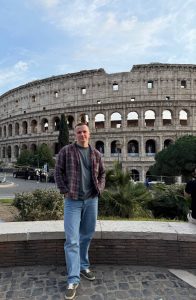
Founder - is always more than just a role. It's a state in which work and life are intertwined, blurring the lines between personal and professional. In the world of affiliates, where the rhythm is set by speed and competition, this challenge becomes even tougher: every morning you are greeted by dozens of decisions, team processes, and numbers that cannot be delayed.
Is it possible to maintain balance at this pace, to be present not only on calls but also in your own life? We talk about this frankly with Vadym Volochniuk, co-founder of Improve Team. His story has it all: an active childhood, a late start in entrepreneurship, an accidental entry into an affiliate program, the creation of a team that grew into a company, and a constant search for an answer to the main question: how to stay a funder 24/7 and not lose yourself at the same time?
Childhood and youth
HWYD: Where were you born and what were you like as a child?
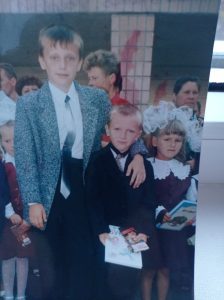
Vadim: I was born in the Rivne region in a small town. As a child, I was a very active boy: I took part in all the activities at school and held concerts. I also graduated from music school with a degree in accordion. In addition, he played for the local football team and participated in track and field tournaments. In general, he spent his childhood very active and not bored at all.
HWYD: What traits from those years help you the most as a funder today?
Vadim: Probably, my parents laid the foundation of perseverance in me. My mom and dad were constantly pushing me to realize my goals so that I would always achieve what I wanted. This helps me a lot today.
HWYD: What episode from your youth best describes your perseverance or risk-taking?
Vadim: Speaking of risky, it was running away from home after my parents went to bed. The goal was simple - to go out with my friends, even if tomorrow was the 11th grade exam, and my parents wouldn't let me go) It all ended in a happy ending: I passed the exams.
First contact with business
HWYD: How did your entrepreneurship start: first attempts, first failures?
Vadim: In fact, I started my journey in entrepreneurship quite late. I don't have this story that I've been selling lemonade since I was a kid - no. The first serious touch of entrepreneurship was the Improve Team. I can't call everything before that a business. It was just a job for which I received money. But I had been preparing for it for a long time, and that's why I think that being prepared, I succeeded.
HWYD: What skills did you develop before becoming an affiliate and how do they help you now?
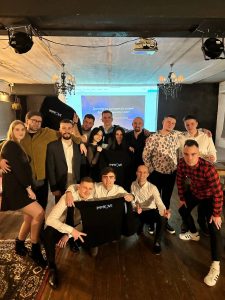
Vadim: I have always been a pretty hardworking person. Before the affiliate niche, I worked at various jobs, tried myself in many areas, including those where I had to work for 12-13 hours sitting in one place with a short break for lunch. I think that the ability to work non-stop today helps me to solve many routine tasks every day and not get tired.
HWYD: When did you realize that you wanted to build not just a career as an employee, but your own business?
Vadim: Several stars aligned in one place. I felt that I was being restricted in my desire to earn more and not allowed to develop. At the same time, I realized that I had grown out of the position of "employee".
And then I met the right person, and the match was made. In fact, it was very important not to fade away then. Meeting Nikita helped me realize that it was time to take a chance.
Login to affiliate
HWYD: How did you first get into affiliate marketing?
Vadim: My first job in the niche was an interesting position - a traffic coach. I joined RichAdvert when I was very young and green. I was trained in soft skills, given a sufficient number of manuals, and I started working.
I learned about traffic arbitrage and affiliate marketing by accident while watching random business videos on YouTube. I think it was also a bit of a fluke that I latched onto.

HWYD: Who was your mentor/support at the start?
Vadim: I was very warmly received at my first job. We had a good team and managers who saw me as a prospect. I was pleased that they believed in me. Before that, I also worked overtime: I was regularly the first to arrive at the office and the last to leave.
HWYD: What early case convinced you: "I'm in this game for the long haul"?
Vadim: Perhaps the first serious money in the form of a salary - UAH 50,000. I remember that day clearly: I received my salary in cash in an envelope, called my mother and shared it with her. It was a wow moment for me and my family.
Then I realized that I wanted to develop in our niche.
Improve Team: foundation and roles
HWYD: How did you come up with the idea of Improve Team and what problem did you want to solve in the market?
Vadim: When we created Improve, we didn't set out to solve a problem. It was just a common desire to make money. It was important that Nikita and I agreed on the vision and soft skills, which played a key role.
HWYD: Why did you choose these verticals (gambling, betting, crypto, mobile apps)?
Vadim: When we started, I had experience in gambling and betting, and Nikita had never launched traffic. Therefore, historically, we started with what we knew how to do. 6 years ago, we didn't analyze the market volumes or prospects - we just went into gambling because we knew how to do it.
HWYD: How did you divide your roles with the co-founders and what did you keep for yourself?
Vadim: Roles were formed gradually. I dealt with everything related to traffic and direct revenue generation. Nikita took over hiring and finance.
We didn't clearly agree on who was doing what. Everyone just did what they were good at. Over time, the roles have changed, and today we at 100% share all the tasks and can easily replace each other.
HWYD: What early decision had the biggest impact on long-term growth?
Vadim: The biggest impact was not the ups and downs, but the downfall that occurred just a year after the start.
Then we completely reassembled the team and our business vision. This is another confirmation that anti-cases often give more impetus and desire to work than just positive results.
HWYD: When did you feel the moment of transition from a "team of buyers" to a "full-fledged company"?
Vadim: This happened when the staff grew to 30 people. If you have positions such as people partner, technical project manager, marketer, or head of finance, it already speaks volumes about the company, because you are moving from "mandatory positions" to "additional positions."
Also, a company is about the legacy part: when you officially employ people, buy insurance, pay for vacations, and have a legal entity.
This is the moment when you realize that you are no longer "just a team".
24/7 founder: how it really feels
HWYD: What does a typical day look like for you, from the first step to the last message?
Vadim: Today, my typical working day consists of analyzing yesterday's analytics and reviewing reports from team leads and heads. This is followed by meetings or interviews, and then a typical 1-2 hours in work chats.
But to be honest, this is what a perfect workday looks like. Sometimes the timing shifts, and Nikita and I can find ourselves on a call at 8 p.m. to discuss a new direction simply because that's when the "inspiration" came.
HWYD: What is your personal decision-making system: what goes into "do now", what goes into "delegate", what goes into "don't do"?
Vadim: Delegating everything that is delegated is the basic rule. Maximum trust and maximum delegated responsibilities are the basis for growth.
Personally, I identify the tasks that affect my day, my company, or those who expect me to make decisions right now, and I do them in the morning before 11:00. Everything else comes later.
HWYD: Do you know how to rest without feeling guilty for being "unclosed"? How did you train this?
Vadim: Yes, I can do it now. I trained it just a year ago. It's important to understand that work is a part of life, not all of life. You need to have time to rest, switch gears, and pay attention to yourself and your family.
To avoid worrying about the "unclosed", I have been keeping a calendar for many years. Every Sunday I plan the week and see on which day which task must be closed. This way I keep the whole plan in front of me and move according to it.
HWYD: Was there a moment when you realized: "I'm too much into work"? What did you change after that?
Vadim: Yes, there have been such moments and sometimes they appear even now. On such days, I try to review the schedule and tasks for the week again, highlight the main ones, close them quickly, and thus unload myself.
HWYD: How do your family and friends react to the 24/7 rhythm? What helps you stay in touch?
Vadim: My friends react well because they see my results). I plan meetings and rallies with them in advance, so we always have time to spend together.
Balance and "life outside work"
HWYD: What exactly do you call "life outside of work" in your case?
Vadim: This is all that happens when you close your work chats. It's time with your wife and son, watching a video, reading a book, traveling, talking to your mom on the phone, etc. The most important thing is to really switch and get distracted. Because if you think about work even while walking with your son, it doesn't add to your efficiency or productivity.
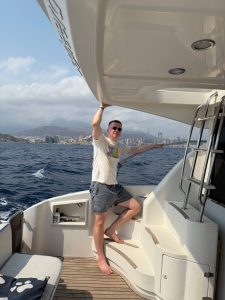
HWYD: What practices/hobbies really restore you?
Vadim: Traveling, the gym, watching football. But all this is inferior to my main hobby - time with my family. My wife and son always bring me back to 100%.
HWYD: Have you ever experienced burnout? What helps to fight it?
Vadim: There was no burnout. There were moments when it was difficult and I didn't want to make decisions and take responsibility for everything again. But this quickly passed when I remembered that people were behind me and waiting for the right decisions.
HWYD: Can you turn off your phone for a day and leave everything to the team?
Vadim: Yes, I can. But it is preferable that Nikita does not turn off the phone at this moment. In general, we have a well-built vertical structure in the team, and there are people who are responsible in all areas. Nikita and I can disappear for a day, but I don't think we can do it for a week.
HWYD: You recently had a baby. How has parenthood affected your work-life balance?
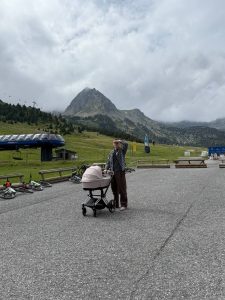
Vadim: Very much so. For the first few months, the focus definitely shifted to family and education. However, I have now found the right balance, negotiated with myself and learned how to build a schedule. But, of course, sometimes it's hard to explain to a five-month-old son that his dad has an important meeting.
Team, processes and trust
HWYD: What processes/metrics allow you to sleep better instead of micromanaging?
Vadim: Reports, CRM, PNL. The heads of all departments submit reports with figures every day by 11:00. In CRM, I can evaluate the result for yesterday, and in PNL I can see the financial result for the day. These three main pillars ensure my restful sleep.
HWYD: In what situations does the team help you maintain a work-life balance?
Vadim: A strong team means people who know how to take responsibility. Once you have enough of them, you automatically have more time for everything else. Including work-life balance.
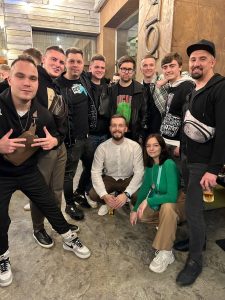
HWYD: When did you first feel that you could fully rely on the team?
Vadim: As soon as there are enough people who are ready to take responsibility, you can immediately feel the changes in your role as a funder.
Publicity and personal brand of the founder
HWYD: Why does a funder need publicity? Is it for recruiting, trust, networking, or all of the above?
Vadim: The main task is the company's HR brand. It helps to hire the best employees faster. They come not only for the salary, but also for the ideas that the funder broadcasts.
The second party is advertisers. It is important for them to understand who you are, how long you have been on the market, and what face is behind the name and another chat on Telegram.
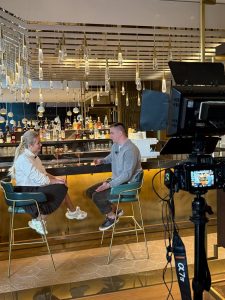
HWYD: Where are your boundaries of publicity: what do you show and what do you keep private?
Vadim: I'm not a very public person in general and I manage my social media quite conceptually. I don't share much about my personal life because I don't understand how it directly affects the results and the HR brand. But in business, speeches, meetings, I try to be active
Looking ahead and tips
HWYD: How do you see yourself and Improve Team in 3-5 years?
Vadim: Life outside of work should definitely take center stage in this picture. I am sure that my involvement in the company will become less. But this does not mean that I will not be involved in other businesses or areas. In general, this is already happening.
HWYD: Three things you would have done differently at the start to avoid going into 24/7 mode so deeply.
Vadim:
- Delegate and trust before.
- Not to think that I can do everything better than everyone else.
- Don't believe that if you don't close the task today, the company won't exist tomorrow.
HWYD: What advice do you have for new founders?
Vadim: Be prepared to work 24/7 at the start and understand each process in detail. It doesn't matter if it's recruiting, finance, or another department - you need to be oriented and know the main points everywhere. At every stage of our company's development, I was convinced that we needed to understand and periodically check every detail. I'm not saying to be a multi-tool player and be able to hire people, set up postbacks, and create a PNL from scratch.
But you need to know exactly how to do it theoretically and in which table to check the indicators. This will keep the team in good shape and avoid losses in the future.
Важливо
Editor's summary:
The phrase "24/7 funder" is not just about working seven days a week. It's about responsibility that never disappears, about making choices every day, and about being ready to keep up the pace even when there are no ready-made answers around.
Vadym's story proves that the real challenge is not to work harder than others, but to learn how to remain human when work takes up 90% of your life. Finding space for your family, for a pause, for yourself - and not losing the drive that once brought you into business in the process.
This interview is a reminder for the entire industry: the size of the company, profits, or high-profile roles do not determine a person's value. It is determined by how they build relationships, how they keep their word, and how they combine ambition with inner integrity.
Founder - is not a soulless decision-making machine. It is a human being who makes mistakes, takes risks, recovers, and leads the team forward again. And perhaps it is in recognizing this human dimension that the true power of business is born.
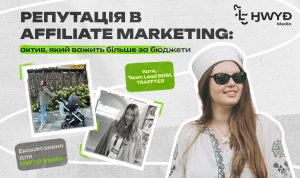
The affiliate market is always associated with numbers, quick results, and competition. Budgets here can skyrocket at a moment's notice, but this is not always enough to stay in the game for a long time.
There is another currency - reputation. It is not as visible and cannot be measured in analytics, but it determines whether a partner will trust you, whether the team will want to follow you further, and whether doors to new opportunities will open.
We talked about the value of this asset with Kateryna Savchenkova, BDM Team Lead at TraffTer. Her story is about people, about trust, and about choosing to play the long game, even when there is a race for quick results.
Childhood and youth
HWYD: Tell us a little bit about your childhood: where were you born, what kind of child were you, what kind of family did you grow up in?
Kateryna: I was born and raised in the best place on the planet, Solomianka in Kyiv. As a child, I was active and talkative, just like my whole family. We lived like a Mexican soap opera.
HWYD: Were there any character traits that have remained with you in your professional life today?
Kateryna: I have three brothers, so the minimum task in my childhood was to survive. And that meant being brazen, agile, and able to defend my own interests.
My parents did not praise me, so I was constantly trying to prove that I was good and worthy of praise. I needed almost all of this in the affiliate sphere to get results.
HWYD: Do you remember any dreams or plans from your youth that influenced your career choice?
Kateryna: I dreamed of driving a hearse) But, fortunately, it didn't affect me!
HWYD: Who or what shaped you the most in those years: family, school, hobbies?
Kateryna: I was an active child, always in search of myself and hobbies. The only constant thing was my family - it was they who guided me and set the example (how to do things and how not to do them).
HWYD: Looking back, would little Katya have seen herself in affiliate marketing?
Kateryna: I dreamed of driving a hearse, watching Winx, and collecting cat magazines. What kind of affiliate marketing?
But in high school, I was already interested in international relations and marketing.
Career start and experience
HWYD: How did you get into the affiliate sphere and why did you choose this particular direction?
Kateryna: When I was 19, I had an Instagram lingerie store. At that time, I was already studying targeting and Facebook to develop it.
Later, thanks to these skills and through acquaintances, I got into bingo and got acquainted with gambling (although at first I was very much against this niche).
HWYD: What was your path to the position of Team Lead Business Development Manager at TraffTer?
Kateryna: Long, thorny and with a pause for maternity leave.
But it was after that that my biggest professional boost took place. I joined a great big team, where I gained tremendous experience in all areas.
HWYD: What does business development mean to you personally - is it more about strategy, people, or numbers?
Kateryna: You can have clear goals and strategies, but you can't realize them without people.
For me, it is definitely about people who have ambitions and common goals. I've seen businesses stagnate because of people, and vice versa - with the right people, they grow rapidly. But this should also include a strategy and a vision for the development of each employee.
Reputation as the main asset
HWYD: Affiliate is often associated with fast money and aggressive competition. How does a long-term reputation become a bigger trump card than any budget in this dynamic?
Kateryna: The quieter you go, the further you will go.
I see teams shouting loudly about themselves, allocating huge budgets for marketing, and then quietly fading away because something was still missing.
I always talk about people and relationships with them. If you are not ready to compromise and negotiate, aggression will help only once - the first and last time.
HWYD: How would you define reputation for a company and an individual in the affiliate market?
Kateryna: Reputation for a company is the perception of its reliability, honesty, and professionalism by partners, buyers, and the media. In fact, it is the currency of trust, which directly affects the willingness of others to work with it.
For a person, reputation is the level of trust and credibility that he or she has gained through experience, knowledge, and ethics. It is personal capital that opens the door to profitable offers, partnerships and opportunities.
HWYD: Can reputation be measured? For example, in reviews, recommendations, repeat business?
Kateryna: Our sphere is not that big. Although the number of people is growing, everyone still knows each other. All the fakaps, gossip, and news quickly become known.
I don't know if it is possible to measure this with a clear criterion, but in aggregate, all of this forms an assessment of a person or company.
HWYD: Were there moments when a good reputation helped open doors where others could not?
Kateryna: Without undue modesty, I will say: constantly)
Challenges and value of trust
HWYD: Reputation takes years to build, and it can be lost in a minute. Have you personally observed such cases?
Kateryna: Yes, of course. I can't say that there are many of them on the market, but there are definitely a few.
HWYD: What mistakes do companies or professionals make most often that damage their reputation?
Kateryna: I can't say for sure, but I assume it's incompetence and overconfidence.
HWYD: Have you personally had a case when you had to "save" relations with partners or restore trust? How did it happen?
Kateryna: I don't remember. Maybe it was a long time ago.
I am usually honest with my partners and engage in a dialog if there are any disputable issues.
Human factor and personal brand
HWYD: You are in charge of business development. How much does a manager's personal brand affect the company's reputation?
Kateryna: I think it depends on what kind of person you are. In the words of Diogenes: "How many people there are, and how few men among them."
Expertise is important. But I know a lot of strong or media managers with whom it is uncomfortable to work. There has to be a balance.
HWYD: How do you manage to strike a balance: to remain professional and at the same time not to lose your true self in communication with partners?
Kateryna: Sometimes I'm super critical of myself for not being able to keep it up. But my partners, friends, and my team always support me.
HWYD: What do you think is the strength of female leadership in the affiliate market?
Kateryna: Initially, the female part of the affiliate community was perceived as a decoration that no one took seriously.
And then - bam! - there was a break in the patterns: women began to show how to work effectively, achieve results, and build from scratch.
We successfully combine emotional intelligence with business goals, creating trust and stable partnerships. But, of course, not all of us)

HWYD: What values do you try to convey in your work and in your team?
Kateryna: Honesty. Trust. Communication.
Perspectives and tips
HWYD: How is the perception of reputation changing in the industry? Is it becoming a more expensive "currency" than a few years ago?
Kateryna: There are more and more scams, so yes, it is becoming more difficult to have trust and reputation.
HWYD: What would you advise to newcomers who are just starting to build their way in affiliate marketing and want to lay a solid foundation of reputation
Kateryna: Don't start) There are already a lot of people.
HWYD: If you have to choose between immediate profit and long-term credibility, what would you recommend and why?
Kateryna: This is a very controversial issue. It all depends on the specific case.
I would advise you to decide whether this trust is worth it.
The final is personal
HWYD: What does it mean for you personally to have a "good name" in the market?
Kateryna: Not to make cringe, to choose where and with whom to work.
HWYD: If you imagine that in 10 years your colleagues will describe Kateryna Savchenkova in one word, what would you like that word to be?
Kateryna: "Kitty."
HWYD: And the traditional HWYD question: what would you like to say to your partners and colleagues right now, here and through us?
Kateryna: Don't be a poop, have a good time and live an interesting life!
Важливо
Editor's summary
Talking to Katia is a reminder that there is always a person behind any deadlines and metrics. A person who has gone through doubts, stereotypes, internal struggles, and learned to keep a balance between professional and personal.
Its story is not about formulas for success, but about simple principles: honesty, communication, willingness to defend your boundaries and support others. These are the principles that create the reputation that cannot be bought or measured in reports.
And perhaps the most important thing in this interview is the feeling that a "good name" is formed not by loud words, but by small steps every day!

I hadn't met Anastasia personally, but I've long wondered who the mysterious person is who selects the most influential women in the industry's most charming looks. These ladies definitely don't have a lot of time, and their bright and beautiful minds are obviously busy with a bunch of other strategic processes, so presumably the process of selecting outfits is delegated to a specialist. But who do girls trust with their beauty and effectiveness? Our editors conducted a little journalistic research and found out who is behind the WOW effect...
HWYD editor-in-chief Kostya Golubev.
Personality.
HWYD: Tell us about your childhood: where, in what family were you born?
Nastya: I was born in Kyiv into a family of doctors, thanks to whom I have a strange sense of humor and am not afraid of blood))
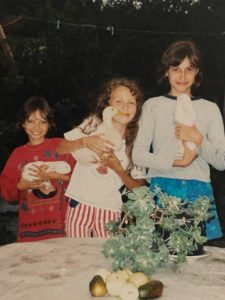
HWYD: What were the first manifestations of your desire for style in clothes and images from your childhood (maybe dressing up dolls or something? - describe this memory)
Nastya: I always say that deficit is the father of creativity. I grew up in the 90s, and in order for me to look stylish, my mother would look for friends who brought clothes from Poland or look for them in second-hand stores. I am very grateful to her for that. ❤️
HWYD: What did you dream of becoming and why? Did you consider becoming a stylist back then and why?
Nastya: When I was little, I dreamed of becoming a meat seller 😂 We didn't eat meat every day and it was considered a festive dish. That's why saleswomen in puffy oilcloth sleeves and gold rings on each finger seemed to me to be the rulers of the world. My love for fashion came later, when I had already eaten enough meat))
Youth
HWYD: How did you gain your professional experience? Perhaps you studied somewhere or absorbed images from glossy magazines or TV?
Nastya: I have always been interested in fashion because it was a world of beautiful clothes, graceful shapes, and as soon as I learned to draw, I drew clothes for some reason, and all my family was sure that I would become a fashion designer. Maybe someday I'll live up to their expectations (spoiler alert - no).
HWYD: How did you approach your own style? How did you experiment? With what exactly? How did you choose your outfits and looks and what did you decide on?
Nastya: I thank my family for their unquestioning acceptance of my stylistic expression; I was literally allowed to wear whatever I wanted and was not corrected in any way, for which I often received flak from the school administration and sometimes from classmates who did not have such freedom. I remember when we were allowed to wear business suits and were told that the color didn't matter (before that, we were required to wear dark green jackets). I came to the first of September in a bright pink pantsuit with white stripes. You should have seen the surprise of my class teacher when she heard that this was not only a costume for the holiday, but my school uniform from now on))
Professional activity
HWYD: Describe your first professional commission: what kind of image was it? Who were you doing it for? How nervous were you? Would you change anything about it now?
Nastya: I received my first order while studying to become a stylist, it was a wardrobe revision and shopping, I warned the girl that I was still studying, but I was incredibly excited.
HWYD: Where and how I spent my first earnings
Nastya: Frankly, I don't remember now.
HWYD: How did you gain popularity? How did you become a sought-after master?
Nastya: I have not gained any and do not have such a goal at all, I strive to be professional, I am constantly working on it. Perhaps, as my skills grow, my recognition will somehow grow organically, and I take it as a nice bonus))
HWYD: How did you get into traffic arbitration?
Nastya: It so happened that my best friend, Olga Sapogova, has been working in this field for more than 10 years, and gradually her friends began to approach me. For which I am very grateful to them all ❤️
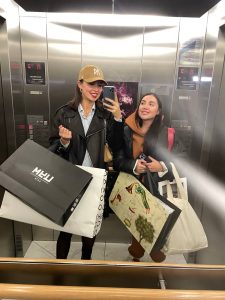
HWYD: Who among the famous personalities in our field have you made insults to?
Nastya: Unfortunately, I can very rarely show or tell about the people I work with, except for those who mention me in publications. But I can say that I worked with girls from the following teams: Dephouse, G Partners, AFFHUB, Traffic Devils, Moon partners. It seems to be obvious which vertical I like to work with 😂.
HWYD: How do you find working with girls in affiliate marketing? Are there any peculiarities and subtleties in the work that distinguish girls from the industry from other girls?
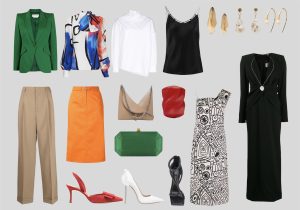
Nastya: The peculiarities lie in the position the client holds. Because the style of an affiliate manager, CEO, or media buyer is significantly different, as job responsibilities and lifestyle have a significant impact on the wardrobe. The most prominent feature of all "arbitration" wardrobes is high stylistic flexibility. Simply put, a wardrobe should be able to quickly transform from casual to evening wear and be appropriate for a conference and an afterparty in a few hours.
HWYD: What are some of the most embarrassing moments you can tell us? For example, putting it together in the car on the way to a gala event in 20 minutes, or picking it up from your own things in the wardrobe, or running to buy something at the nearest store, etc.
Nastya: About two years ago, I received a request for a look for a theme party in Ibiza. I had to come up with the image, create it and send it in 3 hours, as it was the only way to deliver it to Spain as soon as possible. The fashion designer sent the dress from the workshop, which is located far from Kyiv, by some minibus, then I met the dress at the train station, handed it to the driver, who took it to Odesa, and the next day - to Moldova, and finally to Spain. In short, that dress had a very busy schedule and itinerary)) Most often, requests: "for yesterday" are for some themed parties or holidays like Halloween. And I love such tasks, because the less time you have to complete the task, the higher the price 😈
HWYD: How much do your services cost now? What do you base your price on?
Nastya: Currently, a wardrobe revision costs 300$, shopping - 200$, for those who are not yet financially ready, I have a consultation that costs only 100$. I have a very affordable price for a specialist of my level and experience. The price is formed according to experience and various forms of advanced training. That is, if I invest 1500$ in my training and professional growth, my time is already worth more, because I can already give more to my client than before training.
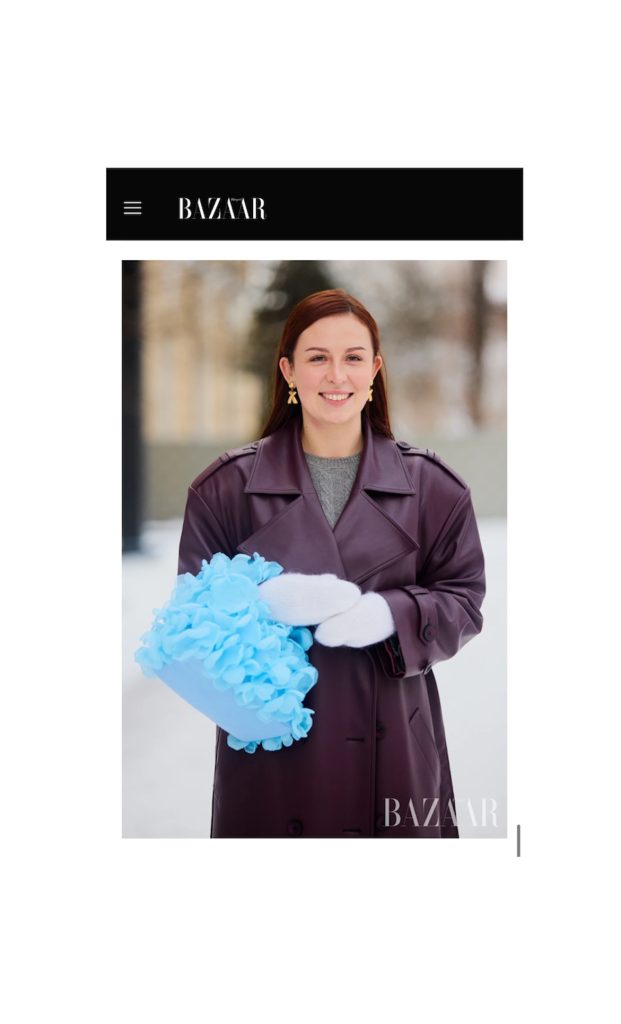
HWYD: How competitive is your specialty in our niche? Are there any of your colleagues whose work you don't like and why?
Nastya: I always say that I have no competitors - only colleagues. Some are more experienced than me, some are less, some are on the same level as me, but have a different "handwriting" and, accordingly, clients who like this "handwriting". And some people only like the way I work. And I usually reciprocate. ❤️
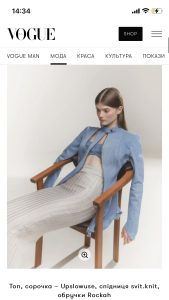
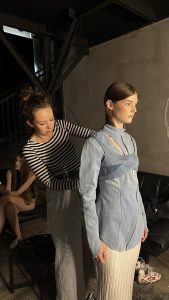
HWYD: Have men ever approached you? With what kind of request?
Nastya: To a greater extent, I still work with women, but lately men are increasingly delegating their wardrobe to a stylist because it is very rational in terms of financial literacy and time management. And men are prone to a rational approach and optimization of all processes. In this regard, it is very easy to work with them, and they usually trust more)
HWYD: How would you generally comment on the average images of the so-called arbitrators, summarized in the "expensive-rich" category - balenciaga sneakers, Louis or Gucci T-shirt with a print across the chest, stone island jackets and off-white hoodies?
Nastya: I can only say that, according to my observations, the higher the position of a specialist, the less prone to logomania he is)) But I do not condemn such manifestations, everything has its time and age, the "Philip Plain" phase must also be passed))
HWYD: What advice would you give to guys and girls in the industry who don't yet have the opportunity or need to hire a personal stylist?
Nastya: There's a good joke about this: "Advice is free, consultation is for money. My advice to you is to go for a consultation." Seriously, mindlessly buying clothes is much more expensive than going to a stylist and rationally allocating the most modest budget. To do this, I added the "consultation" service, after which you can put together a cool wardrobe even at a second-hand store.
HWYD: And for those who have such a need and opportunity, how do you choose a stylist to walk proudly on the red carpet of nominations?
Nastya:
There are a few points that need to be addressed:
- Education. Because a stylishly dressed person or a person whose style you admire will not be able to express you properly through your clothes if they do not have the appropriate knowledge.
- Look through the works, it's cool when a stylist has his own "chips", the main thing is that he does not dress everyone "like a copy", or the same as himself. A professional stylist should be flexible and work on your request, not implement their own vision.
- If you hear from a stylist: "How to look expensive/cheap", "How not to look like a collective farm" - run away as soon as possible, a stylist who operates in such categories is unlikely to have a positive impact on your style. The main thing in cooperation with a stylist is trust, if for some reason the specialist does not inspire it in you, look further ❤️
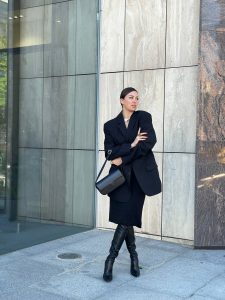
Важливо
We thank Anastasia for her trust in How Was Your Day Media and wish her bright tasks and challenges! And dear readers, we advise you to contact Nastia for professional advice or image selection whenever you need it - you will definitely get the desired effect. Be stylish and feel the beauty in you. Remember, the most important beauty is inside, but with the right stylist, you can emphasize it elegantly.
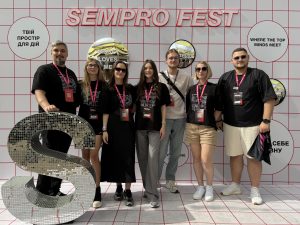
Valentyn and I were introduced by Maria-Victoria at Sempro in Kyiv. He immediately struck me as a deep and sincere person at the same time - he made very subtle jokes and spoke so expertly about work, but not in clichéd phrases, but by sharing his own experience, and such a diverse one that it would be a crime not to share it in How Was Your Day.
If there were no etiquette, I would most likely interview Valentyn with my jaw open - there was so much in his life: dubious companies, the harsh 90s, and communication with which could have had a sad ending, and her majesty Fate, who gave him the person who helped him turn off the fragile path... And then - working as a security guard, a loader, and, in contrast, his own steps in affiliate marketing in solo, bringing 700$/day, which disappeared at the moment
And finally, the founding of MAKEBERRY AFFILIATES... I definitely recommend this interview for reading! There is a lot to learn here.
Childhood.
HWYD: Tell us about your childhood: where, in what family were you born?
Valentin: I was born in Konotop into an ordinary family. My mother is a nurse, and we had our own house there - even half of it - we shared it with a pensioner. At some point, she forgot to turn off the gas, and our house exploded. After this event, my mother went to the mayor for six months, trying to get us compensation in the form of an apartment, and eventually she succeeded - we were given an apartment, which, in fact, is where I lived before moving to Kyiv.
My mother divorced my father, and he later sued us for half of this apartment, barricaded it and locked the door. All this time, we did not communicate with him until I bought the apartment.
I had a stepfather. He worked as a driver all his life until he died. Now my mom lives in Ireland - she left the shelling after a year of war. Now she's almost married there, she's adjusted, she's doing well - she's finally traveling and seeing different European countries step by step.

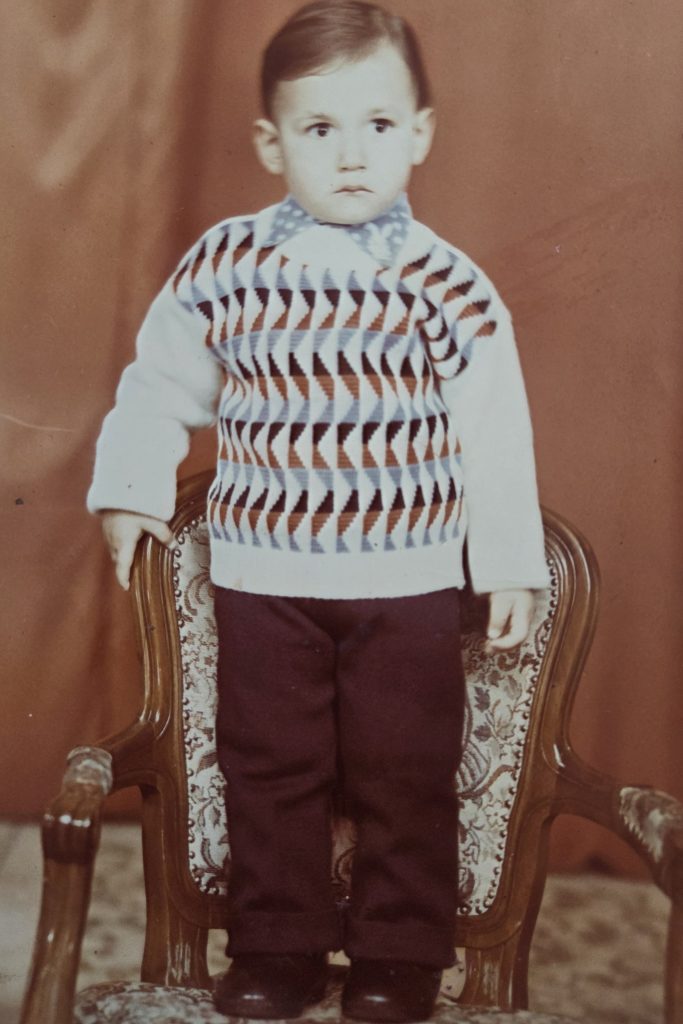
HWYD: Describe your most vivid childhood memory
Valentin: If I think back to the earliest memories, perhaps my first memory is of Muscovy, the circus, bears riding a unicycle, and me in a scratchy sweater. And this memory is the most vivid because when I returned home later, I burned that sweater - you can imagine how much I hated it 🙂.
Youth
HWYD: Tell us about your youthful days. How did you spend your time in Konotop in the 90s?
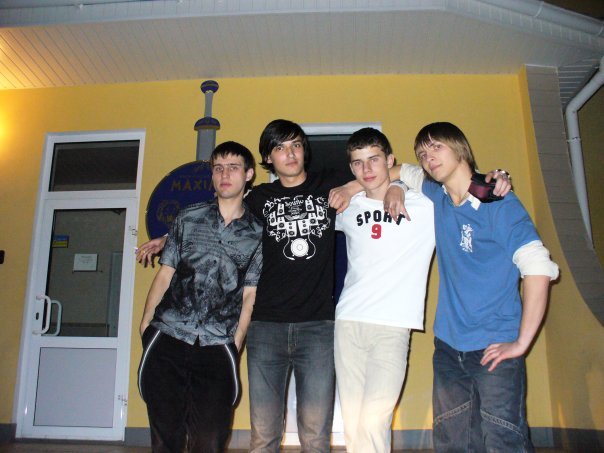
Valentin: In the 90s, we had what we called a "brawler city. I grew up in dubious companies, mostly hanging out with wrestlers. It was my cover from the gypsies and from representatives of other neighborhoods, with whom I was constantly going to the mahacha. I can say right away that I am a completely different person now.
Much of the credit for my choosing the right path, and not ending up somewhere in "remote places" with rings on my fingers, goes to my now godfather, and then just a friend. I was 14, he was 16 - he was a nice, well-traveled guy with tattoos at the time, and I had a choice: either endless fights and arguments with the company, or hang out with my cousin in the company of girls, talk about something other than "neighborhood to neighborhood" topics and have fun, not aggressive. Of course, I chose the second option.
HWYD: And what about your studies - did you manage to attend school in such conditions?
Valentin: I did not study regularly, but I managed.) I studied on average, and I adhered to the position that I communicate normally with everyone, both outsiders and school coolies. This allowed me to feel comfortable at school, which also had its own laws among children of that time. But, let me remind you, I still had friends who were wrestlers, so I wasn't picked on 🙂.
In terms of subjects, I was good at everything except law, history and math. I didn't turn out to be a great mathematician, but my teacher saw potential in me, and I tried. I finished school with C's and went to college.
Students
HWYD: Tell us about your admission to the institute.
Valentin: I came to apply to KI Sumy State University (Konotop Institute of Sumy State University). I looked next to the guy who was filling out the application forms and saw that it said "Electronic Devices and Instruments". Okay, I'll have that too 🙂 And then, in fact, it turned out that there were 4 mathematicians, 2 physicists... And I realized that I was definitely in the wrong place, so a year later I left this direction and changed it to "Management of Organizations".
This story suited me better - to be honest, I didn't study anything, I didn't bring money to anyone, I could pass everything with logical thinking (well, except philosophy, ethics - everything that required terminology, of course) - I just described what processes should take place, what needed to be done, and, in principle, I passed my exams.
HWYD: Did you combine your studies with work?
Valentin: After the first year of studying, I found a job in Kyiv, so I quit full-time and came to the institute only to pass the exams. At first, I worked as a security guard on a two-in-two-out basis at construction sites. But I didn't stay in that job for long, because the 2/2 schedule simply doesn't give you a chance for a personal life - you get enough sleep the day after your shift, get ready for your next shift the next day, and I lived in Konotop and had to allow time to get to Kyiv and back by train.
Then there was the store - a sales assistant, and then there was setting up office equipment, installing Windows, flashing, changing the matrix, etc.
A little later, I opened my own service with an acquaintance. Everything was fine until my partner decided that it was his service and I was his subordinate. It's an "interesting" story, but the site was on my hosting, so I took it back. Most of the orders came from the site, and I consider this moment to be the first step of a kind of affiliate marketing. I had an acquaintance with his own service, and I gave him the leads that came to me from his own service via RevShare. This way, I earned several thousand hryvnias a month just on a liability. But back then, I didn't know what affiliate management was.
HWYD: Do you remember where you spent your first paycheck and what emotions you felt at the time?
Valentin: If I take the first one directly, it was actually when I was 13 years old. I got a job at a wholesale building materials base unloading trucks, where I worked for a week. I spent it on some kind of party, I don't even remember exactly what it was.
Career in arbitration
HWYD: How did you first learn about affiliate marketing and realize that this is the area you want to develop and build a career in?
Valentin: After Kyiv, I decided to temporarily move back home - let's just say I went through a black patch in my life that lasted almost a year. I broke up with my girlfriend, my business went under, my stepfather died of cancer, and I was completely overwhelmed. I came to Konotop, studied Manual QA to distract myself from my thoughts, and went to the gym to gain weight - I treated not only my soul but also my body. It paid off - in a year, my mental state recovered, so I returned to the capital and got a job as a PPC specialist at Svitsoft, where I was engaged in advertising in various areas. I gained previous experience on my own - I had an online sportswear store, and my partner at the time worked as an Inbound Calls specialist - receiving calls, communicating with customers, and handling logistics. So I knew how the mechanisms of working with PPC work and had practical experience.
HWYD: What was your first position and what were your responsibilities?
Valentin: I was engaged in Kyivmiskbud, in all the areas that were available, including the sale of parking lots, commercial premises, and, in fact, apartments. This gave me an understanding that there was a lot of money in marketing, because a lot of money was going through this Google Ads account, I was managing it myself, doing something unique every month, and I realized that I was starting to do a lot of work, but the company could no longer pay me for it. By the way, it was at this job that I met my future wife.
MAKEBERRY AFFILIATES
HWYD: How did you end up at MAKEBERRY AFFILIATES?
Valentin: When I decided to enter a stable story, I first went to buy into the Offer Leader FB team - my first steps in iGaming. But after six months, I realized that I was treading water, not growing or developing. And then I met the company that later opened Makeberry to the world as one of its manifestations, which we worked on creating side by side.
HWYD: How has your career developed at the company, and what are your current responsibilities?
Valentin: I have been with the company for more than 4 years now, I came to the position of Affiliate manager for my own products and was engaged in attracting partners to work with PPC and themes. I bought traffic and showed results. In fact, I was lucky that my then manager was promoted to the position of Head of Acquisition, so they saw the potential in me due to proactivity and efficiency, and made me a team leader.
At that time, I was buying more traffic than our in-house buying was buying! And now I'm paying attention - ten times more! Now in-house buying has grown by 30-40 times, so it makes me very happy, and I can afford to share the story of how it was in the beginning.
And then a full-scale war broke out. We were forced to reduce the volume of external purchases somewhat, we quickly sold the CIS products, and with the proceeds we created the RocketPlay project, which is currently ranked, as far as I know, in 2nd place behind the SoftSwiss platform in Australia. That's when we became big and definitely recognizable throughout the market.
HWYD: How did you decide to sell traffic?
Valentin: During the first months of the war, in between alarms and shelling, I worked as a canner - we made this decision to keep the company from sinking. And I must say, I was quite good at it. That's when we thought, why shouldn't we sell traffic if we can generate it...
I was offered to develop this area - even then it was unclear in what position and with what title. The budgets were floating, but "go for it, man! It took us about a year to get used to it, to get established, to sell traffic, and then the logical decision was to formalize the whole thing and create a brand. That's how MAKEBERRY came about!
HWYD: How many regular advertisers does MAKEBERRY AFFILIATES have now?
Valentin: We have about 30, maybe 40. These are the ones we work with adequately, who understand the value of our traffic. Sometimes things happen: sometimes products stop converting, sometimes our traffic doesn't match the products, sometimes there are seasonal drops, but the main point is that we don't have enough traffic to meet all the needs of all the advertisers we work with. Roughly speaking, we can easily sell 5 times more traffic with a team of business development and advertisers - we literally have a queue of ads for which we need to firstly fill their caps, and secondly, test them. That's why there is most likely not enough traffic to cover all the ankups (for example, we put 200-300 deposits on an ad, and he says "Let's have 1500"), and we could take them from someone, but they also want 1500, and we have to say "No, sorry, we will pour one and a half, but we are focused on the capacity that we can really pour on you". So I try to maneuver between all the factors: from payback to risks. It would seem logical to give everything to one advertiser, but at the same time, it could happen that the ad agency will simply collapse or close the geo - no one is safe from this. That's why diversification is extremely important in my work. Something converts better, something converts less, but we don't completely merge everything into one ad.
Currently, we specialize exclusively in tier-1, but we are forming a team for tier-3. Hopefully, we will gain a foothold there. We understand how to scale up there, we already understand some products that can handle these players properly (payments that do not drop every half hour). So we plan to expand to Africa and Asia.
On the innovative side, we will soon launch a system of pre-executions - analytical calculations based on various metrics of how much money we can bring to the partner. And based on these pre-decisions, we plan to negotiate based on specific numbers and expectations from both our side and the advertiser.
HWYD: MAKEBERRY AFFILIATES can often be found with various manifestations at conferences - stands, sponsorship, participation, raffles, etc. What is the main purpose of such activity, what do you personally invest in it as a brand?
Valentin: I'll draw an analogy with Coca-Cola - everyone knows about it, everyone drinks it, but this drink is constantly advertised around the world! In marketing, you should always be visible, because as fast as brands grow, they are forgotten if they fall out of the information field.
We also spread the message through PR that we have the best FB traffic on the market. We confirm and argue this in live conversations at events and conferences. And another 20 percent of our partners come to conferences because of recommendations, because the turnover rate in the market is high, we could drive traffic to a company from which employees left for other companies, and now representatives of their new employers are coming to us because they were recommended us as a quality assurer with whom they had previously dealt.
HWYD: What distinguishes MAKEBERRY AFFILIATES from other companies in the same field?
Valentin: We are always working on a win-win story, our FB traffic is 40 percent more expensive than the market average, but our players come and play for the long haul. This is not a story where you pay off in the first 2 weeks and then don't play anymore - no. We are talking about players who come for the sensations, deliberately to lose money. We are a direct advertiser of WinSpirit and RocketPlay casinos, we know how to work with them, what kind of traffic to drive there. As a conclusion, we don't buy bullshit for ourselves and neither do external advertisers.
In addition, we have our own analytics. At the beginning, we immediately stipulate with the advertiser that if we start cooperation not on the test cap, we will connect you to our analytics, where we see the activity of players, how traffic pays off, how it performs kpi, and how it lives on. This is in order to stop buyers, funnels, reconfigure something in time, etc.
HWYD: What are your future plans for MAKEBERRY AFFILIATES?
Valentin: I want to close my own gestalt - build a system that will work autonomously. Integrate all the new features - AI, make all the databases, and develop buying to the volumes we have planned with several large advertisers who want 10 million monthly traffic from us. And on the basis of 40-50 million/month turnover, we scaled up additional departments. That's how we eventually got our own YouTube production and SEO department. We would like to launch Tik-Tok, Twitter, Tg, but we don't have these tools yet, we're going for the classic tools: Google, FB, In-app, a little bit of SEO. So here, too, we would like to capture a little more markets and eventually make MAKEBERRY-2, MAKEBERRY-3... 🙂
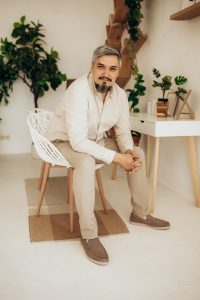
Важливо
HWYD: And finally, what would you recommend to people who are just entering the field, as a person who once mastered affiliate marketing on their own?
Valentin: The most important thing is to fully understand what you are selling! Because if you don't understand all the subtleties, don't have a base of buying functionality, it will be difficult for you to sell this traffic. At the very least, you should know the acquisition cost of traffic, how it is generated, and what expectations products have - that is, what products want to get from it. This traffic has to play, and not for a month or two or three, but for six months to a year, so that investors of the products to which you sell this traffic receive their dividends.
The easiest way to get started in the industry without any experience is to become an affiliate of an affiliate program, join the industry, understand how teams and products work, and then choose something that resonates with you. No one took me by the hand at the time, I gained all the experience on my own, because one of the most important factors is to be sincerely interested. I used to watch courses after work, and now there are a lot of them, so choose, try, and don't be afraid.
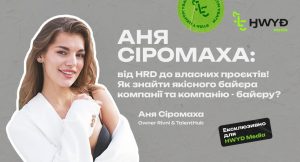
We have known each other in absentia for a couple of years - we constantly crossed paths at various affiliate events, even stayed in a hotel in Warsaw in neighboring rooms once 🙂 we said hello, but, as often happens, we never had a chance to meet in person until the RIVNI project brought us together, for which I had the opportunity to thank Anna personally at Sempro Fest in Kyiv. A sincere, always smiling and sparkling girl - who she is and why candidates trust her with their fate, I decided to find out personally, and How Was Your Day came in handy for this! So, stock up on tea (or whatever you have there? - prosecco) and read the long interview, because Anya and I talked about her and her unique experience for more than an hour... I promise it will be interesting.
Kostya Golubev is the editor-in-chief of HWYD.
Childhood.
HWYD: Tell us about your childhood. What kind of family did you grow up in? When were you born?
Anya: I was born and raised in Kyiv at the end of the 90s 🙂 My whole childhood was filled with love and adventure, my parents are doctors. We are all very family-oriented and spend a lot of time together. This is my first priority, my great pride and love.

HWYD: Describe your most vivid childhood memory.
Anya: To be honest, I had a wonderful childhood and have many such memories. I ate dry mulberries in my grandmother's yard, climbed mulberries, traveled, read O. Henry, went to the theater regularly, and played Cossacks the Robber with the boys in the yard.
HWYD: What did you dream of becoming when you grew up? Why?
Anya: I don't remember wanting to be anyone in particular, except maybe an actress, as is often the case with girls. But I do remember that I dreamed of being famous since I was a little girl, and from the age of 3 I imagined my biography being studied in literature class (my grandmother and I always studied the biography of authors before reading their works).
Youth
HWYD: How did you study at school? What subjects did you like the most? Which ones the least? Why?
Anya: I did quite well in school, but I was not an excellent student. In the subjects I liked, I was always among the best in the class. My favorite subjects were math, literature and all languages (Ukrainian, English, German).
HWYD: What clubs/sports did you attend?
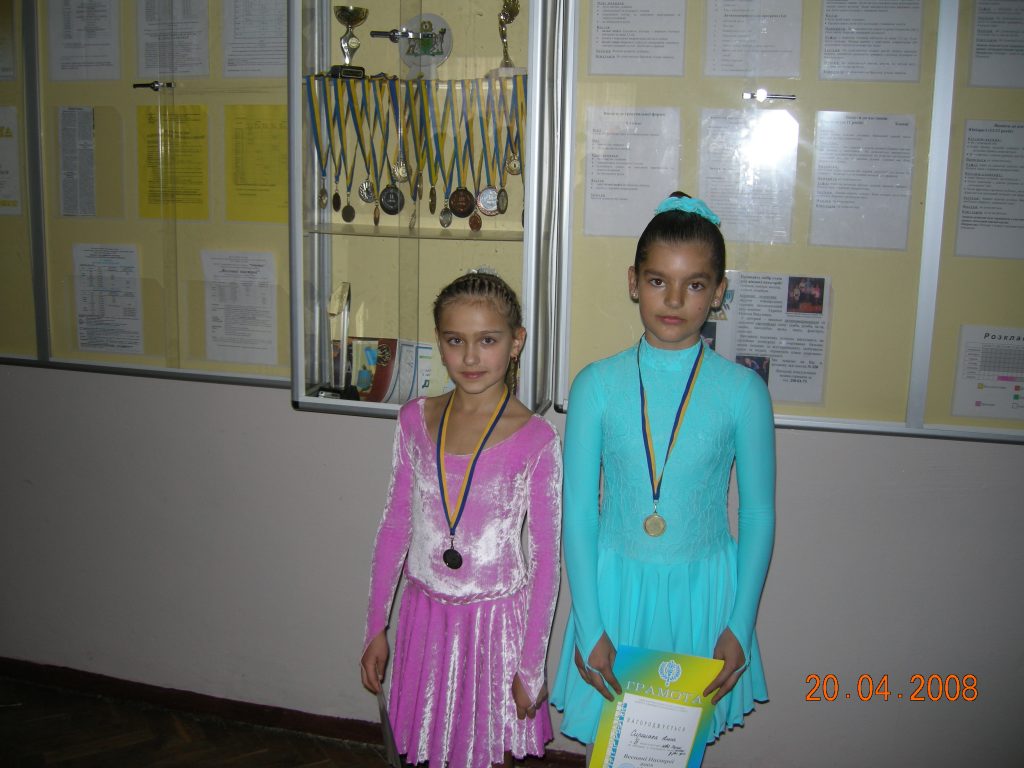
Anya: As for my extracurricular activities, I was engaged in and adored ballroom dancing, and, of course, I actively learned languages. I also went to art school! And tennis. And I loved horseback riding, which, unfortunately, was not so much)
HWYD: Describe your most vivid memory from school.
Anya: At school, I was the biggest activist 🙂 I was the head of the senior student council, the eternal headman, and participated in the leadership of the district. I seemed to communicate with the whole school, opened a radio station, organized events, went on a model UN trip, and, of course, was at the epicenter of all school stories. Oh, how many interesting things I learned about myself from Gossip Girl) I remember how the 5th grade choir congratulated me on my birthday in the 11th grade) Touching moments.
I love school! It's my favorite time. Even when I was finishing the 11th grade, I realized this when I was crying at the line. 117 ❤️

Adolescence
HWYD: What university did you graduate from? Why did you go there?
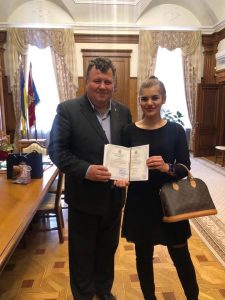
Anya: The situation with higher education is a bit more complicated, but very interesting) I graduated with a bachelor's degree from the Institute of International Relations of the Kyiv National University of Shevchenko, majoring in International Business. At school, I had to study really hard, intensively, and actively, so I found it too easy and, to be honest, not very interesting at the institute. I missed school a lot, but in order not to waste time, I started working in my first year. I tried different things and I think it's great! When else but at the age of 17 or 20 to look for yourself, agree to completely different offers and say yes to everything? I worked as a journalist's assistant on TV, and as a social media manager for a clothing brand for cooks, and I was a sales manager and a green manager in household chemicals. my first serious job was at the charity foundation "Your support". I was in charge of affiliate marketing:))) I offered conscious businesses to join the charity, and not just "give money", but together with the team I created and implemented various promotions, the profits from which went to help children. It was an incredible, very difficult, but such a valuable experience!
HWYD: How did you spend your first salary? What was it like?
Anya: I spent my first salary partly on my family (I had to "show off"!)), and partly just on living. It was something around 100$, I don't remember exactly :)
HWYD: Did you continue your education after realizing your lack of interest in the institute?
Anya: Yes, I finished my studies and entered the master's program. I liked the master's program much more! I graduated from it with a degree in business administration at KNU and also in Italy, Macerata. It was an incredible time that I often remember, and a space where many friendships, adventures, and experiences were created.
Then I swore that I would never study again, yeah))) With the start of the full-scale program, I went to the next higher level))) And I graduated from KNU once again, the Faculty of Psychology.
By the way, my journey in recruiting and HR began in the 3rd year of my bachelor's degree 🙂.
The scope of arbitration
HWYD: How did you find out about the industry? What was your impression of it?
Anya: Life has often led me around Affiliate Marketing! First, I helped a young eco-network as an influencer manager (I didn't know what I was doing at the time, but I learned all the metrics, terms, etc. thanks to that job), then I worked as an HR in an SEO company. But the HRD position became a full-fledged entry into affiliate marketing. I already had about 2-3 years of experience in HR, and I was the first HR specialist in the team.) I came a long way there in 1.5 years, I joined the team when there were about 40 employees, and when I left there were already about 130 of us.) And it was a very bright, high-quality experience that taught me a lot of things, for example, that a successful business is based on 3 pillars: drive, speed, and energy. Then I went to a large holding company as a CVO to open a new vertical for them:) We worked together for a long time, until I started my independent journey...
Your own way
HWYD: Tell us about your own recruiting agency, job search site, and intensive.
Anya: In early 2023, I started my own business. At first, I worked on one project, now I have three, and they developed organically one after the other. Two of them are now in the active phase: RIVNI, a website for finding jobs in affiliate marketing, my pride and know-how that the market has been waiting for for so long, and TALENTHUB, an affiliate recruiting intensive suitable for both beginners and experienced professionals.
I really like that my projects were created to meet people's needs. I saw the "gaps" and filled them with the necessary business units. So, recognizing the need for a specialized recruiting platform specifically for this market, one day I came up with rivni. Receiving a lot of requests for recruiters' advice and complaints about their lack from employers, I created an intensive course that incorporated the experience of 5 years of work and training of recruiters in the affiliate.
The first public stream of the intensive is taking place right now. I love teaching so much! I was also very lucky with the group, very cool proactive students. So I think we will launch more than one stream. I already have ideas and new tricks:)
HWYD: How do you recruit visitors to the event? How did you gain/are you gaining trust among the community?
Anya: Although half of the affiliate's media figures talked about the intensive on their resources, to my surprise, most of the students are my subscribers!) Or friends of friends or partners. By the way, it's a great idea to send your own recruiter to our intensive to improve their skills, some have already done so smartly) So, recognition, community trust, and personal brand are very important.
HWYD: What are the most difficult vacancies on the market? Which of them did you manage to close?
Anya: The most difficult position is always a media buyer. I always say this. There are a lot of them, but few specialists. There are also few methods to verify the authenticity of skins and results. It's almost always a pig in a poke, and everyone always needs it. But I believe in the best and always have a positive attitude. However, I have my own tricks and methods of checking. Of course, over the past 8 years, I've had a lot of cases in recruiting and HR, both great and failed. From assembling teams from 0 to hundreds to closing incredibly difficult vacancies. I even managed to work in a German web3 project, where we hired people from Amazon and Microsoft. But that's another story)))

The final word
HWYD: What would you wish to companies that cooperate with recruitment agencies? And to candidates?
Anya: I wish candidates to work with agencies and rivni! It greatly increases your chances of a perfect match, because you communicate once and immediately get to 10+ relevant teams. This is at least 7 hours of time saved! Can you imagine?
I would like to thank the companies for their trust, openness and responsibility. It is so pleasant and at the same time responsible to fill really worthy businesses with qualified specialists!
HWYD: What does he look like - an ideal candidate for a recruiter and an employing company at the same time?
Anya: The ideal candidate = the one who gets an offer during the interview. Where there is no doubt and an absolute match. Sometimes I hear "this is exactly what we were looking for!" and that's the most important thing.
HWYD: How and where do you see yourself and your business initiatives in the near future?
Anya: So far, my plans are to develop the existing projects, which are really professional, cool, and very client-oriented. I want to attract more people, help more businesses and job seekers. And I plan to be more creative 🙂.
Thank you very much, Kostya, for the invitation and the great opportunity to review my life by writing a kind of autobiography.
I am always happy to answer all the questions of the readers of the wonderful How Was Your Day Media.
I leave my contact information for communication:
- https://t.me/rivnikyiv
- https://t.me/Talent_Hub_Support
Важливо
Outro from the editor-in-chief of How Was Your Day
The aftertaste of a conversation with Anya is like an energy drink that has been maxed out - she has so much vigor, sincere confidence in her own business, and fire in her eyes! Her work is exhausting, but it does not exhaust Anya! This explains why both candidates and companies come to Anya for quality and compliance - because Anya Siromakha is a brand that has created itself and made a name for itself! Thank you so much for this conversation, Anya! I'm sure your case will inspire our readers to believe in themselves and do what they love, no matter what. And I personally wish you to develop all the directions you have started and grow more than one business giant in our market thanks to your professionally selected positions!
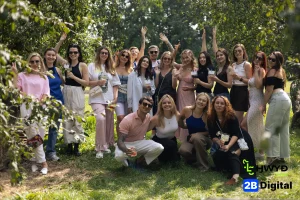
Важливо
On a warm Sunday in August, we gathered HWYD friends for the first time for a new format event - How Was Your Art? And from the very first minutes it became clear that we were witnessing not just an event, but an evening that was created before our eyes - with smiles, colors and sincere conversations. This is how something is born that eventually grows into a tradition.
An atmosphere that creates inspiration
That day, KITCHEN&GARDEN turned into a creative oasis. An apple orchard, sunlight breaking through the branches, the aroma of fresh fruit, glasses of wine, and live music that seemed to know when to become a gentle background and when to become the main theme. The atmosphere smelled of apples and acrylics, mixed with the light August wind and made us feel as if we were at a reunion of old friends.
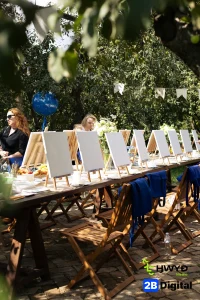
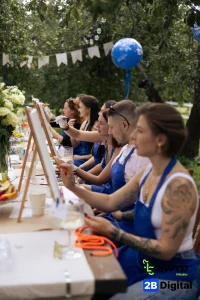
The warmth created by people
The small number of guests made the evening special. The intimacy was our advantage: everyone had the time and opportunity to get to know everyone, to talk in a real way, not in a hurry. Here we met again those we knew well and saw for the first time in person those with whom we had previously communicated only in work chats.
The details of the evening also spoke for themselves: aesthetic glasses with motivational quotes, light delicacies, and thoughtful decor. And at the end, there were packages with pleasant surprises that we didn't want to open right away, but to keep as a memory of the event.
It was more like a party at a friend's house that suddenly turned into an art meeting than a traditional event with a program and timing.
When brushes become a cause
The main character of the evening was art - not the gallery, not the "right" paintings, but the process itself. Everyone painted: some for the first time after school, some experimented with colors, some created their own affirmation paintings.
The result was a whole gallery of little stories: abstractions, landscapes, symbols, and paintings that everyone painted not only with their hands but also with their mood. The tables were filled with laughter and jokes, and they became our soundtrack for the evening. No one here was afraid to do something "wrong" because it was not about the colors, but about the feeling that we were creating together.
The instructors played a big role in this, helping everyone to find their own rhythm and suggesting how to realize their ideas. Thanks to their support, even those who doubted their abilities were surprised by the result. And in the end, all the guests took their paintings home as a small piece of the evening that will now warm them for a long time.
Words that sounded like toast
Kostya, as the host, kept the atmosphere light and relaxed, adding to the feeling of a home gathering. Indeed, people were the main element of the evening.
We received so many warm words and sincere responses that our hearts are still fluttering. Someone admitted that he hadn't felt such awe for a long time. Someone wrote that it was the first time they saw themselves as an artist. For some, the main value was the opportunity to spend time in a circle of like-minded people, where you don't have to prove anything - just be yourself.
These words did not sound like dry "feedback". They were more like small toasts after the evening - simple, sincere, and very personal. And they made us realize that we had done something more than an event. We created a memory that we want to repeat.
Aftertaste.
After the evening, we spent a long time looking through the photos and re-reading the messages from the guests. These were not just words of gratitude, but warm notes in a common memory album that will continue from now on.
By the way, we have prepared a photo report from the event for you - it can be viewed at link.
There are smiles, paintings, and the most sincere moments of the evening that cannot be expressed in words.
We are immensely grateful to our guests - it was you who filled this evening with meaning and created an atmosphere that cannot be recreated in any scenario. Thank you for sharing your warmth, trust and creativity.
Special thanks to our friends and partners from 2B Digital, who helped bring this idea to life and added their own colors to the overall picture.
It was only the first stroke
Важливо
How Was Your Art? is just the beginning. We took the first step and realized how important it is to create a space for sincere meetings, easy conversations, and joint discoveries.
There are still many moments ahead that will surprise and inspire: new formats, new acquaintances, and new stories that we will create together.
So if you didn't make it this time, don't worry. Very soon we will meet again to live another evening that will stay with us for a long time.
See you at the next HWYD events 💚
Важливо
Generations in teams is a topic that always causes controversy. In practice, we see not caricatured differences, but different rhythms and expectations.
Millennials are looking for stability, structure, and predictability. Zoomers are looking for speed, flexibility, and instant feedback.
These contrasts should not be seen as a problem. In fact, they create a field of opportunities. After all, a team becomes stronger when it has both the experience of long marathons and the excitement of experimenting here and now.
We asked industry leaders how they work with the mix of generations in their companies. Each has their own observations, but they all agree on one thing: balance is possible.
Stability vs. Flexibility

Alyona,
Head of Media buying, Traffter
Millennials are more focused on stability, clear tasks and predictable development, while Zoomers prefer flexibility, diversity and quick feedback
For the former, clear plans and long-term projects work best, and for the latter, creativity and modern work formats work best. My team consists of people from the age of 18, and I always find an approach to everyone, taking into account the characteristics of the generation.
A generational mix works best when roles are properly assigned: millennials can lead large, structured projects, while zoomers can generate new approaches and test them. The combination of these approaches creates a powerful balance of experience and new ideas, and proper communication helps to maximize everyone's potential.
Involvement vs Predictability
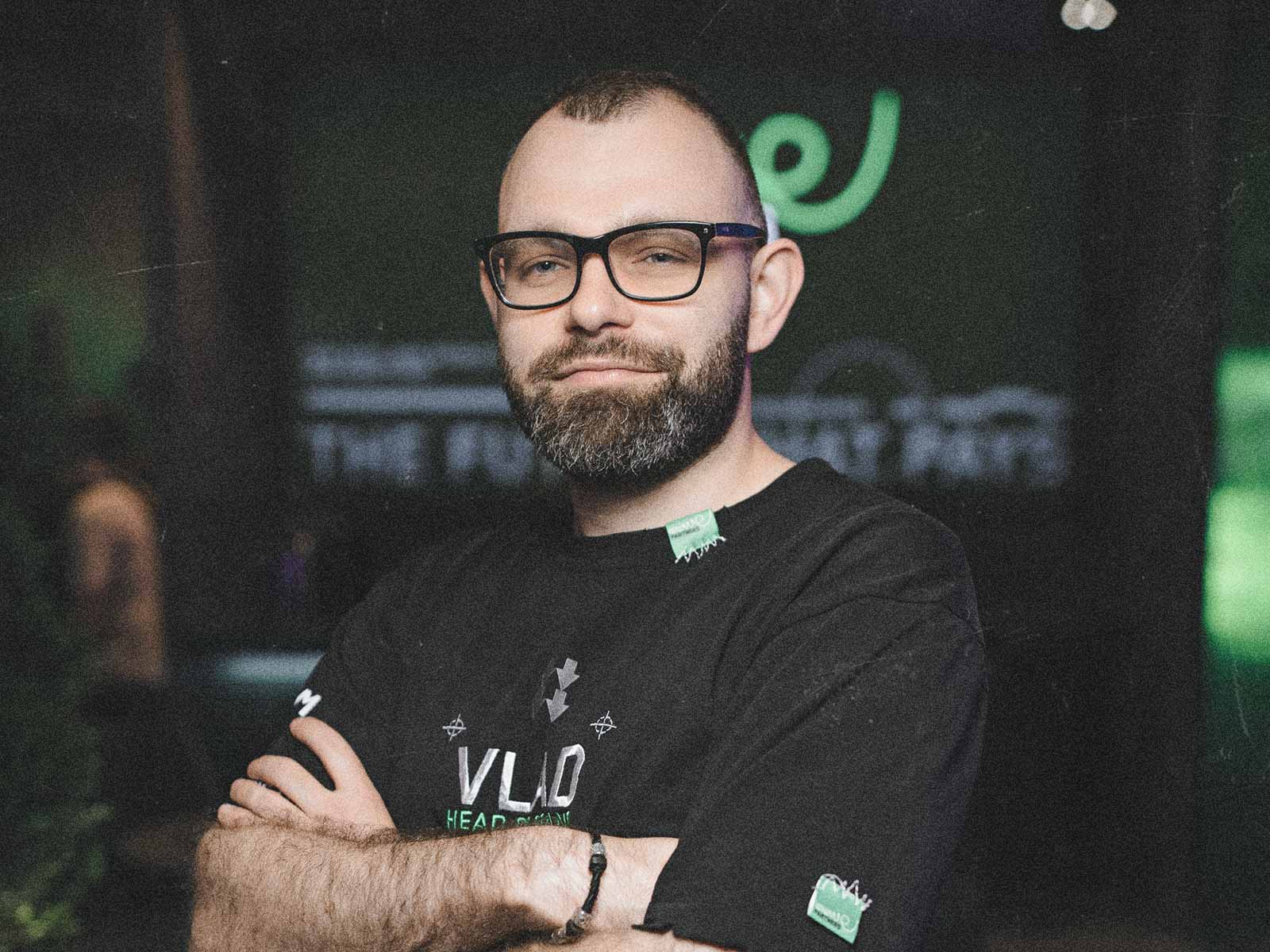
Vlad,
Head of Brand, Growe Partners
When I started thinking about generational issues, I decided to look at what research says. In its 2025 Gen Z & Millennial Survey, Deloitte notes that both generations seek a balance between financial stability, meaningful work, and psychological comfort. However, they choose different ways to achieve this, and this is felt in their work every day.
At the same time, it should be understood that in reality, many people are at the intersection of generations, and we at Growe Partners always approach both our colleagues and partners individually. The division into Gen Z and millennials is more of a guideline than a clear line
Gen Z is emotionally sensitive, responsive to change, and values transparency and honest dialog. Support, a sense of involvement, and quick feedback are important to them. This generation grew up in a world of instant communication, so they expect this pace from both their employer and business partner.
Millennials are about stability and predictability. They feel more comfortable working when they see a clear plan, realistic deadlines, and confirmation of agreements in actions, not just words. The key for them is to understand the long-term strategy and feel the impact of their work on the result.
At Growe Partners, we take this into account. We give our Zoomers regular 1-to-1s, quick updates, online and offline meetings where they can freely discuss both new ideas and work issues. It's important for millennials to have a clear roadmap and a transparent strategy - we provide planning and keep our promises.
The principle is the same with partners. Zoomers appreciate an individual approach and constant dialog, while millennials appreciate clear KPIs, fixed terms, and a clear framework.
The balance is simple: Gen Z needs to feel involved and supported, while millennials need to see progress and confidently plan for the future. In the end, the main thing is not labels, but the ability to find an approach to everyone, and then cooperation becomes clear and comfortable for all parties.
Stability vs. Momentum
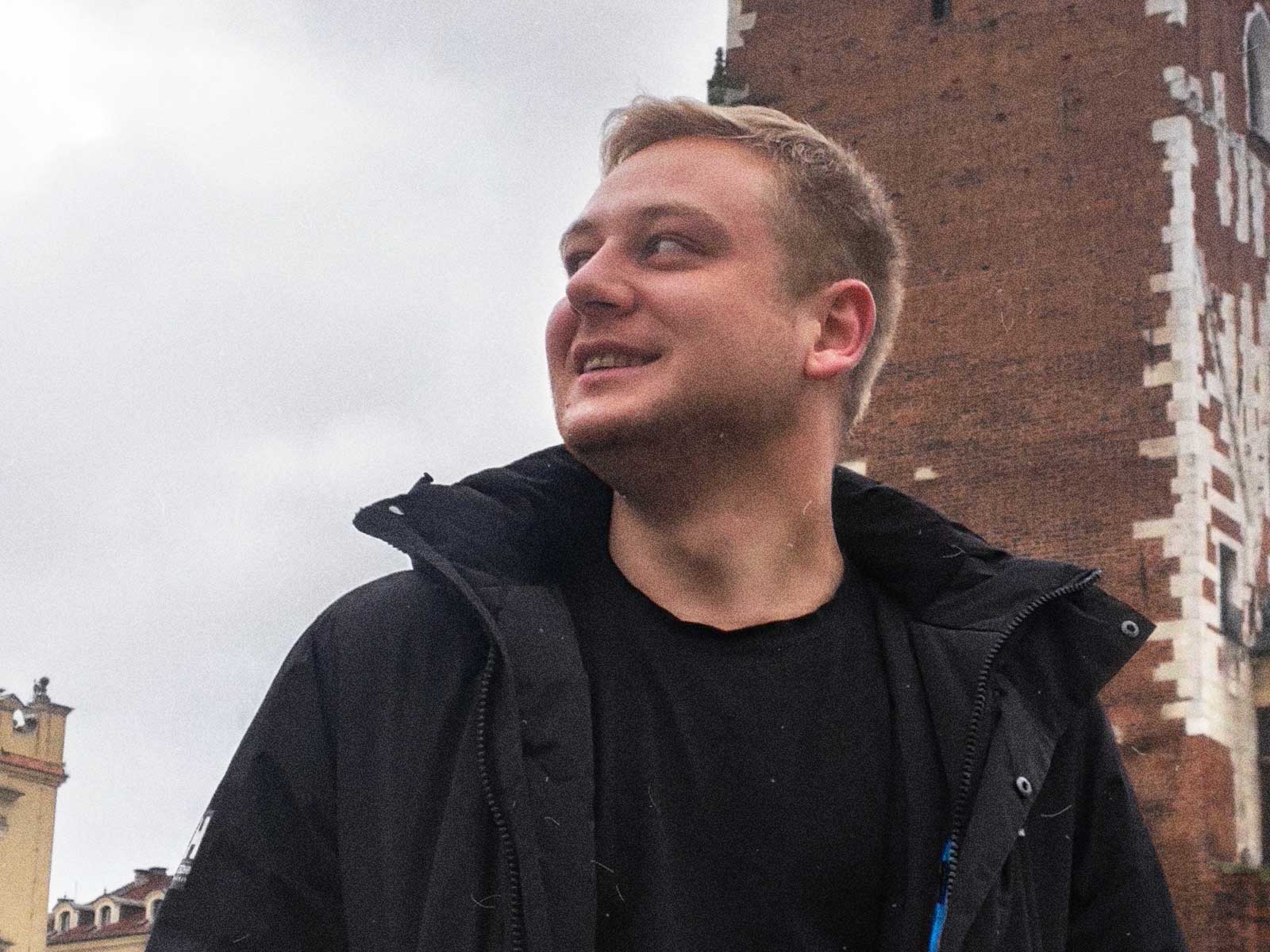
Misha,
Head of Tequila
Today, a leader must be flexible. The right balance = a strong team.
Stability versus the moment. Clear conditions are important for millennials. Zoomers need short projects with quick results. Bureaucracy vs. experimentation. Millennials will check everything ten times, so they need standards and instructions. Zoomers need freedom and space to experiment.
Corporate culture vs. recognition. Millennials value corporate values, stability, and career growth. Zoomers need frequent feedback and public recognition.
Attitude to mistakes. Millennials have a harder time dealing with serious mistakes, so it's important to support them and explain that it's a learning experience. It's enough to show them that it's important to draw conclusions and move on.Don't forget about Coca-Cola in the office for the zoomers. And for millennials, a relaxation area after focus work.
At TEQUILA, we know how to unite generations for a common goal.
Hours vs. Results

Nasa,
Brand & Communication Head, Gorilla Partners
The topic of the difference in generational approaches is both relevant and hackneyed. The market is now clearly showing points of misunderstanding, and they arise even before the offer is signed - during interviews or meetings with HR or business leaders.
Millennials, who were raised in the old school, tend to have a classic view of work: hours in the office = discipline and efficiency. They value control, structure, and presence even at unnecessary meetings. Often, this is where the demands start that the buzzers also sit from 9 to 19, even if the actual productivity in the morning is zero. For them, hours are an indicator of loyalty and teamwork.
Zoomers, on the other hand, are increasingly thinking in terms of concrete results, not process. They are not interested in how long they have been pretending to work. What matters is whether they fulfilled the KPI, brought in new traffic, or closed a partner for a larger volume. They are often more effective in the afternoon, can be distracted by anything in the office, and therefore produce results faster and better during the remount.
And here the key role of managers is to understand these differences and adapt. The main question is: what is more important to you - adherence to discipline or results that really move the business forward?
Mature management is all about flexibility: seeing the strengths of different generations and creating an environment where results become the key criterion.
My principles are simple:
- recognize generational differences as a resource, not a problem;
- create an environment where everyone is comfortable - the office and the remodel;
- evaluate work by KPIs, not by the number of hours;
- do not confuse control with results.
Marathon vs Sprint
Valeria,
Head of Adv, DepHouse
Millennials are stable, but they have a can-do attitude. This is a person who will hear a task and say: okay, we'll figure it out. They are executive, reliable, and a bit like a meme: "I don't know how, but it has to work - and it does." Their style is a marathon: long, steady, with coffee and faith that the finish line will be
Zoomers approach their work differently - "where is my manual?" They work in the vibe of the YouTube tutorial "5 Steps to Success". If a manager does not give step-by-step instructions and does not promise financial freedom tomorrow, then he or she is not "sharp". This is the generation with the TikTok meme "explain it to me as a person who has just been assembled."
Their strength is speed and creativity. Their weakness is impatience. They want results right away, not always realizing that great stories take time.
Together, it's a mix of stability and speed, experience and experimentation. This is where the magic of modern work is born.
Важливо
The generational difference is not a problem, but a tool.
Millennials add structure, stability, and longevity.Zoomers bring speed, freshness, and courage to experimentation.
A strong leader does not look for who is better. They build a system where both approaches work together. Strategy and flexibility, control and trust, marathon and sprint are not contradictions, but two sides of the same team.
The future lies in this combination. Because the market is not driven by labels, but by those who know how to create an environment where different styles of work form a single result.