



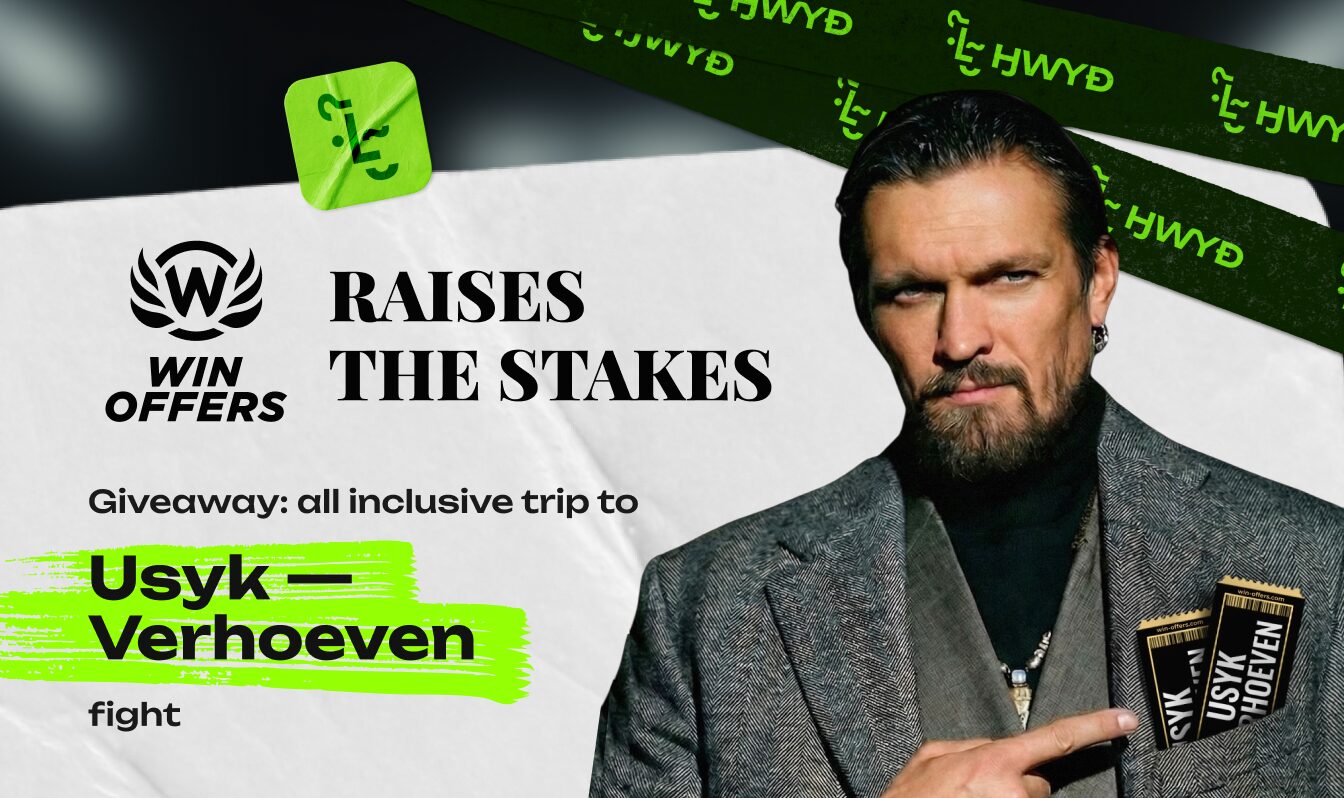
The iGaming world is usually associated with numbers, conversions, and endless testing. However, sometimes events occur that make even the most ardent buyers tear themselves away from their monitors. This time, the cause was a loud announcement from Win-Offers — affiliate program, which decided to raise the stakes and organize a trip for its partners to one of the most anticipated sporting events of the year.
The talk is about Oleksandr Usyk's fight against Rico Verhoeven, which will take place on May 23, 2026, against the backdrop of the majestic pyramids of Giza. HWYD MEDIA figured out how to get a chance to get into the dream fight.
Who are Win-Offers?
Before we go into the details of the giveaway, it's worth understanding who we're dealing with. Win-Offers — this is not just another affiliate program in the iGaming vertical. Their advantage lies in direct communication with advertisers and exclusive conditions that are hard to find on the open market.
The Win-Offers team has access to deep product analytics, so when managers talk about conversion or working relationships, they rely on real advertiser figures and data. This allows partners to forgo guesswork and immediately receive tested solutions. Their goal is to make you profitable by sharing expertise that helps you become a market leader.
When traffic turns into a trip to Egypt
Especially for the showdown in Giza, the team has launched a massive giveaway. Up for grabs – three all-inclusive packages. The winners will receive a full package so they don't have to worry about anything:
- Flight to Egypt
- Tickets for the Usyk vs. Dubois fight
- Hotel accommodation and transfer
This is the perfect chance to transform your usual workspace into an atmosphere of ancient times and professional boxing.
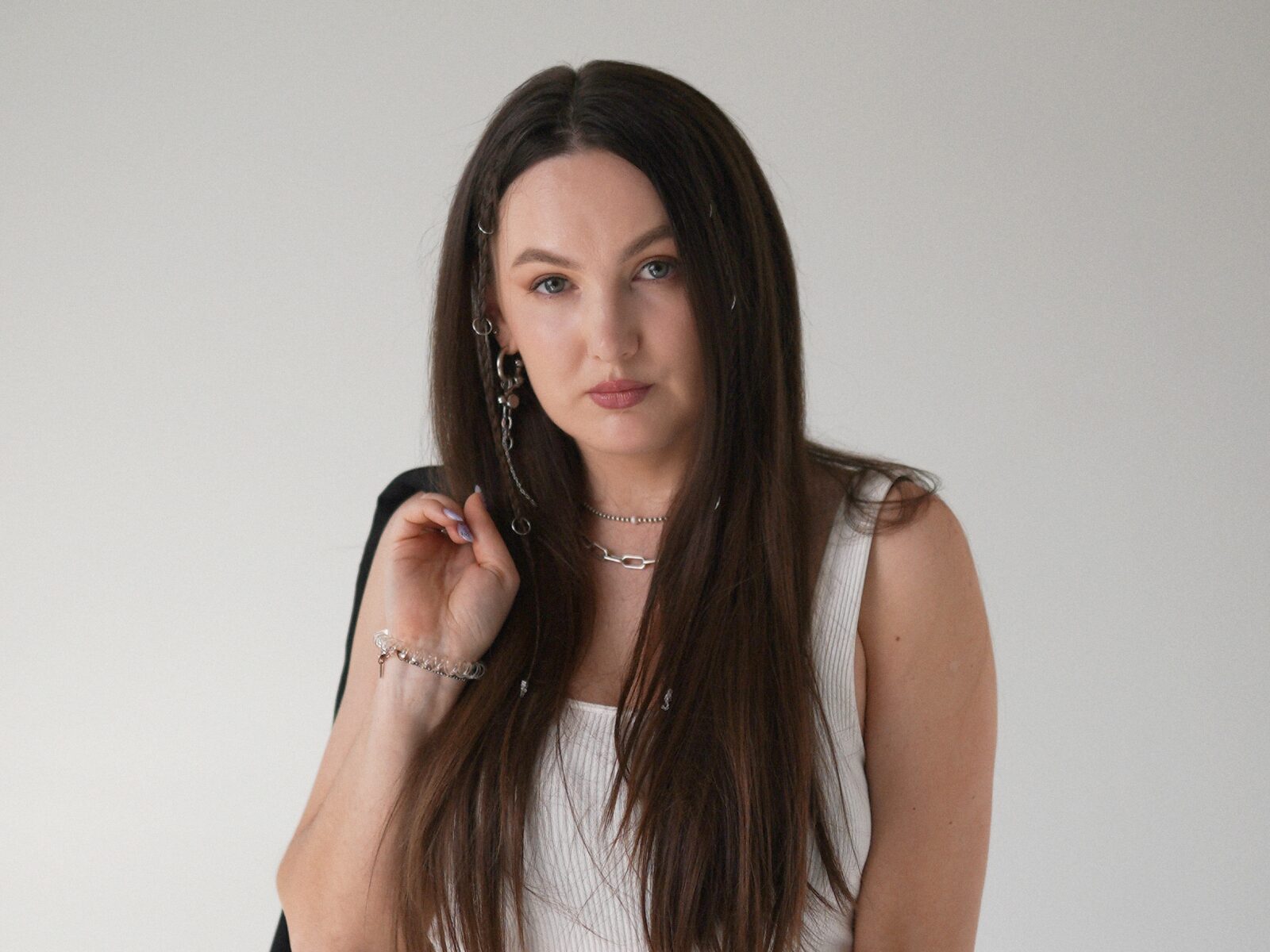
Victoria,
Head of Business Development - Win-Offers
HWYD MEDIA:
Today, the iGaming market is oversaturated with various promotions. Why did you choose such a large-scale format with a trip to Giza, and why is it important for Win-Offers to invest in such giveaways for partners?
Victoria, Head of Business Development at Win-Offers:
We wanted to give our partners not just a bonus or a standard promotion, but a truly unique experience and strong emotions.
Oleksandr Usyk's fight is an event that all of Ukraine roots for, and our team is no exception.
That's why the idea of a fully paid trip to Giza with the opportunity to live this moment seemed to us to be the most aligned with our values – to give our partners more than just standard cooperation conditions, and to offer a truly memorable experience.
How do I join the giveaway?
Participation is open to both existing partners and newcomers willing to prove themselves. The focus of the promotion is on Ukrainian brands that have already earned the trust of players: Parik24, Topmatch, and StawkiBet.
The algorithm of action is simple:
- Register on the platform Win-Offers or inform your manager of your intention to participate.
- Direct traffic to any of the aforementioned brands (or all three simultaneously, as they have different player bases).
- Pass traffic validation with the Win-Offers team.
Victory doesn't come from luck, but from your traffic
The winners will be determined by a transparent scoring system. The higher the quality and volume of your traffic, the closer you are to the top. Every 30 FTDs earn points, but the number of points depends on the source:
• SEO traffic 30 FTD = 3 points
• Total traffic: 30 FTD = 1 point
• FB traffic 30 FTD = 0.5 points
Such differentiation allows everyone to find their own strategy and use their own resources most effectively.
Важливо
It's worth remembering that affiliate networks are not allowed to participate; the promotion is designed for direct partners. All traffic must undergo verification. And perhaps most importantly: if the winner is unable to travel abroad for certain reasons, Win-Offers foreseen a monetary compensation option.
An opportunity not to be missed
Usyk's fight in Giza is already vying for the status of a historic sporting event. And the Win-Offers Giveaway is an opportunity to become part of this history through professional skills.
If you are ready to test your traffic's strength and fight for a spot in the stands under the Egyptian sky – write to your Win-Offers manager or register on the platform. The battle is coming soon, so there's no time to waste.
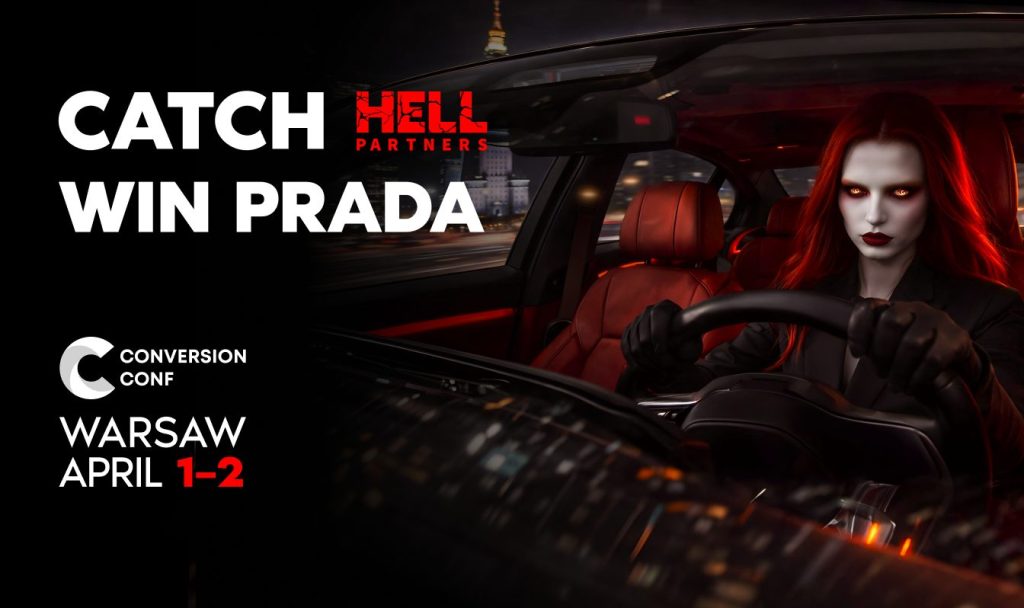
Conversion Conf returns to Poland once again, bringing together affiliates, brands, and performance marketers from across the market in Warsaw.
HELL Partners will also be at the conference, but not with a traditional stand. Instead, the team is betting on something much more interesting: managers ready to discuss deals, exclusive offers for affiliates, and sponsorship of the official afterparty. Because sometimes the most effective way to make a name for yourself at a conference is not to set up a stand, but to become part of the story that everyone will talk about after the event.
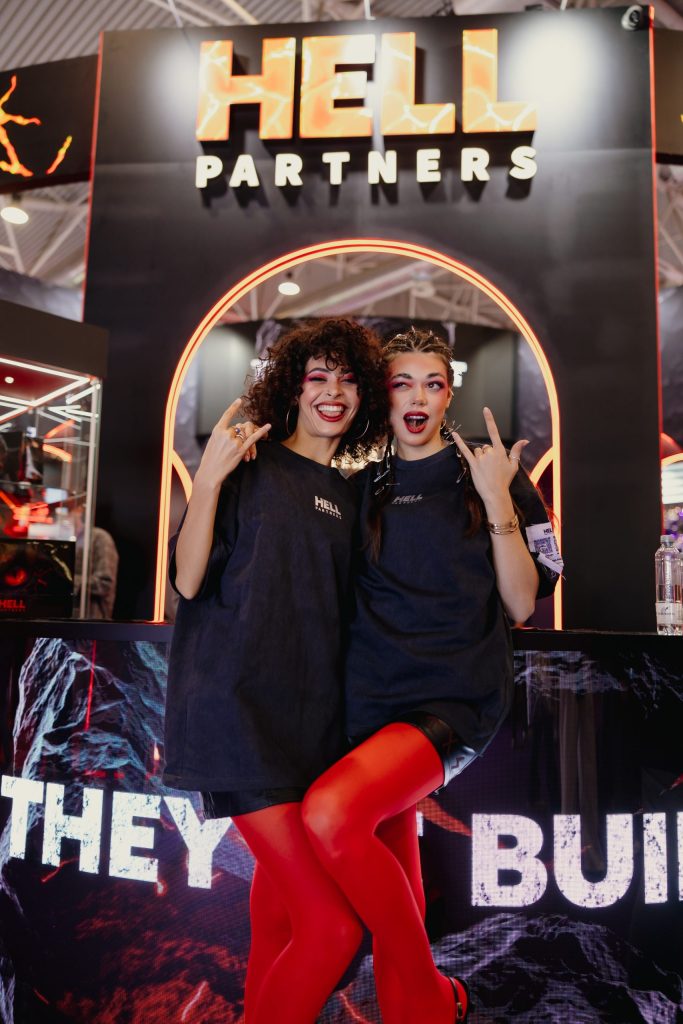
For two days, the HELL Partners team will be on location, meeting with affiliates, discussing partnerships and presenting new offers created for long-term cooperation. For traffic owners looking for strong terms from a direct advertiser, Warsaw will be a rare opportunity to talk to the team live. But the real show will start after the conference.
Важливо
HELL Partners will sponsor the official Conversion afterparty, where participants will be able to take part in a special raffle with a premium prize from Prada, which represents the HELL brand.
The rules are simple:

Later that evening, one lucky participant will receive the main prize - the winner will be chosen at random. And this is only part of the story.
During the conference, attendees will be able to take part in another draw. Anyone who takes a photo with a member of the HELL Partners team and posts it on Instagram Stories, mentioning the brand, will automatically be entered into a drawing for additional gifts from Prada.
Важливо
To join this draw:
- take a photo with someone from the HELL;
- post a story and tag HELL Partners;
- subscribe to Instagram і Telegram HELL Partners;
The winners will be chosen randomly among the stories with the brand's mark during the conference. HELL Partners says that the idea behind this activity is simple: to create moments that unite people.
«We are going to Warsaw to meet with partners, talk about business and support the industry we are building together,» the team comments. «If you see a HELL manager, say hello. There is a high probability that this will lead to something interesting.“.
Conversion Conf will take place in Warsaw on April 1-2. Find out more information about the conference here.
For affiliates planning to attend the event, the message from HELL Partners is simple:
- Come to Conversion.
- Follow HELL Partners on social media.
- Find your team during the conference.
- And take a chance to win something very Prada.
Важливо
Contacts of managers:
Важливо
The affiliate market is growing faster than it can train new people. Teams are scaling up, budgets are increasing, verticals are becoming more complex, but the key problem of the industry remains the same: the lack of strong buyers.
Traffic.one decided not to wait for the market to somehow grow its own staff, but to create its own training system. That's how Traffic.one Academy was born - an educational project embedded in the real media buying business.
The academy has graduated more than 350 students, and about 40% of them are already working in top arbitrage teams, including Traffic.one. We found out why the company relies on new specialists and fresh perspectives, what the academy looks like from the inside, and why it is called one of the most systematic entry points to affiliate programs.
Why Traffic.one invests in new talent
Most market players work according to a short logic: find a ready-made buyer, lure him from another team, and close the position. This is a quick solution, but it does not create long-term stability. Traffic.one chose a more complicated but strategically advantageous way - to invest in training specialists from scratch.
Working with people who enter the profession from scratch allows us to develop not only technical skills but also professional thinking. From the first day, a person learns to work within a specific system: to understand analytics, responsibility for budgets, scaling logic, and process discipline. As a result, a specialist is formed who not only knows how to launch advertising campaigns, but also understands how the team works as a single mechanism. This approach changes the very role of the academy. It becomes not a course, but an entry point into a real profession.
Roman Chesanovsky
Founder, Traffic.one
HWYD: Why did you consciously choose the strategy of training buyers from scratch?
A novel: Because back in 2023, it became obvious that the market was critically short of personnel, especially qualified ones. We launched the training in 2024, and in 2026, everyone is still talking about the staff shortage.
We train specialists in the way the market and our team need them - with the right mindset and understanding of the processes. In fact, the academy has become a talent pool that we form ourselves, rather than looking for people after the fact on the market.
Pavel Eremeev
Head of Media Buying, Traffic.one
HWYD: What's the difference between a buyer from the market and someone you trained inside the academy?
The key difference between a buyer from the market and a specialist we have trained at the academy is the level of adaptation to our work standards.
1. Speed of integration into the team. A graduate of the Academy already understands internal processes, approaches to launching, reporting, and KPIs. Therefore, it is much faster to integrate them into the work.
2. Expectations vs. reality. Buyers from the market often have high expectations about the role and conditions that do not always correspond to their actual level.
3. Willingness to confirm the level. Market candidates are not always ready to go through assistant positions to prove their potential in real-world conditions. Academy graduates, even those with experience, are ready to go the extra mile and prove their skills in practice because they have already developed the value of teamwork.
4. Training for specific business tasks. The Academy allows you to form buyers for real business needs - from technical discipline to thinking in numbers.
In short: an internally prepared banner means a predictable result, quick adaptation, and fewer risks for the team.
Academy as a response to a systemic market problem
Traffic.one Academy appeared as a reaction to a specific situation: the rapid growth of the industry is not accompanied by sufficient training. The market is full of courses, but most of them provide fragmented knowledge without real immersion in work processes.
Therefore, the academy program was built around practice. The training models real-life media buying scenarios: from the first launch to optimization and scaling. Students work with live cases, analyze mistakes, analyze numbers, and learn to make data-driven decisions. The key emphasis is on shortening the distance between education and professional activity. After graduation, the student does not face a gap between theory and reality - he or she has already worked in an environment as close to real-world conditions as possible.
Pavel Eremeev
Head of Media Buying, Traffic.one
HWYD: What does the training process look like and why is it structured this way?
1. Systematic approach from A to Z. We provide a complete path: from entering a niche to launching, analytics, and decision-making based on numbers.
2. Focus on the result. Our goal is not just theory, but a working level at which a person can launch and improve results.
3. Live interaction. Regular online meetings allow us to analyze not only “what happened,” but also “why,” in order to close problems systematically.
4. Support. People are not left alone with their tasks: there is feedback, clear guidelines, and support.
5. Adaptation to real market requirements. The training is tailored to work scenarios, so it is easier to integrate a specialist into the team after the course.
To summarize: we do not provide information for the sake of information, but a predictable practical result.
Roman Chesanovsky
Founder, Traffic.one
HWYD: How is the Academy fundamentally different from other educational products in the niche?
The level of practical knowledge we provide far exceeds the cost of training. We don't sell the illusion of quick money - we honestly tell you what the path looks like and how you can reach an above-average income in IT. This is confirmed by the results of our graduates and the numbers after graduation.
Real student performance as the main quality criterion
Any educational project can be evaluated by promises, but the professional community looks at results. In the case of Traffic.one Academy, the key argument was the numbers.
More than 350 graduates are not just statistics. This is an established community of specialists who entered the industry through the academy, many of whom are already integrated into the market. About 40%s work in top arbitrage teams, including Traffic.one. This means that the academy fulfills its main function - not just teaching theory, but converting newcomers into professionals in demand on the market.
The high course completion rate and the first successful campaign launches show that students receive not abstract knowledge, but tools that can be immediately applied in practice.
HWYD: What student results do you consider to be the main indicator of the academy's success?
Paul: For us, a successful student is someone who knows how to turn knowledge into a stable profit.
HWYD: Were there any alumni who became key players within the company?
A novel: There are many such graduates, and there will be even more. There are curators who were once students and went from assistant to senor. We have a team leader who, after the academy, grew to manage a team of 12 people. And there are many good results from our graduates - not only in gambling, which I am particularly pleased about.
Why beginners should choose Traffic.one Academy
For a beginner, the affiliate market looks chaotic: a lot of information, contradictory advice, aggressive promises of quick money. In such an environment, it is difficult to understand where marketing ends and a real profession begins.
Traffic.one Academy offers a clear structure for entering the industry. Here, the training takes place under the guidance of practitioners who work with real budgets and processes. Students receive mentoring, feedback, and support after graduation. But most importantly, they immediately find themselves in a professional environment where work discipline and responsibility are formed. The Academy does not sell the dream of easy money. It offers a way into a profession with clear requirements, a system, and growth prospects.
HWYD: What is the portrait of an ideal student of the academy?
A novel: Soft skills and desire in the eyes always come first. We believe that anyone can be taught, and it is true. Discipline and character always win out over unmotivated hard-skill students.
A student must be willing, understand, and be ready to invest time in their studies. He does not live with rose-colored glasses and does not expect $10k in the first month. He clearly understands his point A and what he wants to see in point B, sets clear goals for learning and forms a plan to achieve them.
HWYD: What does a student get after graduation besides knowledge?
Paul: In addition to knowledge, students get a real opportunity to get into the company after graduation. What does it give to a graduate:
- A career chance to move from studying to real work in a team.
- Quick start in arbitration.
Academy as part of the Traffic.one ecosystem
The main feature of Traffic.one Academy is that it does not exist as a separate educational product, but as an organic part of the company's media buying ecosystem. This means that learning takes place in the context of real business, not in an isolated academic environment. Students see how decisions are made, how indicators are analyzed, how the team responds to market changes. They get to know the internal processes and work standards before they become part of the industry. This format helps to shorten the adaptation period after graduation and increases the level of readiness for professional challenges.
In fact, the academy has been focused on real work in the industry from the very beginning. Training is integrated into practical processes, so students do not just gain knowledge, but immediately develop the skills necessary for launching and working in a team.
Where Traffic.one Academy is heading in 2026
The Academy is a long-term investment. And it's not just about training, it's about shaping the future market. Traffic.one has already shown that they can systematically grow personnel. The next question is the scale.
Roman Chesanovsky
Founder, Traffic.one
HWYD: Where is Traffic.one Academy heading in 2026? What are your plans for scaling and development?
A novel: We will continue to expand our training programs because we need not only media buyers but also other specialists. There will be several large-scale collaborations. We will definitely create different programs for different levels. I want more Ukrainians to work in the affiliate industry - it's about personal income and contribution to the country.
The Verdict
The affiliate industry is constantly talking about the staff shortage. But only a few companies take responsibility for solving this problem. Traffic.one Academy is an example of how a business can not only fill vacancies but also build a new generation of specialists. And if the future of the market is being shaped today, it is being shaped by the hands of those who have been trained correctly.
Важливо
Learn more about Traffic.one Academy on the project's official website.
Using the promo code HWYD20, you will receive a -20% discount on any tuition rate. To get a discount, write to manager Traffic.one.

In the traffic and iGaming industry, names often turn into brands faster than companies turn into corporations. However, the story of Inna Gagarin is not about a quick hype, but about a fundamental «match». A girl from a small town who chose the unpredictable world of digital strategies instead of a stable railroad dynasty has become one of those who shaped the face of the modern CPA market in Ukraine and abroad.
She is not afraid to say that success is measured by money, and trust is measured by financial discipline. There is no place for info-gypsyism in her approach: only a dry balance, a strong team, and a reputation that she has been building for years. Today, Inna is a symbol of how female leadership is changing the rules of the game in a niche that was dominated by male rules just yesterday. We talked to her about her journey from a 200-hryvnia proofreader to the status of a key industry figure, her ability to stop at the seashore in time, and why ambition is the only thing that hasn't changed since childhood.
Childhood and youth
HWYD: Where were you born and what kind of family did you grow up in?
Inna: I was born in the city of Znamenka, Kirovograd region, into a family of railway workers. And it's really a family dynasty: my mom, dad, grandparents, and grandparents all worked for the railroad, going back several generations. On my father's side, one grandmother was a math teacher, and my great-grandfather was a prosecutor. But everyone else I remember and know from my family was connected to the railroad.
The family was absolutely ordinary. It was a small town-about 40 thousand people at the time. An ordinary kindergarten, an ordinary school. I grew up in the difficult and rather harsh 90s, when there was often a lack of basic things, and it was a difficult experience. I think many of our generation know this well.
HWYD: What kind of person were you as a child - more quiet or ambitious? What childhood memory do you consider important for understanding yourself today?
Inna: I have always been ambitious. At the same time, I was an absolutely normal child. I was popular in class, I wasn't bullied, we had a cool group of girls where we supported each other. We were friends with everyone - with boys and with each other - and we did well in school. I wasn't the star of the school, but I didn't have any problems either, neither with my studies nor with my friends. I was just an average girl from a small town in Ukraine.
The most vivid memory that characterizes my ambition very well is the story of textbooks. At school, there were simply not enough of them for everyone. And my persistence - or perhaps even my impudence - helped me a lot. I always had some kind of grip. My classmate Katia and I once came to the library and realized that there were no books we needed. But eventually we got them - by some miracle, we “scrolled through” this issue. I think this is very much about me. We had a crazy thirst for knowledge. We didn't say: “Well, okay, there are no books, so we won't study.” We literally broke through and received these textbooks among the first, in full, so that we could study.
HWYD: Who or what had the greatest influence on the formation of your character in those years? What were your dreams back then-what did you see yourself doing in the future?
Inna: I was greatly influenced by the fact that I lived in ordinary conditions and in a small town. I really wanted to “go beyond” this space. I wanted more - to be on TV, to become famous, to be visible. I saw myself as a star. It didn't matter in which field - acting or journalism. Journalism seemed the easiest way because I was a good writer. But even then it was important for me to choose the best university. My family also had a great influence. A combination of my mom's warmth, kindness, and empathy and my dad's severity. Although my dad is also very kind and sensitive, it was the balance of gentleness and demandingness that I think had a strong influence on my upbringing.
HWYD: Was there a moment in your life when you had to take responsibility early on?
Inna: I guess I took responsibility very early on, since I was a child. I have a younger brother, and it so happened that my parents worked a lot, so I was often responsible for him. In such situations, you have to grow up quickly. When you are responsible not only for yourself, but also for someone smaller, it forms a different attitude to life. Everything happened: I lost him, looked for him, took him to school, and actually got involved in processes that are not usually a child's area of responsibility.
In general, I was a very responsible child. Despite the difficult times, I had a music school from an early age - I started there when I was about six, even before I went to a general education school. Then there were clubs and classes. I didn't like music school very much, to be honest, but I graduated and played for about ten years. Plus, I was the school's head girl. That is, the sense of responsibility-for myself, for others, for the process-has been with me for a long time.
HWYD: Looking back, do you see any traits in that Inna that are still with you today?
Inna: Absolutely everything. Everything that happened in my childhood stayed with me. Shyness, perseverance, and the desire to achieve something. In fact, nothing has changed. I just became an older version of myself.
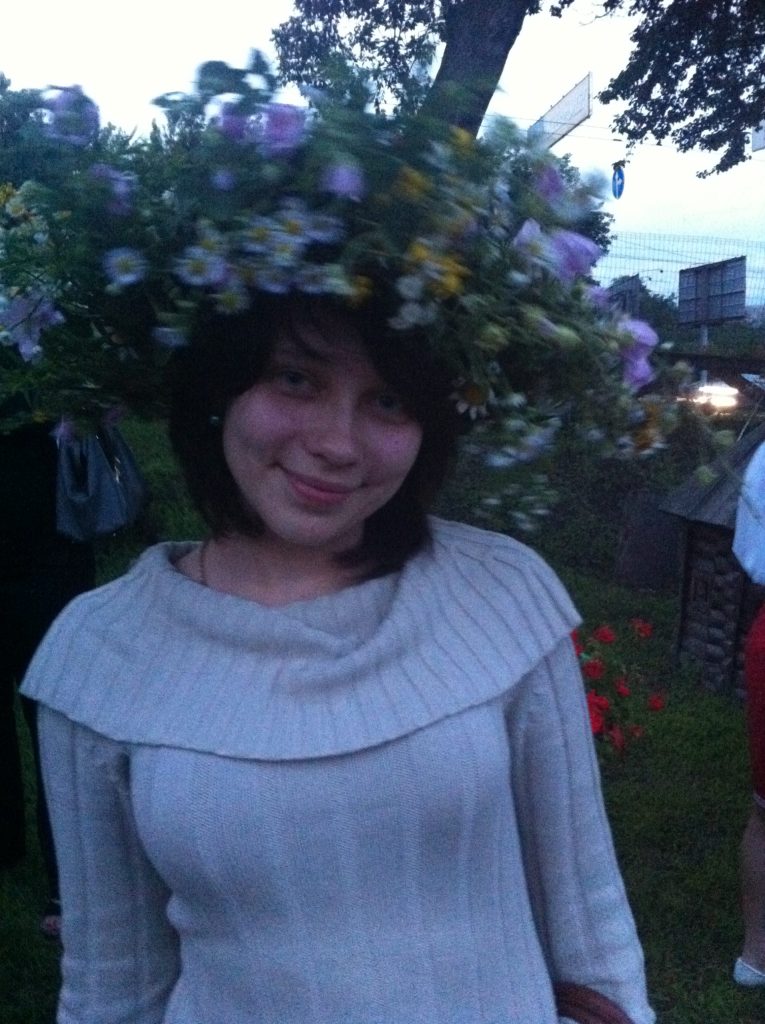
Education and first steps in the workplace
HWYD: What path did you choose after school and why?
Inna: My parents really wanted me to go to work for the railroad, just like they did. This has been our family history for generations. But I always wanted something bright, and it was definitely not the railroad.
HWYD: Did you immediately realize that you wanted to build a career in business?
Inna: No, not at all. For a very long time I thought that business was not about me. I imagined myself in a TV newsroom, creating content, programs, and stories. At that time, no one realized that classical journalism would gradually disappear, and entertainment content and YouTube would become dominant. I thought I would either go into news as the “fourth estate” or into entertainment formats. I got into business by accident. And just as accidentally, it turned out to be IT, and later - a traffic-related field.
HWYD: What was your first job and what did it give you?
Inna: My first job was as a proofreader in a publication. It gave me stamina and perseverance. There was very strict discipline and a very small salary. My first salary was 200 hryvnias. It was 2007.
Entry into the iGaming and CPA sphere
HWYD: How did you get started in this field and what were your first impressions of the industry?
Inna: My journey began in 2010 with the Khreshchatyk poker club. Back then, I was a fourth-year journalism student and worked as a part-time journalist at the poker series. That's where I met Tolik. After several years of working in various companies and in the poker industry, he suggested that we start a CPA network together. That's how I first got to the conferences, the professional community, and the industry itself. It was from there that my first networking began to take shape.

Then came the main company, the parent structure, and the product line. Then there were various networks, teams, work formats, experiments. At some point, I even had a poker school. We were engaged in the gamification of products - to be honest, I've done a lot of different things over the years. If you don't count the two years of poker as journalistic experience, then in total, I have about 13 years of experience in the industry. During this time, I tried many directions. Not everything worked out, a lot of things didn't work out at all. But some of it has definitely worked out. And I recognize this.
HWYD: What seemed the most difficult or incomprehensible at the start?
Inna: The most difficult thing was to understand how traffic works in general. It seems obvious now, but 10-11 years ago it was a completely different reality. The explanations about “traffic”, “grids”, and “matchmaking” sounded very abstract. And here I am very grateful to my former boss, Ildar, who always said: “Inna, if you know the math, you know everything.” Even if your first business doesn't take off, knowing the basics allows you to try again and eventually figure out where you'll succeed.
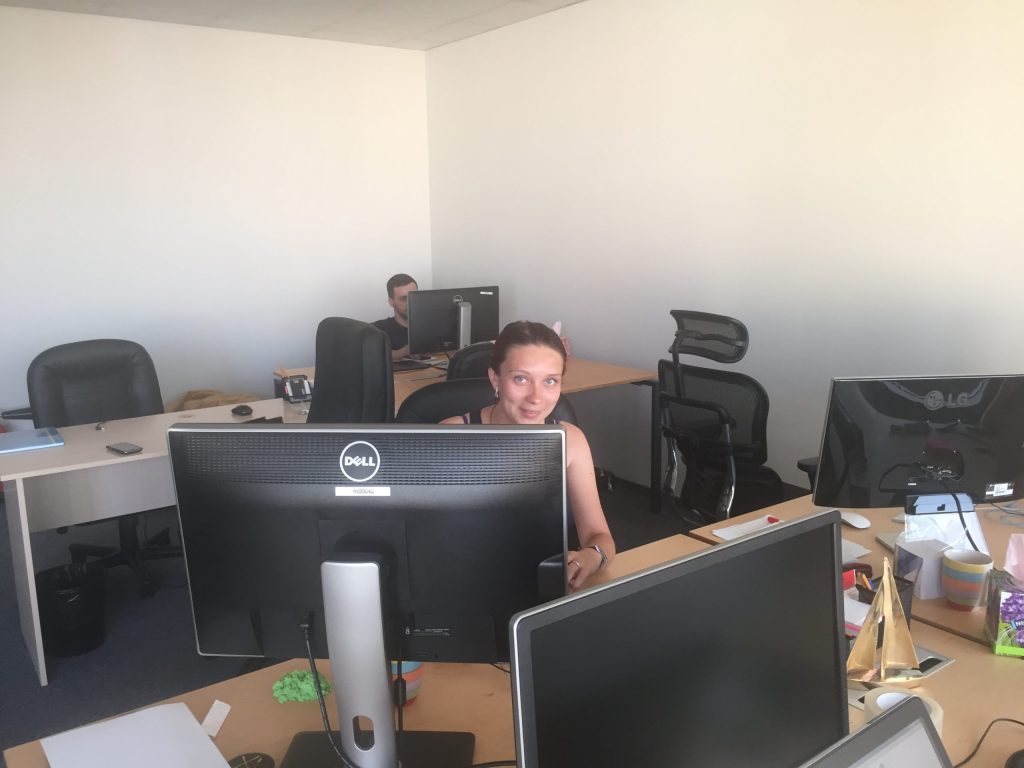
HWYD: At what point did you realize that this environment offered an opportunity for scaling?
Inna: I didn't have a specific “moment”. We were growing up together with the industry. I came in and everyone was small, and I was small. There were big players, but it was a completely different league, with which we didn't even intersect at the time. So it felt like we were all growing and scaling in parallel.
HWYD: When did you feel ready to create something of your own?
Inna: It wasn't a sudden decision. There was no moment of “I woke up and realized that's it, I'm doing my own thing.” This is a story about circumstances, support, suggestions, and the right moment. Everything just worked out - one plus one equals two.
HWYD: What was crucial for you in building the affiliate program?
Inna: Two things: a large number of direct advertisers and a strong team that knows how to work with traffic. When these elements converge, the system works. When something falls out, everything starts to fall apart.
HWYD: How did you build the team and culture within the projects?
Inna: Initially, the team was formed from people who were already around and wanted to grow together. It was easy to start from scratch with them. Later, we started looking for people from the market, and it is much more difficult. People come with their own experience, which is not always relevant, and it is harder to build a culture.
There were several stages: a family atmosphere, then a more corporate structure with regulations and boundaries of responsibility. I don't consider myself a genius of corporate culture - it was a living, changing process.

Leadership, reputation, influence
HWYD: You are often called one of the key figures in the industry. How do you feel about publicity?
Inna: I'm fine with publicity because I'm used to it. This is one of the facets of my personality. I didn't have a moment when I said to myself: “That's it, I want to be public.” It happened very naturally. I didn't have any goals to be recognizable or to specifically form a public image. It just happened over time that I communicate a lot with people who have been in the industry for a long time, and they know me. Whether I am a key figure is not for me to judge. It is better to let others evaluate this. One thing I can say for sure is that I really like the people I work with, I like what I do, and I like the environment I am in. There are a lot of strong people in the industry now who have been in it for a relatively short time but already have serious business results. And this is very cool. The industry is growing, and this is more important than any personal “titles”.
HWYD: How do you build trust with your project partners?
Inna: I always say it very bluntly: trust in any partnership starts with money. This is the foundation. People will work with you if you pay. If you don't pay, they won't work with you, even if you have good human relations. You can be friends, you can have great conversations, but if you don't fulfill your financial obligations, there will be no partnership. This is a basic thing.
But there is another side to it. You can pay on time and in full, but if you are an unpleasant person, if you are difficult to work with, if you have no respect, no one will want to work with you for a long time either. So for me, it's always a balance. It's about 50/50. You have to be an adequate, honest, open partner and always fulfill your financial obligations without exception. For me, this is the basis of trust.
HWYD: What were the most risky decisions in your career?
Inna: To be honest, I didn't have any one decision that I would call the “riskiest” one. Launching any new project is a risk. And not all of them were successful. Moreover, most of them were not successful the first time. This is normal. So for me, risk is not something exceptional, it's part of the process. Rather, what is important here is the ability to accept that something didn't work out. To accept your weaknesses, to accept the moments when you were not perfect, not the strongest. This is also part of maturity. The realization that you are a living person, not an infallible function. There were many risks. Not so many of them were successful. But they all taught me something.
HWYD: What is more important to you in the long run - the result or the reputation?
Inna: Over the long haul, it's definitely reputation. No doubt about it. If you want to build a “come, earn, and leave” business, then maybe a short-term result is more important. But if you are building something for the long term, if you plan to work in the industry for years, reputation is everything. You can show the result once, twice, three times. But you either have a reputation or you don't. For me, the answer is very simple: reputation.

HWYD: What does your life look like outside of work? What fills you the most?
Inna: People fill me up the most. My inner circle. This is my family, relatives, close friends. This is my foundation. Besides, I really like my lifestyle in general. The opportunity to travel, see new places, learn something new. It also fills you up and gives you a sense of life. But to be honest, my family and those people who are with me not because of work will always come first.
HWYD: How do you recover from difficult periods?
Inna: I am recovering in Cyprus. I just come there and spend as much time as possible by the sea - with myself. I walk a lot, read a lot, breathe a lot. I really like the Cypriot vibe, this island history, the sense of calm and simplicity. After four years, I realized that Cyprus suits me very well. I don't need to do anything special to recover - just being there is enough. A week is usually enough for me to feel alive, healthy, fulfilled and happy again.
HWYD: You travel a lot and are constantly on the move. How do you cope with flights, changes in biorhythms and jet lag? Do you often manage to go home and see your family, or has life on airplanes become an integral part of you?
Inna: To be honest, I don't feel jet lag at all. Flying is very easy for me. I can fly anywhere and feel like I've never been anywhere. It seems to me that my body is just used to it. I can fly for 4-5 hours, arrive and immediately be in a working or normal state of life.

It's more difficult with loved ones. I try not to fly for more than two weeks. I always come back to Cyprus. I rarely see my parents - two or three times a year. There is only the phone, communication and acceptance of this reality.
Future and meanings
HWYD: How do you see your next professional stage?
Inna: In the future, I would like to focus more on my family and myself at some point. I can't say that I need to “rest” because I'm not tired. But I would like to be able to switch gears and have more freedom. It's important for me not to be on call all the time. Because at some point, when you have calls from morning to late evening, you don't have time to do anything, and at the same time, you have flights, logistics - it's not the work itself that exhausts you, but the pace. I would like to have more time to watch something interesting, to live an interesting life - without having to constantly run somewhere, call someone, be in the process 24/7.
And the next professional stage... I don't know. Maybe I would like to do something completely different. I even think sometimes: perhaps a restaurant by the sea. Or some basic consulting in an area that I understand well, just in a format that gives me more freedom to do what I want. But I definitely don't want to leave the industry completely. I'm interested, I like it. I think it's great for me and for the industry if we move forward together. It's like that.
HWYD: What challenges are you most interested in working with now?
Inna: I am always interested in new markets - it is a constant challenge. Because it's complicated: different rules, different people, different context, different logic. But that's what keeps you on your toes. I also find it very interesting when people set a high bar for themselves and then actually reach it. When someone first declares a “great level” and then confirms this level with their actions, it's a thrill to watch and be part of such a process.
HWYD: What impact do you want to leave in the industry in the long run?
Inna: It seems to me that I have already left him. If this is true, I am very happy about it. I think a lot of girls have come to believe that girls can do a lot too. And that they don't have to “shrink” to meet expectations. If at least part of this happened because I was just doing my job, being visible and not hiding, then that's already very cool.

 HWYD: What is the main marker of success for you today?
Inna: For me, like for everyone else, the basic marker of success is money. It sounds trite and even mercantile, but it's true. Success is measured in money. If you have money, you are successful. If not, well, I'm sorry, no matter how it sounds. Then there are nuances: you can be an introvert and stay at home, you can be an extrovert and party, you can be super-public - it's all a lifestyle and a choice. But without money, the very fact of “success” is very difficult to confirm.
The final block
HWYD: Who do you feel like today, without roles and titles?
Inna: I'm just an ordinary girl. And, by the way, I don't really feel like a “woman” - I feel like a girl. I'm still very interested in everything: I'm interested in living, I'm interested in researching something, I'm interested in doing something, communicating with someone, learning something. I'm just interested in being a human being, and that's enough for now.
HWYD: What advice would you give yourself at the start of this journey?
Inna: I would advise myself not to be afraid of anything. To trust people more, to love people. Love your team, your family, your environment. Respect your competitors, treat everyone with dignity and not deceive anyone. This always comes back to haunt you on the course, both in a good and bad way.
HWYD: And the traditional HWYD question: what do you want to say to the people from the industry who are reading this interview?
Inna: Don't give up on your dreams - if they are real. Go ahead, because everything is real. But it is important to realize that this is not a fairy tale. You never know what will happen next. And no one else does either.
C'est la vie.
Важливо
After a conversation with Inna, you are left with a feeling of extreme clarity. In a world where everyone tries to appear to be more than they really are, she allows herself the luxury of being just «a girl who is curious about life.» Her path is not a straight line to success, but a series of risks, some of which did not work out, but each of which gave her the same grip she mentioned when talking about schoolbooks.
Today, Inna Gagarin is moving to a new level - an international context, new markets, and a search for freedom that is worth much more than any check. She has already left her mark: hundreds of girls in the industry look up to her as proof that you don't have to shrink to fit into someone else's expectations.
And «c'est la vie» in her performance sounds not like a sigh, but like a conscious acceptance of the rules of the game in which she has long been more than just a player...

Важливо
HWYD MEDIA has analyzed the HELL Partners infrastructure in detail to understand what tools allow partners to get a stable ROI at a distance.
HELL Partners - is a direct advertiser that has transformed the classic affiliate program model into a technology platform. The brand focuses on creating its own products, where high conversion is not a marketing promise, but the result of deep engineering and analytical work.
Products that generate ROI: Analyzing your own brand line
The main difficulty of working through intermediaries is the inability to influence the funnel. HELL Partners has eliminated this barrier by launching its own custom brands, each of which is tailored to different scenarios of player behavior and different types of traffic.
- Hell Spin: A premium online casino product focused on high retention. Thanks to a unique visual concept and well-thought-out gamification, the brand is focused on LTV, which is critical for partners working on the RevShare or Hybrid model.
- Ivibet: A universal product that combines a casino and a betting line. It is an ideal solution for teams that work with event traffic or launch betting offers, providing cross-conversion.
- Slotsgem: The most flexible product in the line, specially optimized for quick user decision-making. It shows the best results on sources with «fast» traffic, where the speed of registration is crucial.
In addition to the current lineup, HELL Partners is preparing to launch two new products that will expand the capabilities of partners in the near future. The result of this strategy is a stable 25%+ CtD (click-to-deposit) and more than 50% RtD (reg-to-deposit). These are the numbers that allow buyers to confidently enter the auction, knowing that each paid registration is highly likely to turn into a deposit.
HWYD: Christina, your products demonstrate a Reg2dep of 50%+, which is a serious indicator for direct advertising. Could you tell us how internal development helps such conversion? And what exactly can partners expect from two new products that are being prepared for release?
Kristina: We have been working on a platform that has been improving and adapting to the needs of the market for years. As a result, we have a technological ecosystem optimized for all major traffic sources. As for the next new product that we expect in the spring, it will be our second sportsbook (with a full-fledged casino section). It will be significantly different from the existing Ivibet: it will have a wider GEO coverage, an expanded betting line, and more attractive odds for players. The second new product is planned for the summer - it will be a casino with a focus on the already well-known Tier-1 GEO.
Kristina, Head of Affiliates, HELL Partners
Global coverage and no traffic restrictions
HELL Partners provides access to more than 20 GEOs covering all priority areas: Tier-1, Tier-2, and Tier-3. Such a wide geography allows partners to diversify risks and scale successful relationships within one platform without the need to look for new advertisers for each market.
An important feature of PP is loyalty to traffic sources. HELL Partners understand the specifics of each channel:
- PPC: Maximum relevance of landing pages to key queries.
- SEO: Stable brands that promote organic growth and player confidence.
- In-App and Facebook: Providing free webview applications that do not require rental payments, which significantly reduces startup costs and improves the team's overall ROI.
Technology stack
Professional arbitration is impossible without accurate data. HELL Partners is built on the NetRefer platform, a benchmark in the iGaming tracking industry. This allows partners to conduct in-depth analysis of every user action.
The system supports full integration via API and Postback, which allows you to build complex analytical dashboards on the side of the buying team. You get a transparent picture: from the first click to the repeated deposit. In addition, the availability of a wide range of ready-made promotional materials (landing pages, banners, creatives) allows you to reduce the time from idea to first launch to a few hours.
Marketing and PR: The Devil Wears Prada concept«
The brand's approach to PR and marketing is worth noting. HELL Partners builds recognition through strong concepts. All year round, the brand works in the concept «The Devil Wears Prada», which is manifested not only in style but also in real actions: VIP partners receive limited edition branded gifts from Prada. This is part of the brand positioning that enhances the sense of status and involvement in a closed circle of professionals.
You can see what Hell-gifts look like and feel the brand's atmosphere in their Instagram. The company relies on exclusivity: for example, during the conference in Barcelona, a private dinner Flamenco Night was organized for TOP partners - a combination of high gastronomy and an authentic show, which once again confirms the company's People-first approach.
HWYD: HELL Partners is known for its unconventional approach to loyalty. How did you come up with the idea of the concept with Prada, and how do such private events help build a true partnership that goes beyond just driving traffic?
Kristina: The idea was born from the very DNA of the HELL Partners brand. For a large company, giving premium gifts to partners is the basic minimum. The choice of Prada was not accidental: the cult movie The Devil Wears Prada became a key source of inspiration for our concept. Our partners share our values, and we equally value style - both in clothing and in doing business: clarity, rigor, creativity, impeccable quality and result orientation.
Our events are a logical extension of this philosophy of giving. Private side events allow us to build partnerships deeper than is possible at conferences. This is a space of trust, personal contact, and a common sense of level - when business starts with live communication, not presentations and KPIs. We organize intimate side events for VIP partners with a well-thought-out entertainment program, where each guest feels the attention, comfort, and value of their presence. No noise of exhibition halls, no rush and no formalities.
This format is effective because:
- partners and managers can easily communicate in an informal atmosphere;
- It gives you the opportunity to share emotions, impressions, and vivid memories that form a real connection;
- conversations become deeper and more honest, and decisions become faster and more informed;
- long-term relationships are built, not one-off deals.
Private events are not about scale, but about the quality of contact. It is in these moments that strong partnerships are born that last far beyond the conference.
Kristina, Head of Affiliates, HELL Partners
Publicity, event activity and SiGMA Dubai 2026
The HELL Partners team is a regular participant in the most important industry events - you will meet managers at every significant conference such as SiGMA and iGB. This allows the company to keep abreast of market trends and maintain a lively dialog with partners.
The next strategic step will be participation in SiGMA Dubai 2026. And here, HELL Partners is preparing something truly grandiose that goes beyond standard networking: an exclusive helicopter ride awaits VIP partners!
Important for those who are flying to Dubai: this time, the team will work without its own stand, but HELL Partners managers will be available to meet and talk at the conference. This is a great opportunity to discuss custom conditions, plans for future GEOs, or just get to know the HELL Partners crew in person.
The Verdict
HELL Partners - is an affiliate program created for those who value consistency and direct access to the product. The combination of their own products, a powerful technical stack, and loyalty to partners makes them one of the most stable players in the modern iGaming market.
HWYD MEDIA recommends HELL Partners to professional teams that value high envelope (CtD 25%+), no app rental fees, and direct communication with the advertiser without intermediaries.
Важливо
Contacts for professional cooperation:
Affiliate managers:
HELL Partners on social media:
- Telegram: Hell Partners Official
- Instagram: @hell_partners
- LinkedIn:Hell Partners Official
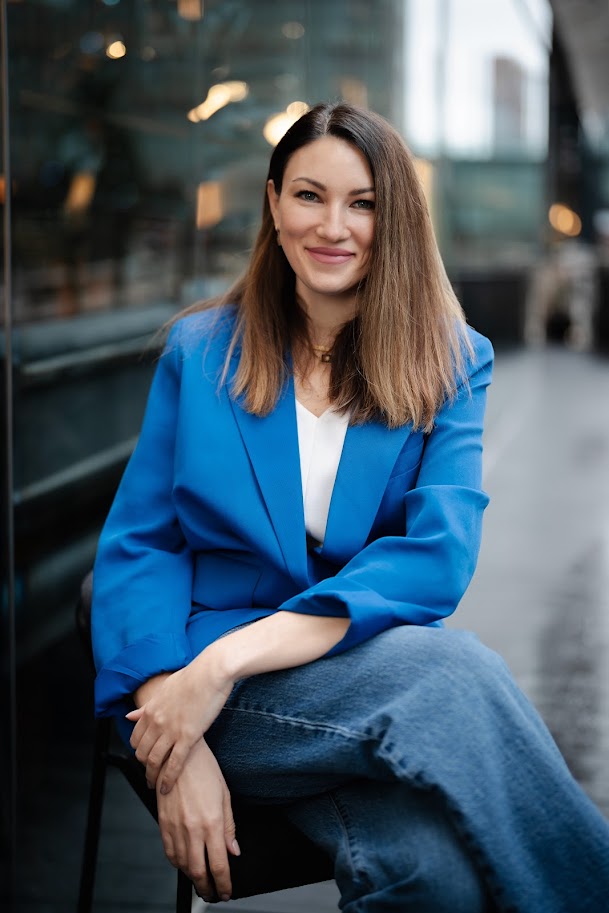
We met Dasha a few years ago through fruitful networking and mutual acquaintances. She was pleasant, sincere, and had an extremely sharp mind - that's what I noticed then. I knew little about her work, but it was enough to realize the level and importance of her as a specialist for the companies she represented: back then, Daria was a non-media person, always in the shadows, but she was guiding and setting the strategic direction for large companies.
I recently found out that she has taken over AFFSTELLAR, completely reorganized the company, and is actively and successfully working to restore the company's reputation and good name. But she will tell us all about it in our interview. Traditionally, stock up on hot tea, make yourself comfortable, and enjoy the read!
Kostya Golubev - editor-in-chief of HWYD
Childhood, youth and first job
HWYD: Tell us about your childhood. What kind of family did you grow up in? When and where were you born?
Daria: I was born and raised in Kyiv, the most dear and beautiful city in the world. My childhood is closely connected with its history: I loved exploring the old streets, exploring architecture and historical sites, because many generations of my family lived here.
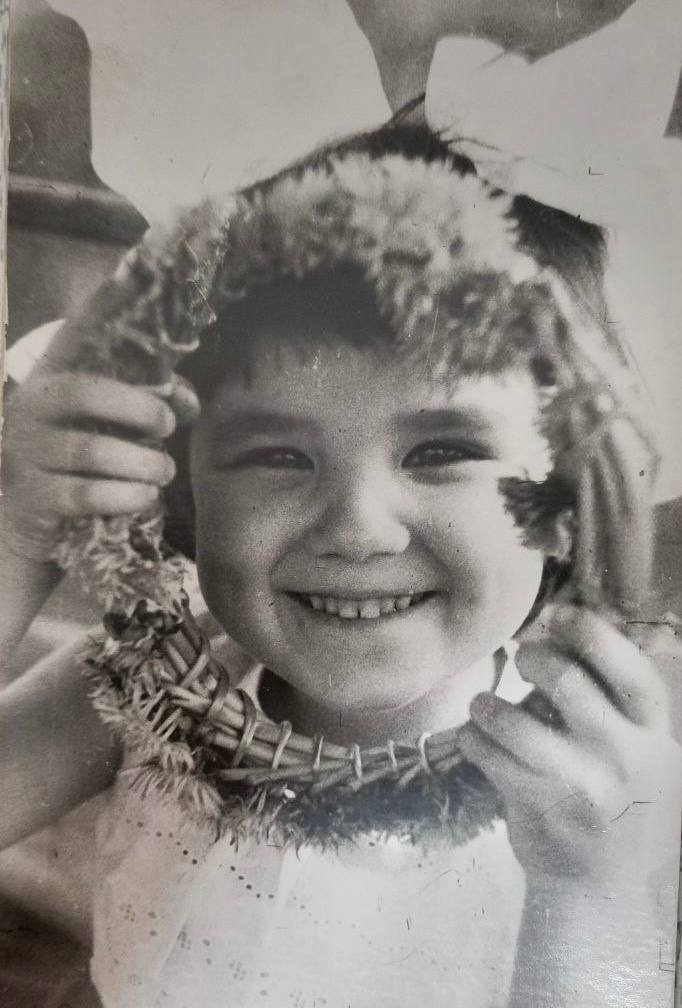
My parents are a teacher and an engineer. Perhaps this is why I realized very early on that business is a combination of logic, systematicity and creativity, and that this is what I want to do. Even as a little girl, I saw business as an opposition to the first professions with the opportunity to go beyond and think more broadly, and therefore earn more 😉
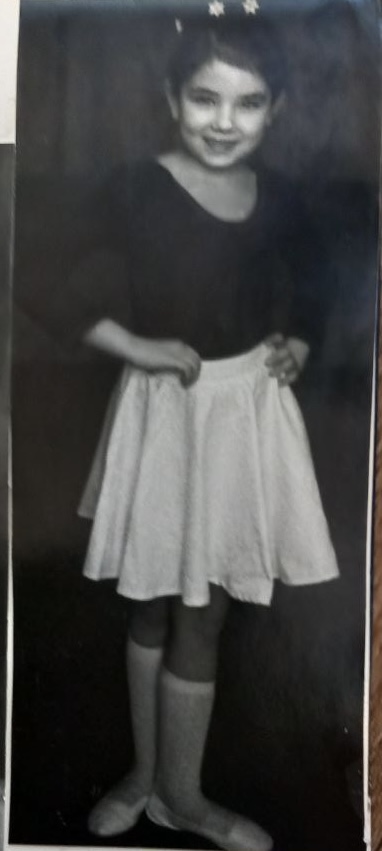
At the age of five, I was enrolled in dancing, devoted five years of my life to it, and I must admit that after that I don't want to watch any dance shows anymore.)
HWYD: Describe your most vivid childhood memory.
Daria: Summer. Kyiv courtyard. Lots of greenery. Vacations are just beginning. Friends are already waiting outside, and there is the same childhood excitement to run away to Hydropark, where the Dnipro was completely different then than now. And then to return home with wet hair and naively explain to my mom that we just got caught in the rain, sincerely believing that she will believe))
HWYD: What did you dream of becoming when you grew up? Why?
Daria: I have always been fascinated by economics, trade, numbers and calculations. For me, this is a form of creativity - creating systems, processes and models from scratch. I've always enjoyed seeing abstract ideas turn into working mechanisms.
HWYD: How did you study at school? What subjects did you like the most? Which ones the least? Why?
Daria: Oh) I did well in my studies - 4-5 (there was such a system back then). But there were questions about my behavior: it was difficult for me to obey rules that seemed illogical. Because of this, I periodically had conversations with teachers, and after graduation, I felt absolute happiness.
My favorite subject is chemistry. Experiments, experiments, searching for patterns. My least favorite subjects were those where the teachers were not invested in the learning process - it was always boring and uninteresting for me. These were the classes I most often skipped, which, again, did not go unnoticed.
HWYD: What university did you graduate from? Why did you go there?
Daria: I love to learn)) That's why it's a lifelong process for me. First, I graduated from Kyiv Aviation University with a degree in Marketing. It's funny that when I told people where I was studying, many were sure that I was preparing to become a flight attendant 🙂.
Later, I studied financial management at the University of Trade and Economics. And today I am studying business and entrepreneurship at a London university.
HWYD: What was your first job and where did you spend your first salary?
Daria: The first work experience is always unforgettable. At the age of 14, I felt an urgent need for financial independence and went to sell books. And of course, I spent my first salary on shoes - the most fashionable ones.) During my student years, I managed to play many roles: I worked as a counselor, participated in children's parties as an animator, and was a model. All these experiences have shaped me as a person.
Arbitration and successful crisis management at AFFSTELLAR
HWYD: How did you find out about the industry? What was your impression of it?
Daria: About five years ago, I got acquainted with this niche, assessed its scale and opportunities. I was most attracted to the market dynamics, the speed of decision-making and, of course, the financial potential.
HWYD: Describe your first position in affiliate marketing. What were your responsibilities?
Daria: Initially, I entered the business as an investment analyst and asset manager. Gradually, as I got to know the specifics, I saw the strengths of this area more and more. My key responsibilities were analyzing strategies, assessing potential and risks, and finding a balance between them.
HWYD: How did your career in the industry develop further?
Daria: Later, I received an offer to relaunch the AffStellar brand and take on the role of CEO to develop and scale the business during a difficult period for the company.
HWYD: How difficult was it for you to make the decision to lead the company in a very difficult period?
Daria: It was a very difficult decision. I took almost a month to make it, which is a critically long time for me. The main stop factors were the difficult communication aspects of the previous team with partners, as well as the loss of trust in the brand and skepticism about the new team.
HWYD: How did you see the crisis being overcome, and what methods did you implement?
Daria: The first and key step is an open dialog with all partners: meetings, calls, honest conversations, closing the negative from the past and creating new conditions for cooperation. The second important element is the team. I came with a completely renewed, motivated team that I can rely on. The next step is systematic work: to fulfill our obligations on a daily basis. Only forward movement.
HWYD: What are you currently doing at AFFSTELLAR? What are your goals and directions for development?
Daria: My key task today is to build transparent, long-term and successful relationships with partners and grow turnover together with them. Other important areas include creating internal sources of traffic generation and achieving the company's planned financial targets for revenue and profit.
HWYD: Where do you see yourself in the future? Do you plan to stay in the company and develop it, or is your task to be an exceptional crisis manager? What growth points do you see for yourself and what horizons will you conquer?
Daria: My primary task is to bring the company to the planned targets, which we are now confidently moving towards. And then we will see. The market has a huge potential, there are many ideas, but I am always very cautious with my forecasts. Nevertheless, I am honest with myself and my partners, and I know for sure that the team and I are doing a titanic job together, which we are proud of and passionate about.
Важливо
HWYD: What advice would you give to newcomers who are just planning to join the affiliate marketing industry? And what vacancies are currently open at AFFSTELLAR that could be useful for our readers?
Daria: My main advice is not to be afraid of making mistakes, not to be shy about asking questions and to have a deep understanding of the field. Open communication and responsibility for your commitments are the keys to success.
As for the team: we are currently actively scaling up and will be glad to see affiliate managers and media buyers, in particular. If you have at least two years of experience in the niche, a desire to develop and become part of a reliable team, we will be happy to review your CV.
You can contact us via Instagram.
Важливо
In modern affiliate marketing, the line between an affiliate program and a media buying team is gradually blurring. However, few companies manage to build a model in which both components work not in parallel but reinforce each other. CPA Crew is an example of such an approach: the brand combines in-house media buying and iGaming affiliate network into one managed system.
HWYD Media figured out how the CPA Crew works, why the team thinks in terms of infrastructure and processes, and what exactly the market gets when an affiliate program is built by a team with practical experience in traffic buying.
From experience to brand: how CPA Crew was formed
CPA Crew has a clear foundation that is felt in every decision - 7+ years of experience in media buying and affiliate marketing in the iGaming niche. This background fully explains the brand's style. CPA Crew does not rely on loud statements, but focuses on what is of the greatest value in the performance environment: real connections, fast decisions, quality control, and predictable interaction. The team formulates its position directly: no unnecessary words and no illusions - only connections that give results.
Ihor,
CEO/Co-owner, CPA Crew
HWYD: Igor, the development of any strong structure goes through crucial decisions. What stages do you consider to be key in the development of CPA Crew, and what has become the main driver of scaling over these 7 years?
Ihor: There were several key stages. First, we realized that media buying should not be a separate area, but the foundation of the business. That is why from the very beginning we built not just an affiliate program, but a system where our own buying actually acts as an internal laboratory: we first test everything on ourselves, and only then pass on ready-made solutions to partners.
The second important stage is investments in infrastructure and processes: analytics, technical solutions, and the team. We did not scale chaotically, but first built quality control, which we are still doing, having a small binge, but we are also actively scaling. The main driver of growth is the practical experience of the team and the focus on long-term relationships with advertisers and partners. We grew not due to hype, but due to stable results and reputation, because we have really cool experts in the gambling niche.
Media buying as a foundation: why expertise determines everything
In many affiliate programs, media buying exists as an additional area. In CPA Crew, it is the foundation that shapes the entire approach to business. Internal buying plays a key role in the entire ecosystem: it acts as a «filter» and the main R&D center.
Before any offer enters the affiliate network, it goes through rigorous tests by the internal team. This allows us to clearly understand what works in the current moment and what does not. The company operates with large volumes of traffic, working with Facebook Ads, UAC, PPC, Push, In-App, and ASO. Such expertise gives CPA Crew partners a huge advantage: they receive data based on real tests and spent budgets, not on theory.
HWYD: Alexander, internal buying is your main source of expertise. How do you build a system of tests and analytics to pass on only the most effective and proven solutions to your network partners?
Oleksandr: Our entire system is built on two key elements: experience and a transparent evaluation system. Experience. As a buyer, we have an exclusive opportunity to constantly test a huge number of geos and products. This allows us to avoid templates and stereotypes in our work. Transparent evaluation system - we keep detailed analytics on all metrics that we collect from all ads that have ever been launched by our buying agency. This allows us to quickly assess the potential and effectiveness of each new product.
The symbiosis of these factors forms a single system in which, before launching any product, we know the maximum prices for the cost of a click, registration, and deposit that will allow us and our websites to make a profit. We do not rely on luck - we keep statistics and evaluate each new product through the prism of our experience and analytics archive. This allows us to significantly reduce advertising costs on tests, as we immediately remove some products from the pool due to non-compliance with key metrics
Oleksandr, Head of Media Buying/Co-owner, CPA Crew
Why is a win-win strategy with an advertiser more profitable than just knocking out bumps?
To prove how the team's experience transforms into results, Oleksandr shared a real story about why it is important to build adequate communication with the advertiser, and not just «pour into milk.».
Start and first challenges
In early October 2025, we launched a new product for Ecuador. The starting CPA rate was $23. At the same time, the deployment rate was kept at $13-15 (this is for those who constantly whine that it is impossible to pour on CPA). After the test, the capacitated recall gave the go-ahead for scaling. However, after the first 500 FDs, we ran into a classic problem: the cost of the deposit increased while the quality remained the same, and it became unprofitable for us to work.
What do 99% buyers do in such a situation? That's right - they ask for a bump. We're no exception: we went for a +$10 bump (yes, it's okay to ask for +30% to the bet right away). And what do you think? We were refused.
An alternative way:
- Work for the budget: This could have been the end of the story if not for the persistence of our business manager and the adequacy of the product manager. We were offered an alternative - work on a budget. They allocated only $4k to start with, but we are not proud - we immediately returned the traffic to work.
- Results in numbers: After switching to a budget, we buried ourselves in analytics and focused only on those approaches that gave the best return on product.
The results speak for themselves:
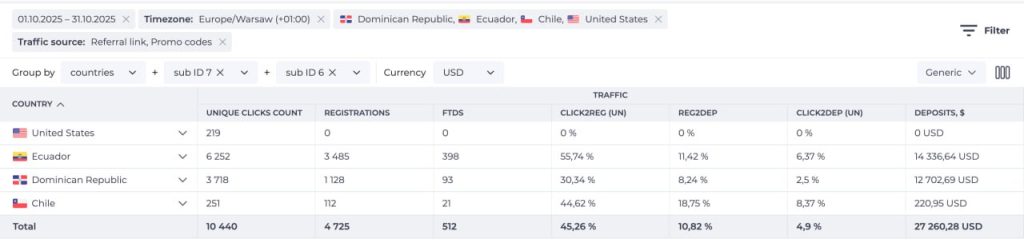
October: The advertiser appreciated the quality and allocated another $4k for two new geos - Chile and the Dominican Republic (total $12k budget). Our traffic brought the depot $27k.
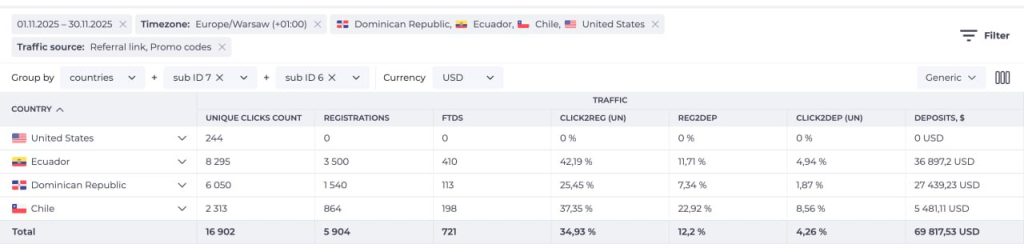
November: Recl had set a budget of $30k for us. We shed $29k, which brought the product $69k in deposits.
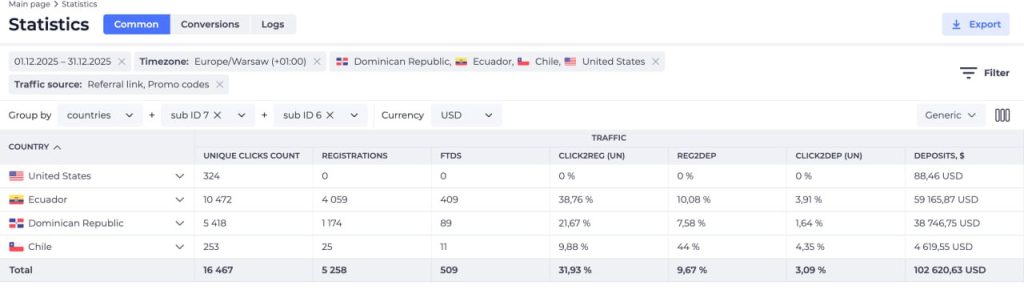
December: We were allocated the range of $40-60k. Due to the pre-Christmas traffic surge, we only mastered $32k, but this traffic contributed a total of $102k to the product.
What do we have for January 2026?
At the time of writing this case study, the agency is budgeting from $60k to $100k for our January buy for the month of January with the possibility of expansion, and we are already discussing the budget for February.
Важливо
The Verdict
Instead of starting to dilute traffic with fraud or crashes back in October (as most of the market does), we chose a more difficult but more profitable way - dialog. We have built a system where both parties win. I am already planning to load buyers for February under the budget of $200k, and the advertiser understands that our traffic pays off in x3x5 over a period of 3 months.
As a good friend of mine says: «Do it right, and it will work out.».
Affiliate program: infrastructure and service for results
The CPA Crew affiliate program is built on the principle of «from buyers for buyers». In addition to access to exclusive iGaming offers on the CPA, CPL, or RevShare models, webmasters receive powerful technical support that is usually available only to large in-house teams.
What CPA Crew gives to its partners:
- Infrastructure strengthening: A full set of tools - from APIs and postback to providing stable webview applications, which is critical for a stable pour.
- Production on request: Assistance with creative and design development, which allows partners not to be distracted by technical routine.
- Expert support: Managers speak the same language with buyers, understanding the technical nuances of each traffic source.
This consistency allows partners to work predictably, scale faster, and avoid unnecessary barriers to profit.
This consistency allows partners to work predictably, scale faster, and avoid unnecessary barriers to profit.
Ihor,
CEO/Co-owner, CPA Crew
HWYD: What unique value does CPA Crew provide to partners, and what does “partnership for the long haul” mean?
Ihor: Our uniqueness lies in the fact that CPA Crew was created by buyers for buyers. We understand the real pains of our partners because we are constantly driving traffic ourselves. For us, a “long-term partnership” is not a one-time profit, but a joint growth. We invest in infrastructure, support, design, and help with technical solutions and scaling. It is important for us that our partner earns steadily, because only in this model do both parties benefit.
Values and work style: when reputation is formed by processes
CPA Crew - is a brand that doesn't try to please everyone. Their communication is straightforward and pragmatic: they talk about numbers, pace, and real connections, not ephemeral promises. In the performance environment, this style is a marker of maturity: when the company's values are manifested not in slogans but in daily decisions - in the selection of products, the depth of analytics, and the ability to maintain stability for its team and partners.
The reputation of CPA Crew is built on predictability. It is important for the team that each partner understands that every offer is backed by a well-established logistics and technical base. The company invests in the development of an internal culture where professionalism is above hype. This allows us to maintain a high pace of work even in times of market turbulence, turning algorithmic challenges into new growth points for the team and partners.
HWYD: Arbitration is a high-pressure area. How do you maintain a high reputation and keep internal processes stable even in times of market turbulence?
Oleksandr: It is important to understand that crises in our industry are not an isolated phenomenon, but the conditions in which we have to build our business. For us, the crisis is an essential part of our роботи🤷♂️.
All of our test/scaling/internal traffic quality assessment and team management systems were created and adapted during the so-called “storms” and “crises”. We've not only gotten used to them, we've grown as a team from these crises and the challenges they've caused. As a result, what most people call “market turbulence” has become a normal working environment for our team.
Oleksandr, Head of Media Buying/Co-owner, CPA Crew
Важливо
CPA Crew - is a brand that shows what a modern iGaming model should look like when media buying and affiliate program work as one system. The team draws on 7 years of experience, keeps the focus on practical solutions, and builds an infrastructure that enables partners to work faster, more stable, and more predictably.
HWYD Media recommends CPA Crew as a reliable partner for those who are looking for not just offers, but a professional environment and technical support from market practitioners. If you value management expertise and tool stability, CPA Crew is the right choice.

There are people who come to affiliate marketing for the sake of quick numbers. And there are those who are looking for its internal logic: how everything works, why it works, and how to make sure that success is not a random flash in the pan for one month.
Alisa Melnyk is one of them. Her story begins in Lviv, in a family of artists, where art was not a choice - it was an environment. The smell of paints, sketches, conversations about form and meaning, the habit of looking closely. And although the classical creative path seemed like a logical scenario, at some point in this story another word appears - scale. First works, first ambitions, first strong teams, and “adult” digital. And then - an accidental entry into affiliate and iGaming, which very quickly ceased to be accidental. Dozens of found influencers, first leadership experience, large budgets, team management, and the understanding that there is always one thing behind any integrations and campaigns: the system or lack thereof.
In this interview, Alisa shared her honest thoughts on perfectionism and directness, what “voluntary captivity” of an affiliate looks like, the power of communication, painful management decisions, and why she brings students to the offer not by magic, but by structure. And also about the next stage.
When you no longer want to solve ordinary tasks, but want to build architecture. Not to amplify the chaos with performance, but to create a foundation that can withstand the market. This interview is about a path that was not easy. But it is definitely real.
Childhood and environment
HWYD: Where were you born and what kind of family did you grow up in? What was the atmosphere of your childhood like?
Alice: I was born in Lviv, into a family of artists. I didn't have a question of whether I was interested in art or not - it was just around me. The smell of paints, sketches, conversations about form and meaning, constant «look closely». I was a very creative child, I drew a lot and learned early on to look at the world from a different perspective. It was the 90s, a difficult time, sometimes harsh, but at the same time very honest. And despite everything, I grew up in love and support. So when I think about my childhood, I don't feel nostalgic and painful, but rather a warm smile.
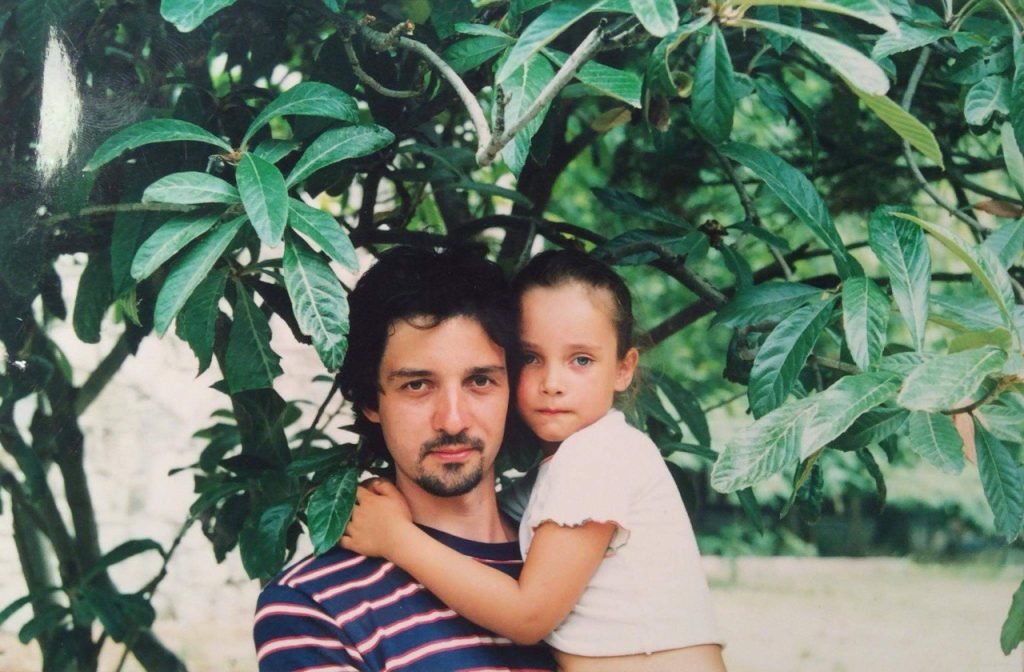
HWYD: What memory from those years do you still carry with you and why?
Alice: Most often, I remember family celebrations of the New Year. When everyone got together, the snow seemed real, and time seemed to slow down. I really loved being with my grandparents - there was a sense of security and silence with them that is difficult to explain in words. Another important memory is traveling with my parents to Crimea. The sea, long conversations, the feeling that the world is big, but now it's all yours. It was good then. Simple and real.

HWYD: Looking back, do you see any traits from your childhood that have stayed with you today?
Alice: I was a stubborn child with a temper and an «A» student syndrome. I remember how I could stand at a press kiosk for thirty minutes, make the saleswoman show me all the magazines, and then calmly say, "I need to think." And leave. I have always been for justice, did not tolerate falsity, and said what I thought-even if it was inconvenient. This inner straightforwardness has stayed with me to this day. As well as my love of solitude and my own rhythm - a typical business Capricorn, with an inner sense of the bar that I never lower for myself or for the process.

Education and career path
HWYD: You studied at an art school and later entered the Academy of Fine Arts and Architecture. Why did you choose this particular field?
Alice: Without being too modest, I just couldn't help but draw. I have always painted. Not «when I was inspired», but steadily, like I was breathing. It was a passion, a therapy, and a legal way to disappear from reality when I got bored with it. Therefore, entering the academy was not a big life choice - it was a scenario without alternatives. Everyone wanted it: both me and my parents. A separate point of pride is the budget. I didn't even consider the contract. In my head, it sounded like «you fell short». I would not have forgiven myself for that. And yes, I still consider it the right decision.
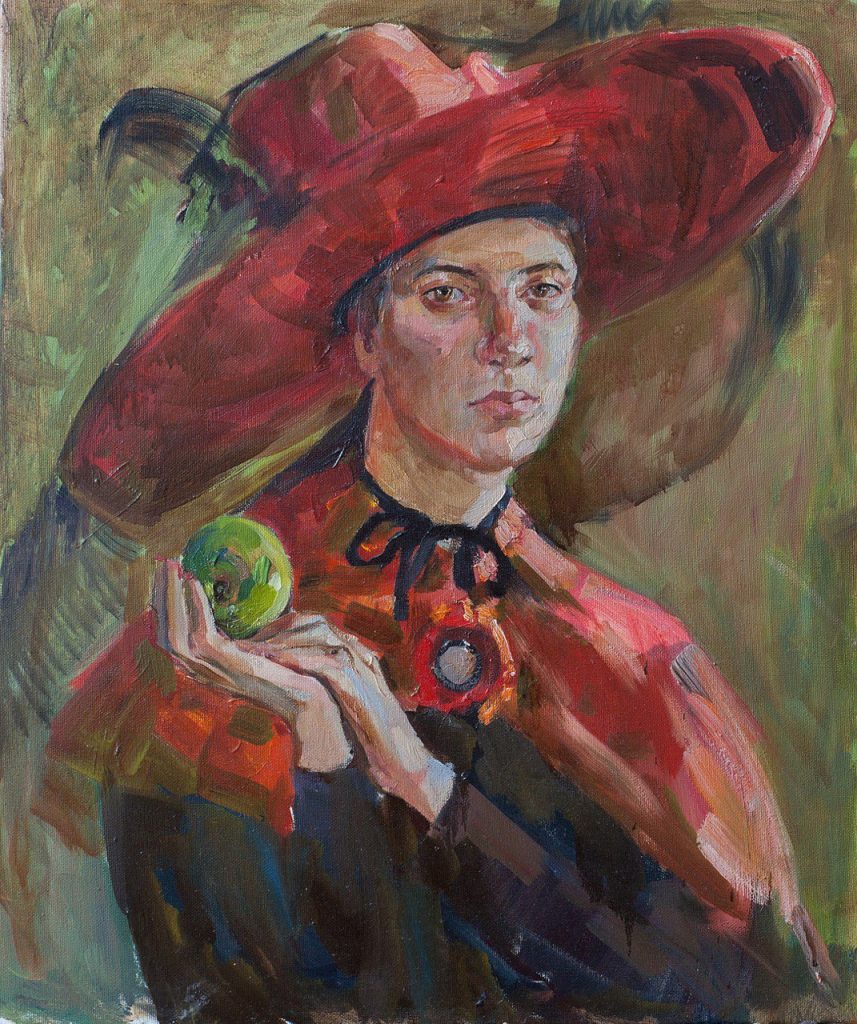
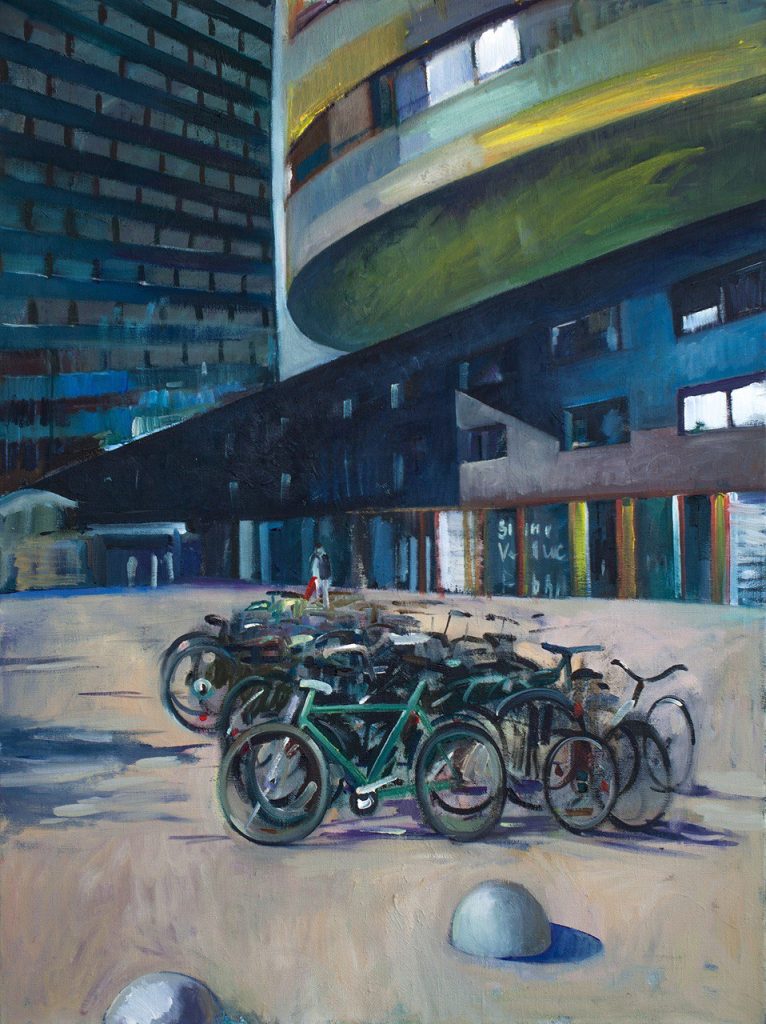
HWYD: Who did you imagine yourself to be at that time-an artist, a director, a movie person?
Alice: But no. At that time, I could only imagine myself as a person who was definitely here for a reason. I didn't think much about my professional identity, but I was very aware of my «heritage». I come from a dynasty of artists, and this seemed to be a sufficient answer to all questions. My grandfather, Ihor Yanovych, was a painter and until his death he held exhibitions all over the world. My father started out as a painter, but later went into art direction and graphic design. My mom is an illustrator. At that time, I thought simply: if I am given this, then I will somehow realize it. The details came later.
HWYD: What did this education give you, not in terms of your profession, but in terms of your thinking?
Alice: First of all, I am surprised. I can actually «see» ideas. Generating them in batches is effortless. This is my natural mode. Secondly, a cold shower.
Once my art teacher said prophetic words: «Alisa, you're very talented, but you're a bit of a clinger,» and it really triggered me. I left the classroom feeling like I had just been insulted. And then life said: «No, it was a diagnosis.» Over the years, I learned not just to come up with ideas, but to bring them to fruition. I became structured, attentive to details and very intolerant of superficiality. Now, for me, it's either a result or not worth starting at all.
HWYD: When did you realize that classical art was not the only way for you?
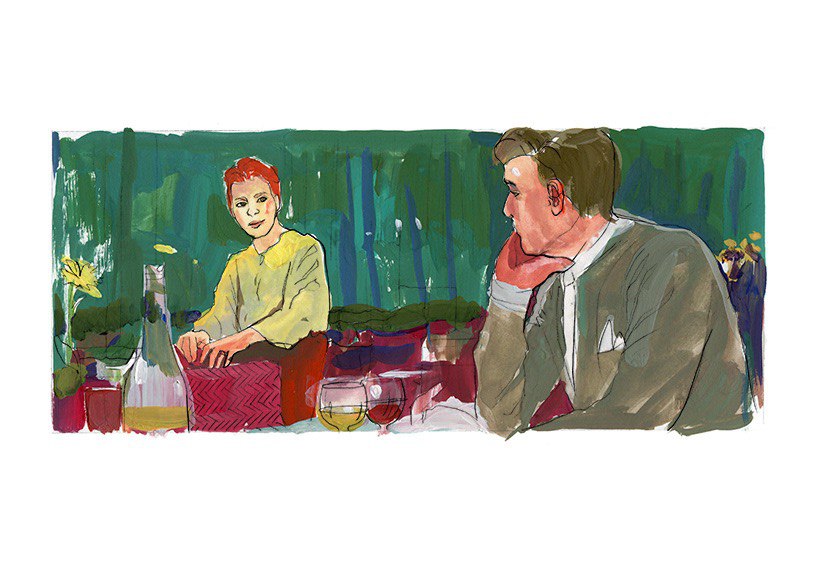
Alice: At a time when I really wanted to have my own money. To buy beautiful things. My parents have always supported me, but I'm not one of those people who are okay with being «under the wing». And somewhere deep down, I already realized that the path of an artist is a thorny path without financial guarantees. And then advertising came along. My dad was working as an art director at the time, and they were shooting commercials, and I was looking at it with a thought: «Stop. Isn't that creativity?
In my third year, after a few vivid conflicts, I decided to leave the academy. I simply stopped going to classes because I was bored. The scholarship was taken away from me because of my failing health and safety (yes, health and safety), and it was the perfect sign from above. I thought: okay, universe, I heard you. I don't want to spend my time on something that doesn't monetize, doesn't scale, and doesn't bring me drive. I have no regrets about it.
First steps in work and digital
HWYD: What was your first job and how did you get there?
Alice: My first job was as a model scout. I loved being photographed, but I realized very early on that a modeling career was not for me. I was 161 cm tall, had to go through constant castings, had to change my weight and conform to standards. And most importantly, I was not attracted to the idea that someone was choosing me.
I much preferred to choose and manage the process myself. This is a very pleasant feeling, by the way. In addition to finding girls, I also organized creative shoots, assembled teams, and thought about concepts. It was a great experience, but it quickly became clear that I wanted to have a bigger scale and impact.
HWYD: What did your work as a model scout give you?
Alice: The most important thing is the ability to find an approach to people. Absolutely different people. Understand motivation, fears, triggers, ambitions. At that time, I didn't know the word «affiliate» yet, but this particular skill later became one of the key ones for me.
HWYD: How did you get into SMM and digital in general? And do you remember the moment when you realized that digital was serious, not just a “temporary thing”?
Alice: I had an interview with Moreca Atelier, a Ukrainian brand with a very ambitious bid for the international market. At that time, we were doing things that few people in their 20s could boast of: global collaborations, including with hip-hop artists like Future and Jay-Z. The bar was immediately set very high. I wasn't formally an SMM specialist at the time, but my boss believed in me because of my soft skills. I was hired into the team and paid for an SMM course at Bazilik at the same time.
I clearly felt that the world was moving into digital, and it was not a trend, but an inevitability. That's why I didn't plan anything in advance - in a good way, I just went with the flow, watched and learned. I really liked the team, the process, and the product we were creating. And I am still grateful for this experience - it has largely shaped my future path.
Login to Affiliate and iGaming
HWYD: How did you first learn about affiliate marketing and iGaming?
Alice: Ha! It was a complete accident. At that time, I was at a classic point of uncertainty: very ambitious and very green at the same time. I opened my first agency (there were three of us co-owners), but to be honest, none of us really thought about unit economics and strategy at the time. I took on a bunch of projects, tried to handle everything at once, and quickly realized that I couldn't take it anymore. Burnout hit me hard. It was painful to close, but it was a forced decision.
At that time, I wanted exactly one thing: one normal project that would cover all my financial needs so that I could stop working like a horse. To give you an idea of the scale, I dropped out of my own blog for years. I was literally sick of social media. And from the word «SMM» too. Back then, there was no such thing as a beautiful word as «remote work» - there was an office. And I considered only Podil or the center. No compromises. I went for an interview and received an offer the same day. It was so fast that I started looking for the catch.
As a result, I ended up at a large holding company (many people have heard of it, but here is an NDA) and was simply blown away. The scale of the budgets and how easily people make decisions. I remember my first thought: «It doesn't work like that». Of course, I still didn't understand a lot of things at the time. But I was really gnawing at this place. We were deliberately put in a competitive environment with another guy and given the same task: «Find Indian bloggers».
When they asked for the result, I found 50. He got 6. The next day, he just withdrew. And in two months I became a team leader.
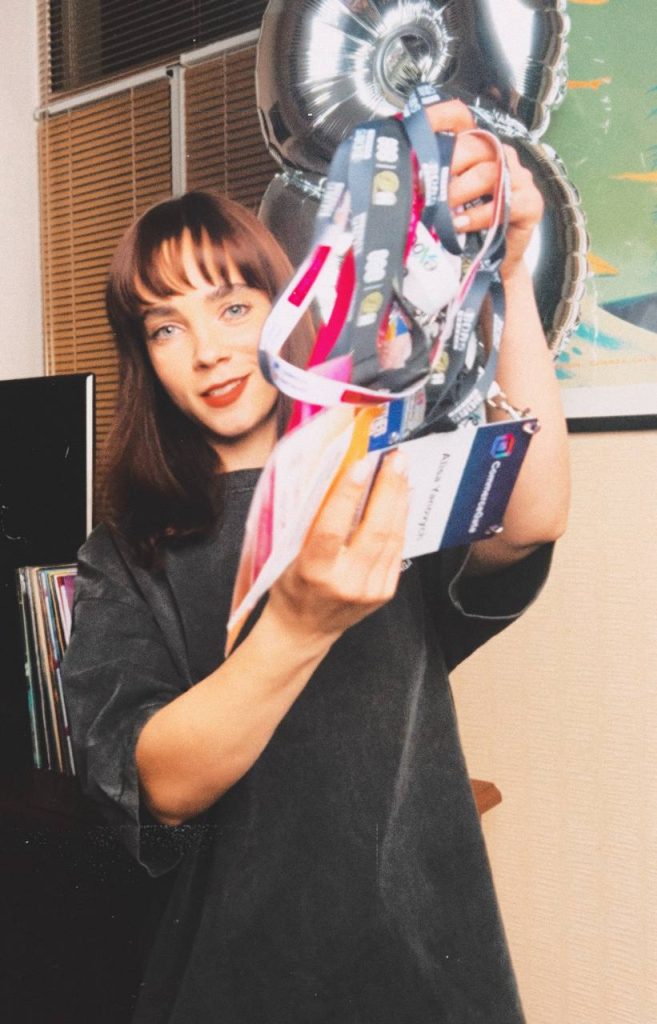
HWYD: What role did you start with and what did you do at the beginning?
Alice: My position was called affiliate influence manager. I was looking for bloggers, negotiating integrations, launching placements, and implementing the company's budgets. Later, I managed a team that did the same. And it was then that I first saw that there were numbers behind ideas, and real solutions behind the numbers.
Growth, teams, responsibility
HWYD: What did your path from a specialist to a managerial position look like?
Alice: Thorny. My next project was a startup, where literally before my eyes we assembled a team from scratch and launched a product. It was the stage when there are no right and wrong decisions - everything is tested in real time.
I was offered a higher position, and I accepted. It was at this company that I experienced my greatest professional growth: within a year, I was in charge of half of the marketing department. My perfectionism probably played a role - it was important for me to gain a foothold for a long time and show results. Of course, there was also «juggling»: competition, envy, and internal struggle. Each project is like the Borgia series: the strongest survive. But in each of them, I thought not about my own ambitions, but about the business and the team. Yes, I wanted to grow, but it was never an end in itself.
I enjoyed gathering people around me. We really had a strong team of creative, lively, ambitious people. This vibe is something like Silicon Valley: creativity, freedom, constant movement. And it is very important that the CEO did not micromanage, but trusted.
HWYD: Who was your biggest team - and what was the most challenging part of the experience?
Alice: My largest team consisted of 25 people. At some point, we split the marketing department into brand and acquisition, and I was responsible for the brand direction. The most difficult thing is the transition of roles: yesterday you are colleagues, and today you are a manager and a subordinate. That's why from the very beginning I tried to build a safe and comfortable environment where everyone's opinion is heard and individual, lively relationships are built with each team member.
A head is a bridge between the team and the C-level. It is about a high level of diplomacy: explaining with empathy why a promotion is not possible now, or why an idea needs to be reworked because priorities have changed. iGaming is about volatility and constant change of focus. And you are always balancing: between team expectations, business goals, and reality.
HWYD: How does the mindset change when you move from tasks to people and systems?
Alice: I have always known that I am not the best performer, but I am a very strong organizer. I know how to find people who can do better than me, create high-quality technical specifications and build processes. I love people, I know how to convey meaning - and my managers saw this, which gave me a career boost.
Consistency is something I'm still working on, because without it, everything falls apart. I saw crooked business processes very often in the companies I worked with. But the key thing to remember is that the lack of stable, honest communication can destroy even the most promising startup with good investments. Here I am again - balance. Between indifference and micromanagement. Between rigidity and softness. Management is the constant maintenance of this balance.
HWYD: What was the most painful but most valuable management lesson for you?
Alice: The most painful thing is to fire people. To give unpleasant news. But I have learned to do it in a way that doesn't leave people devastated. Once, after such a conversation, I was even thanked. This is part of the journey. And each such stage is an experience for which we should be grateful and move on. Whether we like it or not, business is focused on numbers and metrics. But a true managerial talent is to maintain humanity and good relations even after difficult decisions. I once fired an employee, and a year later invited her to another project because it was there that she could reveal herself to the fullest.
The second important lesson is not to be afraid of mistakes. I constantly repeat this to my students. Mistakes are not a failure, they are testing. The main thing is to understand the price of a mistake. Make a mistake, draw conclusions, and move on.
Affiliate as a way of life
HWYD: You often say that affiliate is not just a profession. What do you mean by this phrase?
Alice: I really often talk about this and broadcast it on my blog: affiliate is a way of life. There is an a priori period when work becomes a priority. The 9 to 19 format is not about this sphere at all. It's a constant balancing act and a lot of inner involvement. I have long since accepted the fact that I hardly ever have a classic weekend. Sometimes it's hard to just relax and do nothing. But at the same time, there are moments when your usual routine changes to networking abroad - somewhere in London or Barcelona - and you clearly realize that this is also work. And that's when you realize what it's all about. Can you call it complete freedom? I'm not sure. For me, real unfreedom would be living from paycheck to paycheck. It is thanks to Affiliate that I have grown financially: an apartment, a car, a watch - this would not have happened if I had remained a marketing head in a «white» Ukrainian company. That's why I call it a voluntary captivity 🙂.

Another important aspect is connections. No matter what anyone says, it works in any country. Today you meet someone at a conference, and tomorrow they recommend you for a cool project. There are no geographical boundaries. Almost anything is possible in this field - if you allow yourself to dream and get out of your comfort zone.
HWYD: What does your life look like outside of work - and why is it important to you?
Alice: About three years ago, I developed a habit that comes before work - sports. For the last year, it has been regular tennis training. It is extremely important for me to have a hobby and keep fit - sports give me support, energy and inner stability. I have a family and my dogs are a big and very important part of my life. I also run a blog, and believe me, it takes as much time and resources as a full-time job. I have a team that helps me realize my ideas, and it's also about taking responsibility for it.
In general, I live a completely normal life as a Kyiv girl: manicure, beautician, household routine, billiards, movies, and friends. We all live a routine every day. And the only thing I would advise everyone is to make your daily routine enjoyable. Small rituals shape our lives, so they should not be neglected.

HWYD: Have you ever experienced a burnout period and how did you deal with it?
Alice: Apparently, it is not in affiliate. This is a difficult question. I try to constantly balance myself so as not to bring myself to this state. And sports helps me a lot. So does having a life outside of work. Money coming to your card on a regular basis is also a nice reminder that you are moving in the right direction. I love my job, although I don't idealize it at all. There were cash gaps, hard days, and difficult months. But this is part of the journey. Any development consists of highs and lows. I just try to think optimistically, and it works. In my opinion, the main counteraction to burnout is a strong, slightly obsessive goal that wakes you up in the morning and faith in yourself, even despite all the hardships.
Affio School and mentoring
HWYD: At what point did you get the idea to start your own school?
Alice: While working on my second project, in 2022. At that time, I had already trained about a dozen interns and worked with teams a lot. And it was this moment of sharing my insights-when you see a person grow, apply knowledge, and succeed-that became the greatest pleasure for me.
The idea for the school was born out of the logic of the Blue Ocean Strategy - I consciously chose a different path. It was a risk. At that time, most launches in the infobusiness revolved around familiar and «safe» niches, and it was unconventional and unobvious to go into affiliate. To be honest, I didn't know that it was worth starting with cashback. I created a product first, and only then thought about how to promote it. The first year was very difficult. I received a ton of hate because I chose the ecological way of building trust, month after month.
And then the feedback came. People started writing that their lives were changing. And at some point you stop thinking about money and start thinking about something much bigger. I really want to change as many lives as possible for the better, no matter how pretentious it sounds. Many of those who built their businesses on hype alone have failed because their entire business model was based on launches. I realized right away that launches were not my path. I built a systematic, boutique training, not for mass, but for results.
I am starting this year with a clear understanding of what I am doing and why. In a few days there will be a conference, and with each such event, there are more and more of my students there. This time, there are at least six whom I will definitely see. I guess happy students are my main achievement.
HWYD: What, in your opinion, is the most important thing that people who want to start an affiliate program from scratch need?
Alice: A system that is laid out on the shelves. Affiliate is an avalanche of information, in which you can «swim» for a very long time without any result. I give direction and only what really works and helps to move faster. At one time, it was soft skills that helped me build my career faster than technical skills. Techniques are developed, but the art of communication takes a lifetime of training. Confidence is what sells you at the first interview.
I bring students to the offer, but at the interview, the person does everything on their own - and this is fundamental for me. My task is not to do it for them, but to give them confidence that they can do it. And she does. Most people want quick results, and this is a trap. Those who are willing to work for a long time and without expecting an instant effect usually get results much faster.
HWYD: How do you define Affio School's core value?
Alice: The main value is in the synergy between student and teacher. My format is mentoring, and it is always a bit about psychology. I am able to find the «key» that unlocks potential and restores a person's self-confidence. Anyone can give knowledge. But not everyone can give faith. But faith in your own strength is the 70% of success. Most students at the start are people who are burned out, tired, and have lost their bearings. They need a fresh perspective from the outside. And, honestly, each of us needs it - I am no exception.
HWYD: What is the most important moment for students for you-the first offer, the first interview, or the first failure?
Alice: The first failure. It brings you back to reality very quickly, and that's good. Often it is followed by an internal one: «Oh yeah? Well, now I'll show you.» The first interview is like roulette. You can fail, and that's okay. Or you can get a perfect match. The first offer is already a clear result. Like the first press cube or the first medal. A small but very important reminder: «I can do it».
So I will say this: all these stages must be there. They form wisdom and inner peace. Someone needs an offer, and someone needs another door. And they will definitely open. Yours will always find you.
HWYD: What motivates you to continue mentoring, even when it takes a lot of energy?
Alice: I just love my job. I feel that this is my destiny, at least at this stage of my life. You see people's sincere emotions, you see them grow, change and become happier. Yes, this is a very energy-consuming story. But at the same time, it's insanely resourceful. And there's nothing stronger than a message: «Alisa, I got an offer». At that moment, it's as if I'm reliving my first emotions. And it's incredible.
Future and meanings
HWYD: How do you see the affiliate industry in a few years?
Alice: Definitely faster, tougher and much more professional.
HWYD: At what stage of your professional career do you see yourself now and where do you want to go next?
Alice: I am now at a very clear turning point. After the last conference in Rome - or rather, a month after it - I finally decided to launch my own agency. I clearly see the issues I want to work with. I grew up being hired. I'm 30, I have experience, a bigger vision, and the ambition to work with ecosystems rather than just one business. I want to have a broader impact: to help brands build strategies, not just close operational tasks. That's why Barcelona will be my first conference in a new role - as an agency founder and strategist.
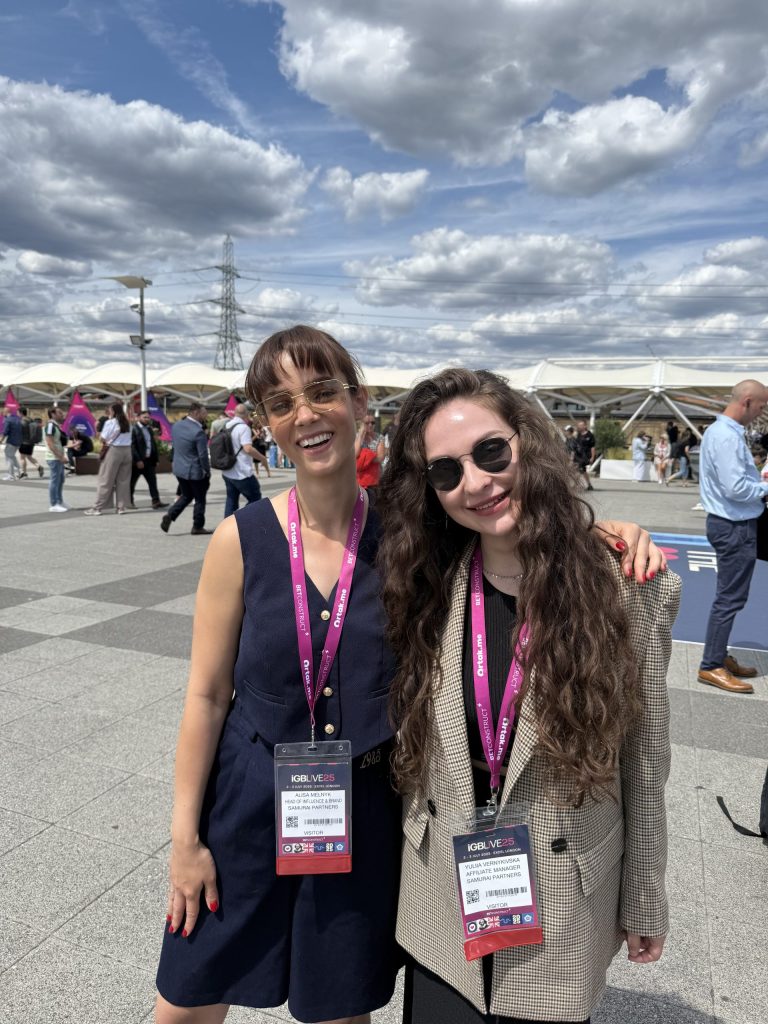
HWYD: How do you see your focus shifting in the future - from roles within companies to working with brands on the level of strategies and systems?
Alice: During my four years of work at affiliate, I have seen one systemic problem. In 80% cases, budgets are merged not because of the market or traffic, but because the strategy simply does not exist. Companies think in the horizon of one month. They choose GEO, where everyone else is going. They copy other brands without understanding their role in the market or why the user should choose them.
I'm no longer interested in being responsible for traffic alone when the strategy is limping along at the foundation level. I'm tired of «patching up» the lack of vision with performance. That's why I'm moving on to working with brands at the level of architecture: positioning, influence systems, market entry, and long-term solutions. To be honest, our industry critically lacks bold and intellectually interesting brands. You can count them on one hand. I want the competition to be not just aggressive but smart. I want the affiliate market to develop no worse than the «white» industries - strategically, creatively, and systematically. This is where a strategic agency makes sense. Not as another contractor, but as a partner that builds the foundation, not just launches another campaign.
HWYD: What kind of meaning and scale of impact do you want to build into your next stage - and why is this important to you now?
Alice: My focus is on working with brands in high-risk niches. I see my role as an advisory partner who helps brands make sober decisions and protects their long-term interests. This is especially important for startups - those who have not yet managed to spend their budgets chaotically or whose growth is built on high expectations. It pains me to see good products being closed not because of the lack of a market, but because of the lack of a system.
A separate area of my expertise is working with influencers. Let's be honest: very few know how to build influence in a way that pays off. Most expect performance from a brand that is not ready for it. I don't sell individual campaigns. I build systems: a brand foundation, influence architecture, and processes that allow businesses to scale without chaos. This is what the name of my agency, Stratella, reflects. It's about strategy. About the structure. About the long game.
HWYD: Who do you feel like today, without the titles?
Alice: I am a happy and fulfilled person. I know that I am in my place now. I just wonder what will happen next and where this path will lead me. There are no over-expectations in this feeling, just like when I was at the art academy or at my first job at affiliate. But my eyes are burning again, and this is the main marker for me that I am moving in the right direction. I want to do my job well and build a strong team. For me, this is a marathon, not a sprint.
HWYD: What advice would you give yourself at the start of this journey?
Alina: The same one I always tell my students: believe in yourself. Everything will be great. You'll see.
HWYD: What would you like to say to people reading this interview right now?
Alice: Do not wait for the moment when you are «ready enough». It doesn't exist. I've checked it out. Take steps with what you have now. The rest will come in the process.
Важливо
There is no «glossy legend» in this story, and that is what makes it so appealing. Here is the reality as it is: with painful decisions, behind the scenes of big budgets and a constant search for balance. Between the humanity in the team and the rigid systematic approach required by the market, Alisa talks a lot about structure - and it's no accident. In her world, creativity without results is just an idea. And a result without a system is temporary. Today, she continues to do what she does best: see deeper, collect meanings, and translate them into a systematic business.
At HWYD MEDIA, we love such stories. Not for their «perfection,» but for their honesty. This interview is a simple reminder: success does not happen to those who wait for the perfect moment. It is the result of clear steps and a structure built in time. Start building your foundation now - everything else will follow.
Важливо
A slump in performance is a signal. So One Media & One Partners told us how to quickly identify and fix it.
Have you been wanting to see behind the scenes for a while? Don't look elsewhere, because we offer two perspectives on the issue - the affiliate program's and media buying's. So today, Nika, Head of Affiliates at One Partners, and Pavel, Head of One Media iGaming Team, answered all the questions clearly. What was the result? Read on!
How do you understand that drawdown is a problem, not just fluctuations?
Nika,
Head of Affiliates, One Partners
When several buyers/teams experience drawdowns at the same time, and there are often objective reasons for this. For example, recently UA proxies have been performing worse due to an outage that affected their work, or another change in FB's algorithms. We don't exist in a vacuum: we also monitor chats, and if we notice that there is more talk about drawdowns, we prepare for such a scenario with our partners.
Paul,
Head of One Media iGaming Team
We try not to let too much happen. Systemic drawdown can be related to algorithms, audience burnout, if we have been working with the offer for a long time and have not paid the necessary attention to updating the creo, for example. The key is to quickly identify the root cause in the chain and not confuse the real problem with a non-issue. Again, we communicate with the ad if we want to find out if this problem is unique to us or if it is common.
How to determine the type of drawdown in 5 minutes?
Nika: We check the data with operators to see if there are any problems on our end, contact the buyer to find out if the root cause has been identified; if not, we can talk about the specifics of working with the offerer to understand what could have gone wrong, emphasize the need to check the proclamation and landing page, as they are often the problem.
Paul: First, we check the performance of different elements of the funnel: CTR → pre-land → land, then technical issues, such as postbacks failing, trackers working. Of course, we also pay attention to FB indicators, namely click2inst, inst2reg, reg2dep, and payments. If we work with an offer in different geos, we look to see if the problem is everywhere or only here.
What does “poor quality” look like on the part of the operator?
Nika: Suspicious activity indicators, players entering the same games and making the same deposits, all deposits made with the same payment method. In general, no advertiser will (almost) tell you their secrets of detecting fraud, so keep it quiet.
How to collect data for drawdown analysis?
Nika: First, we pay attention to the operator's data - FTD, NGR, the number of depots, unique users, then we check the buyer's data, and we always take into account postback logs.
Paul: Gathering all valid data on creosote and bonds, analyzing the actions of buyers from the point of the start of the drawdown, tracking correlations in metrics (is there anything/anything definitely abnormal?), double-checking the technical aspect of the spill.
What are the first steps a buyer takes when such a situation arises?
Paul: First, stop the campaign, identify the cause with a cool head, based on actual data, exchange views with the advertiser/partner, and only then can consider re-launching with corrected funnel elements. Or change the offer.
What are the first steps a partner takes if she discovers this?
Nika: We check the quality with the operator for the last 24-72 hours, send a request for details to the buyers if we see that a simple change of elements will not solve the problem, and our partners with experience offer an alternative offer without any questions.
How do you avoid falling into an emotional pit and take a rational approach to this issue?
Nika: First of all, do not make subjective assumptions without data, without information from partners. Treat the audit as a diagnosis, a discussion on an equal footing, be open to buyers' ideas on how to improve the situation and apply your expertise.
Paul: Drawdown ≠ bad buyer, and you definitely shouldn't look for someone to blame within the team; if you work with a good advertiser/partner, you don't worry that they will change their attitude and start to perceive you worse. We take our time: It's better to spend more time collecting data, seeing the whole picture, so as not to confuse the advertiser and value both of our time.
What information does the buyer need to provide so that the affiliate/advertiser can help more quickly? And what does the affiliate need to provide to the buyer to help remedy the situation?
Nika: On our part, it is definitely a confidence that the technical part is working perfectly, that the offer is working - checking with the indicators of other buyers, checking changes and updates to the offer, monitoring the general situation in the community. We also provide detailed operator data for the same period. And, of course, we provide the team with comprehensive support from our technical specialists and affiliates.
Paul: Drawdown time, changes on the part of the buyer - target, budget, creo situation, CR data at all stages.
What does the ideal communication from a buyer to an advertiser/partner look like at the moment of drawdown?
Paul: Straight to the point: there is a drawdown, it started at that time. Geo - X, CR sank by ..., other data. We checked the postbacks - everything is fine. Can we check with the operator?
What does a perfect partner response look like?
Nika: Prompt verification, mandatory return with an update after a more detailed analysis. At the same time, refrain from assurances that “everyone is doing this now” and pay attention to this particular case, with figures and details from the operator. Make recommendations according to the situation, but do not rush: test the old creo, change the geo, etc.
How can we help each other find solutions faster?
Nika: Get on the call (this can reduce an hour-long correspondence to 15-20 minutes of engaged conversation), compare facts, not assumptions, talk about proven hypotheses, possible tests, track the pattern (for example, according to the buyers, CR always fell in the afternoon), even if it takes more time. Don't miss any changes in the elements of the lead and offer, both on the part of the buyers and the PP. The main thing is to remember that the buyers and the partner are in the same boat and work with a common goal.
What are the most common mistakes made by buyers and advertisers/partners in such situations?
Nika: They don't check operator analytics before responding; they show negative emotions in communication with buyers - the problem is already demotivating, and the last thing both parties need are unproductive, disappointed buyers; and they don't offer an alternative offer until the last minute.
Paul: Hoping meaninglessly for an improvement in the situation even when a large drawdown is obvious, which leads to a budget drain; hiding full information from the advertiser/partner for fear of deteriorating cooperation, or vice versa, going on the attack, blaming the advertiser/partner, convinced that the offer is not working; inattentive diagnosis.
Важливо
One thing is clear: in order to prevent a drawdown from destroying your budget (and motivation to work), the buyer and the advertiser/partner need to work in concert. It's not just about healthy communication, but also about quick detection and identification of the problem, professionalism and focus on both sides, and the ability of the buyer to determine cause and effect. A drawdown is not always a fault or inattention, but a reason to analyze mistakes.
...Or just a large-scale systemic failure - in this case, the advertiser/partner should notify the media buyer so that it doesn't look for the problem in itself. Sooner or later, everyone will experience drawdowns, so each participant in the process should know what to do in such a situation and trust the other party. Choose reliable partners, and drawdowns will no longer be a bad dream.

Важливо
HWYD Media always keeps its finger on the pulse of the market and follows the updates, so today we have great news for everyone who works with the iGaming vertical. The V.Partners team has officially announced the launch of its new flagship brand - Slotoro.
Slotoro - Slotoro is not just another casino, but a modern product designed for high conversion and stable profits. So let us tell you why this offer deserves attention.Slotoro is based on visual excellence and technical speed. The product has a stylish design and instant response (Fast UX), which is critical for retaining a modern player. However, the main value for the user is the content.
Slotoro has collected premium content from the world's top providers:
- Pragmatic Play
- Endorphina
- Play'n GO
- Spinomenal, and many others.
This approach guarantees the exceptional quality of the gaming experience, which directly affects the player's desire to come back again. Slotoro is the result of many years of expertise of the V.Partners team.
Before going public, the product underwent a serious testing system:
- Internal media buying: The team has already tested the product on their own traffic. The results confirmed high conversion and excellent retention rates.
- Deep optimization: More than 50 internal improvements were implemented in Retention, UI/UX, and User Flow.
- VIP mechanics: Special attention is paid to high-value users, for whom personalized interaction strategies have been developed.
The brand operates under a Curacao license, which ensures compliance with international security standards and all regulatory requirements.
For partners, this opens the door to the most profitable markets:
- Localization: The product is available in more than 10 language versions.
- GEO: Both highly solvent Tier-1 countries and large Tier-2 markets are covered.
- A clean base: Slotoro is launched with a clean player base. The absence of historical risks allows us to work effectively with any type of traffic and scale connections from scratch.
V.Partners has prepared a strong foundation for webmasters to get started quickly. One of the main features of the brand is the welcome bonus, which is currently one of the most generous on the market, which is a strong argument for creatives.
What the partner gets:
- A fully prepared promotional package for a quick start.
- A strong promotional line to fuel the interest of players.
- Flexible cooperation models: CPA, RevShare, or Hybrid, adapted to different types of traffic and your strategy.
- Active Roadmap with regular updates, new features and solutions based on in-depth analysis of competitors and market trends
Важливо
HWYD Media's verdict
Slotoro looks like the “fresh blood” that is so often lacking to break through banner blindness. The combination of V.Partners“ expertise, proven metrics, and a clean base makes this brand one of the most promising launches of the season. The V.Partners team is open to cooperation and ready to scale Slotoro together with you. As the creators of the brand say: ”Bring traffic to the places where slots shine like gold.".
Важливо
Register in the V.Partners and be the first to test the new brand.