




STONE ISLAND: ARBITRAGEURS ARE FOOLED BY THIS BAIT
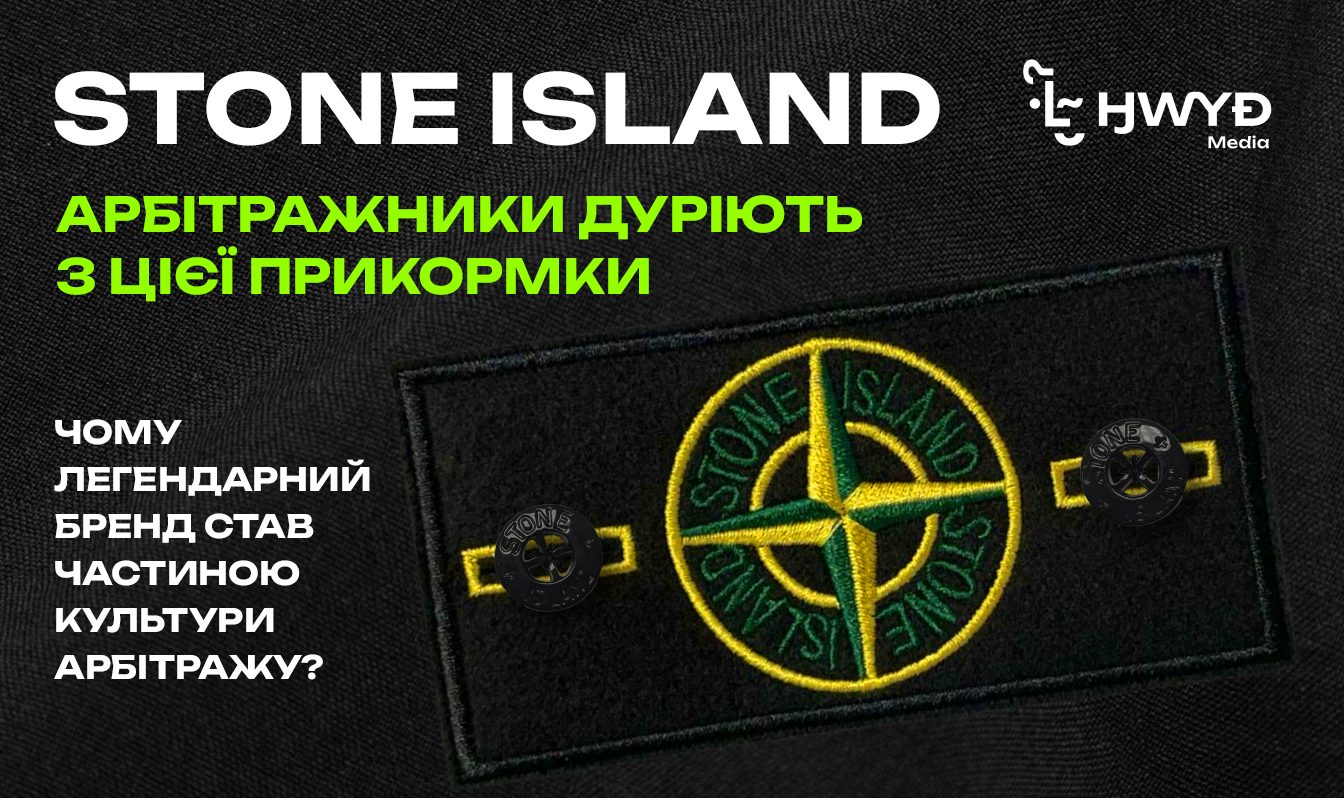
Why the arbitration world is so fond of things from the Italian brand Stone IslandWhy are they attracted to the wind rose patch? Read about this, as well as about the history of SI, the peculiarities of wearing it on the streets of Kyiv in the 2000s, and your own attitude to hipness in the article Kostya Golubev.
I met Stone Island almost 20 years ago, back in 2007. It was a time of wild subcultural flourishing: emo, punks, skinheads, goths, football hooligans, rappers, and many others. Admittedly, the Internet and access to it were non-existent or in a very poor form, so if you chose a subculture, you immersed yourself in it, learning about its history, reading fanzines (thematic self-published magazines), and, of course, trying to look canonical.
"Canonical" meant meeting all the "requirements" of a particular subculture, which meant, first, that you were your own among your own, and second, that you could recognize a representative of another subculture. The outdated trends of that time were literally replaced by something new for us at that time - soccer. The soccer fans seem to profess the ideas of skinheads, but they no longer wear bombers and steel or martins (characteristic boots) exclusively, and they don't necessarily shave their heads. They look stylish, are usually cheerful and sociable, and at the same time they are feared and respected.
I think everyone who knows the subject will agree that such high popularity in the mid-2000s did not arise by itself: in 2004, the film Football Factory was released with the actor who, after the film adaptation, would become a cult character in the football world and even host a series of programs on Discovery about the most reflective fans around the world - Danny Dyer; and, of course, the romanticized Green Street Hooligans in 2005, which popularized the post-Soviet football movement to the maximum: Almost every young man wanted to wear a patch trench coat and be cool like the protagonist of this movie, Pete, played by Charlie Hunnam.

But back then, Stone Island was inaccessible, unattainable, something dreamy and unrealistic at the same time. You could only hunt for it at second-hand stores, and then you had to go and stand in line for store openings almost from the night before, and be ready to fight with other hooligans who also came to the "sec" in search of a stoner. I personally saw such fights and scuffles. The main treasure troves of the "pull out/not pull out" lottery were the huge second-hand markets on Shulyavka and Lisova. There, Stone Island could be pulled out by simply rummaging through a pile of unpackaged items. It was hard to describe the joy of the catch, and it didn't matter that the pulled-out stoner was full of holes, two sizes too big, and looked like it had been taken off a homeless person - the main thing was that it was original! However, there was another option - for the majors. Stone Island was sold in the Central Department Store in the Grand Gallery store. I still remember how we came to see this miracle live, but it was out of the question to buy anything - a large-knit sweater cost about 4000 UAH at the time, while you could live in a dorm for a week for 200 UAH, give or take. Can you imagine this price gap?
The first time I wore Stone Island was at the end of 2007 - my dorm roommate used to go to London to visit his sister, who married a local. Her husband gave him an overshort, and my neighbor gave it to me to ride. It was a strange feeling, as if you were putting on not just a piece of clothing, but the most valuable museum piece. Walking down the street, you walk proudly, like a knight in armor, and on the other hand, you are whining so that you don't get a kick out of it.
Важливо
Let me remind you that each of the subcultures had its own external signs, and other football hooligans 100%-vo identified the person with the patch as their own, and therefore could ask which football club you "support," and if your clubs were at odds, you could get punched in the teeth, or if you were strong enough, you could kick in the face. In short, when you put on the stoner, it was as if you could feel in your gut the high probability of an upcoming adventure.
The young people of that first stoner land grow up, start earning money, have more opportunities, and moaning is no longer so rare, but the love for it, that slight taste of adrenaline, remains. Both adult uncles, and I am one of them, continue to indulge themselves and compensate for what they drooled over in childhood. For me, it's like with tattoos - it seems like I have enough, like I have more than enough, but I still want to buy some new inkage. Now I have about 20 items from the Stone Island brand in my wardrobe, and each one is special to me, each has a story.

What about the quality and history of the brand? How did it gain such popularity before football?
In 1974, Italian designer-innovator Massimo Osti, inspired by the military style, created a trademark called Chester Perry Company. He produces functional items from materials for camping tents that can withstand a variety of extreme weather conditions. Subsequently, due to litigation with a number of brands with similar names (Chester Barry and Fred Perry), Austie shortens the name to "C.P. Company". One of the most famous designs of the time is a jacket that is still revered by the brand's fans, called the Mille Miglia (better known as the Google jacket) - you've definitely seen it - with two lenses on the hood and one on the wrist. You know why: the hood lenses serve as a replacement for glasses and protect you from wind, dust, and sun, while the wrist lens allows you to look at your watch.
In 1982, Osti decides to move away from the hard-wearing, harsh military-hiking style, but in order not to abandon the production that had already been on the rails, he creates a separate capsule line and calls it "Stone Island", inspired by the novels of the English writer Joseph Conrad about sea adventures. And in Stone Island, the maestro, the artist (there is no other way to call him) experiments so much that masterpieces are created one after another. For the first time in the history of the clothing industry, he tries to dye not the fabric, but the finished item (so the print never repeats, and each item is unique - Garment Dyed technology), makes things luminescent, dyes them silver and gold, stitches them with threads that are usually used to sew airplane plating, covers things with a layer of reagents that change color when weather conditions or body heat changes, and many, many more interesting things.
The brand was first noticed by the Italian hipsters of the time, the paninaro.
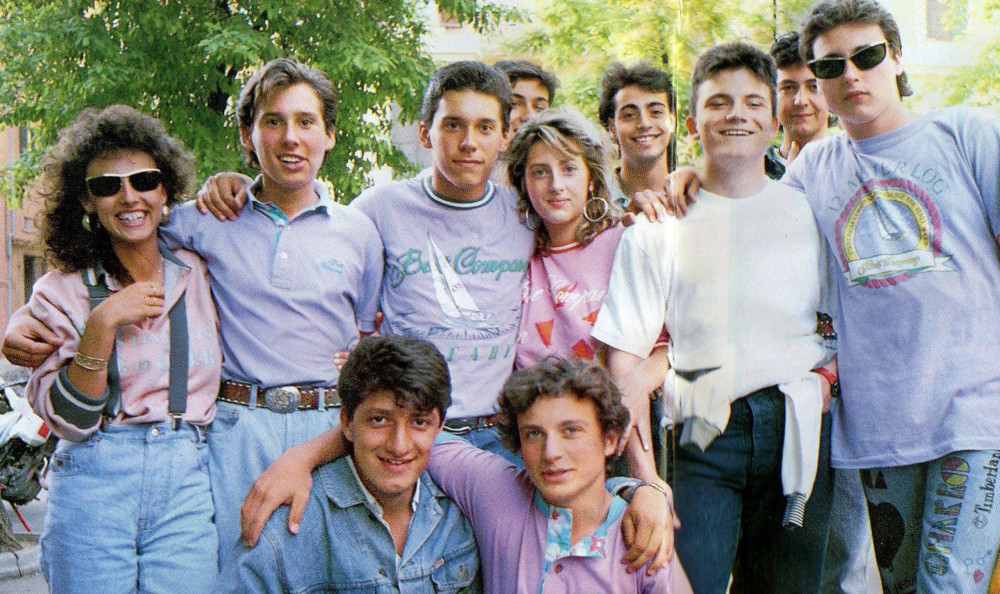
Then English fans come to Italy for football matches, see local youth wearing attractive clothes that can withstand rain in the stands, cold and heat. Some of it is "squeezed" during fights, some of it is stolen from shops by breaking windows, some of it is bought - in any case, they bring the stoner to England, popularize it there, and you know the rest.
Eventually, the trend develops, becomes more and more popular, and is popularized by famous artists (Jason Statham, Drake, and many others). And, apparently, sooner or later, what was supposed to happen happened - big fashion players set their eyes on Stone, bought out the shares and merged it into the Moncler fashion house. SI continues to produce cool things, but it puts a huge emphasis on mass appeal and fashion trends, which it has never done before, and even more so - it sneezed, to put it bluntly, at trends, was countercultural and set trends itself.
Attitudes towards the SI and young arbitrators in the SI
Now, I might sound like a skeptic, but it's because for me personally Stone Island was a kind of armor, a kind of kimono that you put on when you're aware of a slight danger and feel a chill at every glance, it's because of its rebellious design spirit and counterculture, which is close to my heart as a punk rocker, that I don't really accept these popularized brand items, such as tracksuits or some basic sweatshirts. They are devoid of soul, history, and interest...
I in no way intend to offend anyone who, on the contrary, likes it - please, as many people as there are opinions and tastes. I speak exclusively for myself. That is why it seems to me that this younger generation of arbitrators has caught the Stone Island wave so well, because the brand itself seems to be imbued with such a slight danger, hooliganism, risk, and, given its price, also high cost. And what is this if not the perfect outfit for a trespasser: with a patch on your sleeve, you immediately become a kind of "risky guy with money."
Personally, I was very upset by this popularization at one time and even thought about stopping wearing the brand's clothes, because I didn't want to be associated and assimilated with modern connoisseurs. However, I calmed down and realized that everyone puts different meanings into it, and it really doesn't matter what anyone thinks. Perhaps I want people to put more meaning into what they wear. Or maybe we used to pay too much attention to it - now I'm speaking like an old man.
Важливо
As the fans of the English football club Millwall say: No one likes us - we don't care!