



Fundamentals, money and the Cyprus wind: a big interview with Inna Gagarin

In the traffic and iGaming industry, names often turn into brands faster than companies turn into corporations. However, the story of Inna Gagarin is not about a quick hype, but about a fundamental «match». A girl from a small town who chose the unpredictable world of digital strategies instead of a stable railroad dynasty has become one of those who shaped the face of the modern CPA market in Ukraine and abroad.
She is not afraid to say that success is measured by money, and trust is measured by financial discipline. There is no place for info-gypsyism in her approach: only a dry balance, a strong team, and a reputation that she has been building for years. Today, Inna is a symbol of how female leadership is changing the rules of the game in a niche that was dominated by male rules just yesterday. We talked to her about her journey from a 200-hryvnia proofreader to the status of a key industry figure, her ability to stop at the seashore in time, and why ambition is the only thing that hasn't changed since childhood.
Childhood and youth
HWYD: Where were you born and what kind of family did you grow up in?
Inna: I was born in the city of Znamenka, Kirovograd region, into a family of railway workers. And it's really a family dynasty: my mom, dad, grandparents, and grandparents all worked for the railroad, going back several generations. On my father's side, one grandmother was a math teacher, and my great-grandfather was a prosecutor. But everyone else I remember and know from my family was connected to the railroad.
The family was absolutely ordinary. It was a small town-about 40 thousand people at the time. An ordinary kindergarten, an ordinary school. I grew up in the difficult and rather harsh 90s, when there was often a lack of basic things, and it was a difficult experience. I think many of our generation know this well.
HWYD: What kind of person were you as a child - more quiet or ambitious? What childhood memory do you consider important for understanding yourself today?
Inna: I have always been ambitious. At the same time, I was an absolutely normal child. I was popular in class, I wasn't bullied, we had a cool group of girls where we supported each other. We were friends with everyone - with boys and with each other - and we did well in school. I wasn't the star of the school, but I didn't have any problems either, neither with my studies nor with my friends. I was just an average girl from a small town in Ukraine.
The most vivid memory that characterizes my ambition very well is the story of textbooks. At school, there were simply not enough of them for everyone. And my persistence - or perhaps even my impudence - helped me a lot. I always had some kind of grip. My classmate Katia and I once came to the library and realized that there were no books we needed. But eventually we got them - by some miracle, we “scrolled through” this issue. I think this is very much about me. We had a crazy thirst for knowledge. We didn't say: “Well, okay, there are no books, so we won't study.” We literally broke through and received these textbooks among the first, in full, so that we could study.
HWYD: Who or what had the greatest influence on the formation of your character in those years? What were your dreams back then-what did you see yourself doing in the future?
Inna: I was greatly influenced by the fact that I lived in ordinary conditions and in a small town. I really wanted to “go beyond” this space. I wanted more - to be on TV, to become famous, to be visible. I saw myself as a star. It didn't matter in which field - acting or journalism. Journalism seemed the easiest way because I was a good writer. But even then it was important for me to choose the best university. My family also had a great influence. A combination of my mom's warmth, kindness, and empathy and my dad's severity. Although my dad is also very kind and sensitive, it was the balance of gentleness and demandingness that I think had a strong influence on my upbringing.
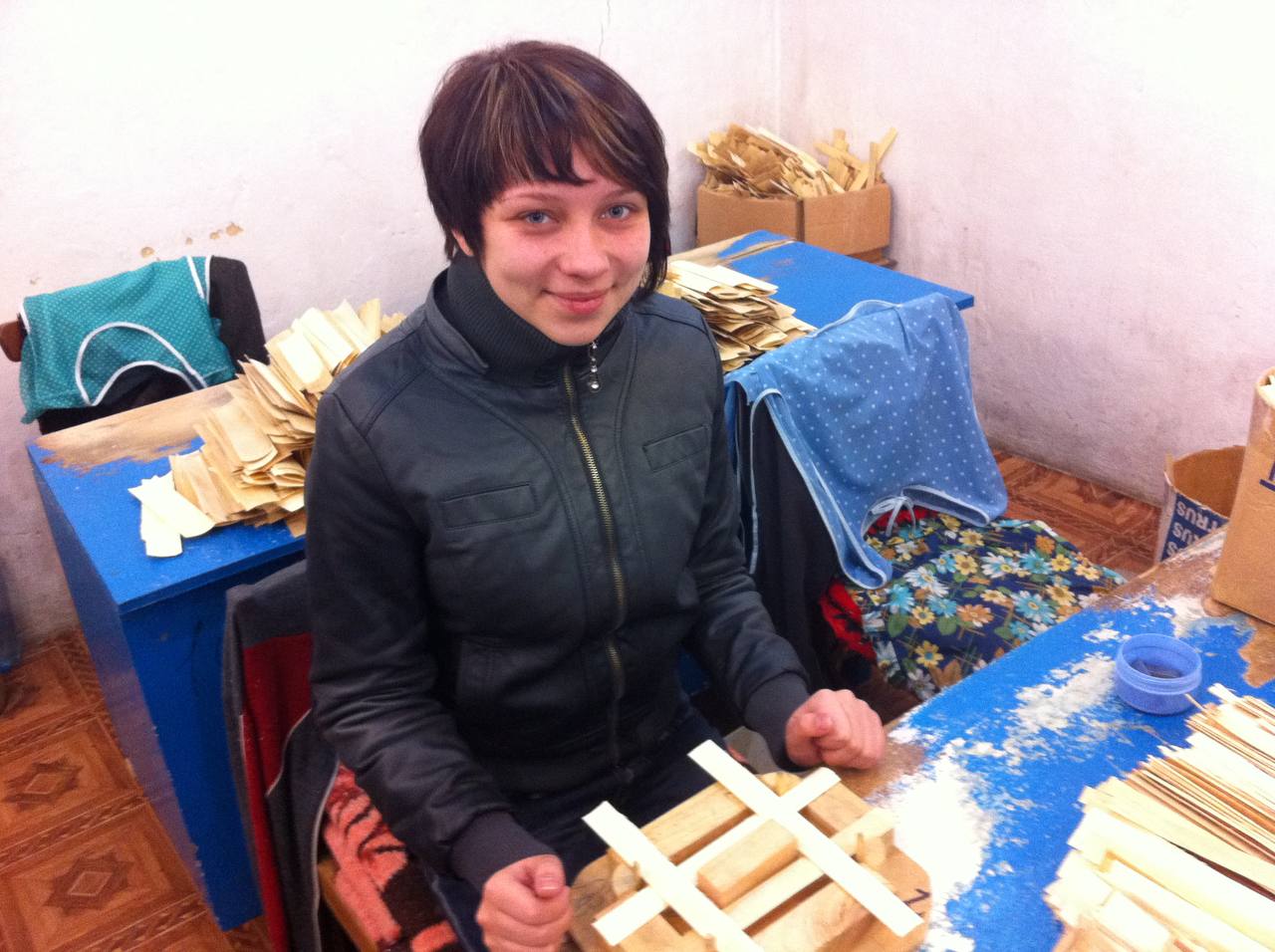
HWYD: Was there a moment in your life when you had to take responsibility early on?
Inna: I guess I took responsibility very early on, since I was a child. I have a younger brother, and it so happened that my parents worked a lot, so I was often responsible for him. In such situations, you have to grow up quickly. When you are responsible not only for yourself, but also for someone smaller, it forms a different attitude to life. Everything happened: I lost him, looked for him, took him to school, and actually got involved in processes that are not usually a child's area of responsibility.
In general, I was a very responsible child. Despite the difficult times, I had a music school from an early age - I started there when I was about six, even before I went to a general education school. Then there were clubs and classes. I didn't like music school very much, to be honest, but I graduated and played for about ten years. Plus, I was the school's head girl. That is, the sense of responsibility-for myself, for others, for the process-has been with me for a long time.
HWYD: Looking back, do you see any traits in that Inna that are still with you today?
Inna: Absolutely everything. Everything that happened in my childhood stayed with me. Shyness, perseverance, and the desire to achieve something. In fact, nothing has changed. I just became an older version of myself.
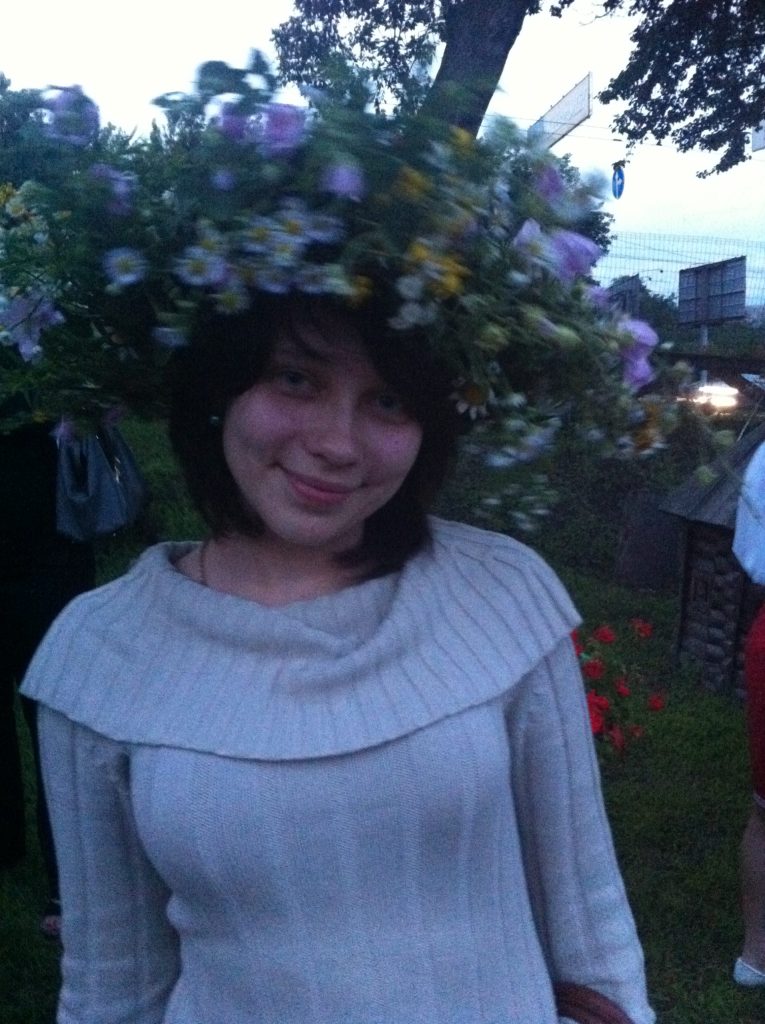
Education and first steps in the workplace
HWYD: What path did you choose after school and why?
Inna: My parents really wanted me to go to work for the railroad, just like they did. This has been our family history for generations. But I always wanted something bright, and it was definitely not the railroad.
HWYD: Did you immediately realize that you wanted to build a career in business?
Inna: No, not at all. For a very long time I thought that business was not about me. I imagined myself in a TV newsroom, creating content, programs, and stories. At that time, no one realized that classical journalism would gradually disappear, and entertainment content and YouTube would become dominant. I thought I would either go into news as the “fourth estate” or into entertainment formats. I got into business by accident. And just as accidentally, it turned out to be IT, and later - a traffic-related field.
HWYD: What was your first job and what did it give you?
Inna: My first job was as a proofreader in a publication. It gave me stamina and perseverance. There was very strict discipline and a very small salary. My first salary was 200 hryvnias. It was 2007.
Entry into the iGaming and CPA sphere
HWYD: How did you get started in this field and what were your first impressions of the industry?
Inna: My journey began in 2010 with the Khreshchatyk poker club. Back then, I was a fourth-year journalism student and worked as a part-time journalist at the poker series. That's where I met Tolik. After several years of working in various companies and in the poker industry, he suggested that we start a CPA network together. That's how I first got to the conferences, the professional community, and the industry itself. It was from there that my first networking began to take shape.

Then came the main company, the parent structure, and the product line. Then there were various networks, teams, work formats, experiments. At some point, I even had a poker school. We were engaged in the gamification of products - to be honest, I've done a lot of different things over the years. If you don't count the two years of poker as journalistic experience, then in total, I have about 13 years of experience in the industry. During this time, I tried many directions. Not everything worked out, a lot of things didn't work out at all. But some of it has definitely worked out. And I recognize this.
HWYD: What seemed the most difficult or incomprehensible at the start?
Inna: The most difficult thing was to understand how traffic works in general. It seems obvious now, but 10-11 years ago it was a completely different reality. The explanations about “traffic”, “grids”, and “matchmaking” sounded very abstract. And here I am very grateful to my former boss, Ildar, who always said: “Inna, if you know the math, you know everything.” Even if your first business doesn't take off, knowing the basics allows you to try again and eventually figure out where you'll succeed.
HWYD: At what point did you realize that this environment offered an opportunity for scaling?
Inna: I didn't have a specific “moment”. We were growing up together with the industry. I came in and everyone was small, and I was small. There were big players, but it was a completely different league, with which we didn't even intersect at the time. So it felt like we were all growing and scaling in parallel.
HWYD: When did you feel ready to create something of your own?
Inna: It wasn't a sudden decision. There was no moment of “I woke up and realized that's it, I'm doing my own thing.” This is a story about circumstances, support, suggestions, and the right moment. Everything just worked out - one plus one equals two.
HWYD: What was crucial for you in building the affiliate program?
Inna: Two things: a large number of direct advertisers and a strong team that knows how to work with traffic. When these elements converge, the system works. When something falls out, everything starts to fall apart.
HWYD: How did you build the team and culture within the projects?
Inna: Initially, the team was formed from people who were already around and wanted to grow together. It was easy to start from scratch with them. Later, we started looking for people from the market, and it is much more difficult. People come with their own experience, which is not always relevant, and it is harder to build a culture.
There were several stages: a family atmosphere, then a more corporate structure with regulations and boundaries of responsibility. I don't consider myself a genius of corporate culture - it was a living, changing process.
Leadership, reputation, influence
HWYD: You are often called one of the key figures in the industry. How do you feel about publicity?
Inna: I'm fine with publicity because I'm used to it. This is one of the facets of my personality. I didn't have a moment when I said to myself: “That's it, I want to be public.” It happened very naturally. I didn't have any goals to be recognizable or to specifically form a public image. It just happened over time that I communicate a lot with people who have been in the industry for a long time, and they know me. Whether I am a key figure is not for me to judge. It is better to let others evaluate this. One thing I can say for sure is that I really like the people I work with, I like what I do, and I like the environment I am in. There are a lot of strong people in the industry now who have been in it for a relatively short time but already have serious business results. And this is very cool. The industry is growing, and this is more important than any personal “titles”.

HWYD: How do you build trust with your project partners?
Inna: I always say it very bluntly: trust in any partnership starts with money. This is the foundation. People will work with you if you pay. If you don't pay, they won't work with you, even if you have good human relations. You can be friends, you can have great conversations, but if you don't fulfill your financial obligations, there will be no partnership. This is a basic thing.
But there is another side to it. You can pay on time and in full, but if you are an unpleasant person, if you are difficult to work with, if you have no respect, no one will want to work with you for a long time either. So for me, it's always a balance. It's about 50/50. You have to be an adequate, honest, open partner and always fulfill your financial obligations without exception. For me, this is the basis of trust.
HWYD: What were the most risky decisions in your career?
Inna: To be honest, I didn't have any one decision that I would call the “riskiest” one. Launching any new project is a risk. And not all of them were successful. Moreover, most of them were not successful the first time. This is normal. So for me, risk is not something exceptional, it's part of the process. Rather, what is important here is the ability to accept that something didn't work out. To accept your weaknesses, to accept the moments when you were not perfect, not the strongest. This is also part of maturity. The realization that you are a living person, not an infallible function. There were many risks. Not so many of them were successful. But they all taught me something.
HWYD: What is more important to you in the long run - the result or the reputation?
Inna: Over the long haul, it's definitely reputation. No doubt about it. If you want to build a “come, earn, and leave” business, then maybe a short-term result is more important. But if you are building something for the long term, if you plan to work in the industry for years, reputation is everything. You can show the result once, twice, three times. But you either have a reputation or you don't. For me, the answer is very simple: reputation.

HWYD: What does your life look like outside of work? What fills you the most?
Inna: People fill me up the most. My inner circle. This is my family, relatives, close friends. This is my foundation. Besides, I really like my lifestyle in general. The opportunity to travel, see new places, learn something new. It also fills you up and gives you a sense of life. But to be honest, my family and those people who are with me not because of work will always come first.
HWYD: How do you recover from difficult periods?
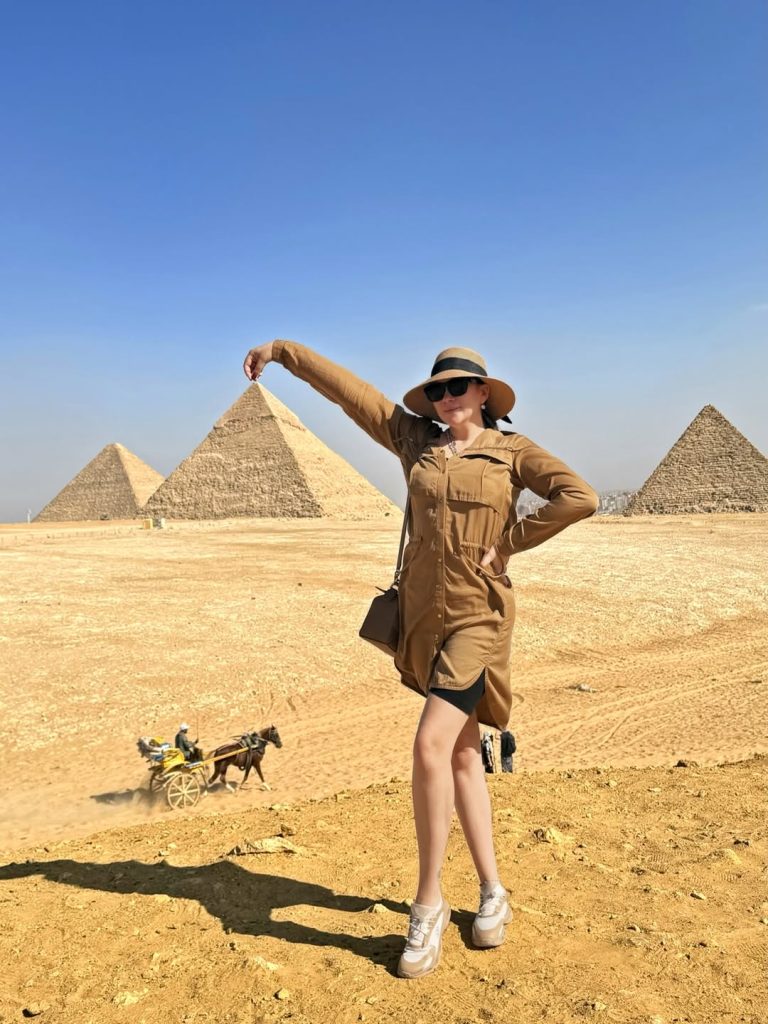
Inna: I am recovering in Cyprus. I just come there and spend as much time as possible by the sea - with myself. I walk a lot, read a lot, breathe a lot. I really like the Cypriot vibe, this island history, the sense of calm and simplicity. After four years, I realized that Cyprus suits me very well. I don't need to do anything special to recover - just being there is enough. A week is usually enough for me to feel alive, healthy, fulfilled and happy again.
HWYD: You travel a lot and are constantly on the move. How do you cope with flights, changes in biorhythms and jet lag? Do you often manage to go home and see your family, or has life on airplanes become an integral part of you?
Inna: To be honest, I don't feel jet lag at all. Flying is very easy for me. I can fly anywhere and feel like I've never been anywhere. It seems to me that my body is just used to it. I can fly for 4-5 hours, arrive and immediately be in a working or normal state of life.

It's more difficult with loved ones. I try not to fly for more than two weeks. I always come back to Cyprus. I rarely see my parents - two or three times a year. There is only the phone, communication and acceptance of this reality.
Future and meanings
HWYD: How do you see your next professional stage?
Inna: In the future, I would like to focus more on my family and myself at some point. I can't say that I need to “rest” because I'm not tired. But I would like to be able to switch gears and have more freedom. It's important for me not to be on call all the time. Because at some point, when you have calls from morning to late evening, you don't have time to do anything, and at the same time, you have flights, logistics - it's not the work itself that exhausts you, but the pace. I would like to have more time to watch something interesting, to live an interesting life - without having to constantly run somewhere, call someone, be in the process 24/7.
And the next professional stage... I don't know. Maybe I would like to do something completely different. I even think sometimes: perhaps a restaurant by the sea. Or some basic consulting in an area that I understand well, just in a format that gives me more freedom to do what I want. But I definitely don't want to leave the industry completely. I'm interested, I like it. I think it's great for me and for the industry if we move forward together. It's like that.
HWYD: What challenges are you most interested in working with now?
Inna: I am always interested in new markets - it is a constant challenge. Because it's complicated: different rules, different people, different context, different logic. But that's what keeps you on your toes. I also find it very interesting when people set a high bar for themselves and then actually reach it. When someone first declares a “great level” and then confirms this level with their actions, it's a thrill to watch and be part of such a process.
HWYD: What impact do you want to leave in the industry in the long run?
Inna: It seems to me that I have already left him. If this is true, I am very happy about it. I think a lot of girls have come to believe that girls can do a lot too. And that they don't have to “shrink” to meet expectations. If at least part of this happened because I was just doing my job, being visible and not hiding, then that's already very cool.

 HWYD: What is the main marker of success for you today?
Inna: For me, like for everyone else, the basic marker of success is money. It sounds trite and even mercantile, but it's true. Success is measured in money. If you have money, you are successful. If not, well, I'm sorry, no matter how it sounds. Then there are nuances: you can be an introvert and stay at home, you can be an extrovert and party, you can be super-public - it's all a lifestyle and a choice. But without money, the very fact of “success” is very difficult to confirm.
The final block
HWYD: Who do you feel like today, without roles and titles?
Inna: I'm just an ordinary girl. And, by the way, I don't really feel like a “woman” - I feel like a girl. I'm still very interested in everything: I'm interested in living, I'm interested in researching something, I'm interested in doing something, communicating with someone, learning something. I'm just interested in being a human being, and that's enough for now.
HWYD: What advice would you give yourself at the start of this journey?
Inna: I would advise myself not to be afraid of anything. To trust people more, to love people. Love your team, your family, your environment. Respect your competitors, treat everyone with dignity and not deceive anyone. This always comes back to haunt you on the course, both in a good and bad way.
HWYD: And the traditional HWYD question: what do you want to say to the people from the industry who are reading this interview?
Inna: Don't give up on your dreams - if they are real. Go ahead, because everything is real. But it is important to realize that this is not a fairy tale. You never know what will happen next. And no one else does either.
C'est la vie.
Важливо
After a conversation with Inna, you are left with a feeling of extreme clarity. In a world where everyone tries to appear to be more than they really are, she allows herself the luxury of being just «a girl who is curious about life.» Her path is not a straight line to success, but a series of risks, some of which did not work out, but each of which gave her the same grip she mentioned when talking about schoolbooks.
Today, Inna Gagarin is moving to a new level - an international context, new markets, and a search for freedom that is worth much more than any check. She has already left her mark: hundreds of girls in the industry look up to her as proof that you don't have to shrink to fit into someone else's expectations.
And «c'est la vie» in her performance sounds not like a sigh, but like a conscious acceptance of the rules of the game in which she has long been more than just a player...