



FUNDER 24/7: IS THERE LIFE OUTSIDE OF WORK?
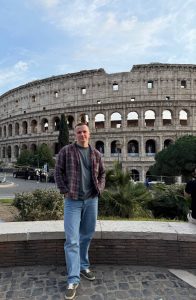
Founder - is always more than just a role. It's a state in which work and life are intertwined, blurring the lines between personal and professional. In the world of affiliates, where the rhythm is set by speed and competition, this challenge becomes even tougher: every morning you are greeted by dozens of decisions, team processes, and numbers that cannot be delayed.
Is it possible to maintain balance at this pace, to be present not only on calls but also in your own life? We talk about this frankly with Vadym Volochniuk, co-founder of Improve Team. His story has it all: an active childhood, a late start in entrepreneurship, an accidental entry into an affiliate program, the creation of a team that grew into a company, and a constant search for an answer to the main question: how to stay a funder 24/7 and not lose yourself at the same time?
Childhood and youth
HWYD: Where were you born and what were you like as a child?
Vadim: I was born in the Rivne region in a small town. As a child, I was a very active boy: I took part in all the activities at school and held concerts. I also graduated from music school with a degree in accordion. In addition, he played for the local football team and participated in track and field tournaments. In general, he spent his childhood very active and not bored at all.

HWYD: What traits from those years help you the most as a funder today?
Vadim: Probably, my parents laid the foundation of perseverance in me. My mom and dad were constantly pushing me to realize my goals so that I would always achieve what I wanted. This helps me a lot today.
HWYD: What episode from your youth best describes your perseverance or risk-taking?
Vadim: Speaking of risky, it was running away from home after my parents went to bed. The goal was simple - to go out with my friends, even if tomorrow was the 11th grade exam, and my parents wouldn't let me go) It all ended in a happy ending: I passed the exams.
First contact with business
HWYD: How did your entrepreneurship start: first attempts, first failures?
Vadim: In fact, I started my journey in entrepreneurship quite late. I don't have this story that I've been selling lemonade since I was a kid - no. The first serious touch of entrepreneurship was the Improve Team. I can't call everything before that a business. It was just a job for which I received money. But I had been preparing for it for a long time, and that's why I think that being prepared, I succeeded.
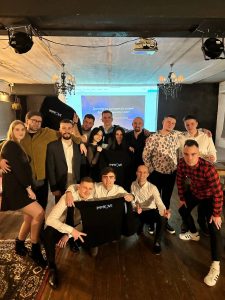
HWYD: What skills did you develop before becoming an affiliate and how do they help you now?
Vadim: I have always been a pretty hardworking person. Before the affiliate niche, I worked at various jobs, tried myself in many areas, including those where I had to work for 12-13 hours sitting in one place with a short break for lunch. I think that the ability to work non-stop today helps me to solve many routine tasks every day and not get tired.
HWYD: When did you realize that you wanted to build not just a career as an employee, but your own business?
Vadim: Several stars aligned in one place. I felt that I was being restricted in my desire to earn more and not allowed to develop. At the same time, I realized that I had grown out of the position of "employee".
And then I met the right person, and the match was made. In fact, it was very important not to fade away then. Meeting Nikita helped me realize that it was time to take a chance.
Login to affiliate
HWYD: How did you first get into affiliate marketing?
Vadim: My first job in the niche was an interesting position - a traffic coach. I joined RichAdvert when I was very young and green. I was trained in soft skills, given a sufficient number of manuals, and I started working.
I learned about traffic arbitrage and affiliate marketing by accident while watching random business videos on YouTube. I think it was also a bit of a fluke that I latched onto.

HWYD: Who was your mentor/support at the start?
Vadim: I was very warmly received at my first job. We had a good team and managers who saw me as a prospect. I was pleased that they believed in me. Before that, I also worked overtime: I was regularly the first to arrive at the office and the last to leave.
HWYD: What early case convinced you: "I'm in this game for the long haul"?
Vadim: Perhaps the first serious money in the form of a salary - UAH 50,000. I remember that day clearly: I received my salary in cash in an envelope, called my mother and shared it with her. It was a wow moment for me and my family.
Then I realized that I wanted to develop in our niche.
Improve Team: foundation and roles
HWYD: How did you come up with the idea of Improve Team and what problem did you want to solve in the market?
Vadim: When we created Improve, we didn't set out to solve a problem. It was just a common desire to make money. It was important that Nikita and I agreed on the vision and soft skills, which played a key role.
HWYD: Why did you choose these verticals (gambling, betting, crypto, mobile apps)?
Vadim: When we started, I had experience in gambling and betting, and Nikita had never launched traffic. Therefore, historically, we started with what we knew how to do. 6 years ago, we didn't analyze the market volumes or prospects - we just went into gambling because we knew how to do it.
HWYD: How did you divide your roles with the co-founders and what did you keep for yourself?
Vadim: Roles were formed gradually. I dealt with everything related to traffic and direct revenue generation. Nikita took over hiring and finance.
We didn't clearly agree on who was doing what. Everyone just did what they were good at. Over time, the roles have changed, and today we at 100% share all the tasks and can easily replace each other.
HWYD: What early decision had the biggest impact on long-term growth?
Vadim: The biggest impact was not the ups and downs, but the downfall that occurred just a year after the start.
Then we completely reassembled the team and our business vision. This is another confirmation that anti-cases often give more impetus and desire to work than just positive results.
HWYD: When did you feel the moment of transition from a "team of buyers" to a "full-fledged company"?
Vadim: This happened when the staff grew to 30 people. If you have positions such as people partner, technical project manager, marketer, or head of finance, it already speaks volumes about the company, because you are moving from "mandatory positions" to "additional positions."
Also, a company is about the legacy part: when you officially employ people, buy insurance, pay for vacations, and have a legal entity.
This is the moment when you realize that you are no longer "just a team".
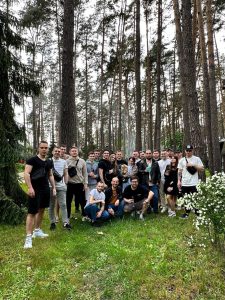
24/7 founder: how it really feels
HWYD: What does a typical day look like for you, from the first step to the last message?
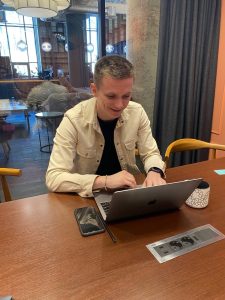
Vadim: Today, my typical working day consists of analyzing yesterday's analytics and reviewing reports from team leads and heads. This is followed by meetings or interviews, and then a typical 1-2 hours in work chats.
But to be honest, this is what a perfect workday looks like. Sometimes the timing shifts, and Nikita and I can find ourselves on a call at 8 p.m. to discuss a new direction simply because that's when the "inspiration" came.
HWYD: What is your personal decision-making system: what goes into "do now", what goes into "delegate", what goes into "don't do"?
Vadim: Delegating everything that is delegated is the basic rule. Maximum trust and maximum delegated responsibilities are the basis for growth.
Personally, I identify the tasks that affect my day, my company, or those who expect me to make decisions right now, and I do them in the morning before 11:00. Everything else comes later.
HWYD: Do you know how to rest without feeling guilty for being "unclosed"? How did you train this?
Vadim: Yes, I can do it now. I trained it just a year ago. It's important to understand that work is a part of life, not all of life. You need to have time to rest, switch gears, and pay attention to yourself and your family.
To avoid worrying about the "unclosed", I have been keeping a calendar for many years. Every Sunday I plan the week and see on which day which task must be closed. This way I keep the whole plan in front of me and move according to it.
HWYD: Was there a moment when you realized: "I'm too much into work"? What did you change after that?
Vadim: Yes, there have been such moments and sometimes they appear even now. On such days, I try to review the schedule and tasks for the week again, highlight the main ones, close them quickly, and thus unload myself.
HWYD: How do your family and friends react to the 24/7 rhythm? What helps you stay in touch?
Vadim: My friends react well because they see my results). I plan meetings and rallies with them in advance, so we always have time to spend together.
Balance and "life outside work"
HWYD: What exactly do you call "life outside of work" in your case?
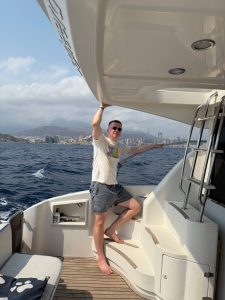
Vadim: This is all that happens when you close your work chats. It's time with your wife and son, watching a video, reading a book, traveling, talking to your mom on the phone, etc. The most important thing is to really switch and get distracted. Because if you think about work even while walking with your son, it doesn't add to your efficiency or productivity.
HWYD: What practices/hobbies really restore you?
Vadim: Traveling, the gym, watching football. But all this is inferior to my main hobby - time with my family. My wife and son always bring me back to 100%.
HWYD: Have you ever experienced burnout? What helps to fight it?
Vadim: There was no burnout. There were moments when it was difficult and I didn't want to make decisions and take responsibility for everything again. But this quickly passed when I remembered that people were behind me and waiting for the right decisions.
HWYD: Can you turn off your phone for a day and leave everything to the team?
Vadim: Yes, I can. But it is preferable that Nikita does not turn off the phone at this moment. In general, we have a well-built vertical structure in the team, and there are people who are responsible in all areas. Nikita and I can disappear for a day, but I don't think we can do it for a week.
HWYD: You recently had a baby. How has parenthood affected your work-life balance?
Vadim: Very much so. For the first few months, the focus definitely shifted to family and education. However, I have now found the right balance, negotiated with myself and learned how to build a schedule. But, of course, sometimes it's hard to explain to a five-month-old son that his dad has an important meeting.

Team, processes and trust
HWYD: What processes/metrics allow you to sleep better instead of micromanaging?
Vadim: Reports, CRM, PNL. The heads of all departments submit reports with figures every day by 11:00. In CRM, I can evaluate the result for yesterday, and in PNL I can see the financial result for the day. These three main pillars ensure my restful sleep.
HWYD: In what situations does the team help you maintain a work-life balance?
Vadim: A strong team means people who know how to take responsibility. Once you have enough of them, you automatically have more time for everything else. Including work-life balance.
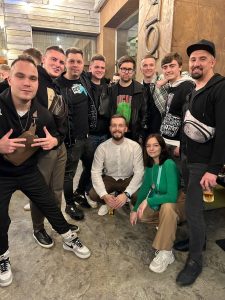
HWYD: When did you first feel that you could fully rely on the team?
Vadim: As soon as there are enough people who are ready to take responsibility, you can immediately feel the changes in your role as a funder.
Publicity and personal brand of the founder
HWYD: Why does a funder need publicity? Is it for recruiting, trust, networking, or all of the above?
Vadim: The main task is the company's HR brand. It helps to hire the best employees faster. They come not only for the salary, but also for the ideas that the funder broadcasts.
The second party is advertisers. It is important for them to understand who you are, how long you have been on the market, and what face is behind the name and another chat on Telegram.
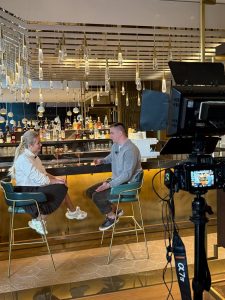
HWYD: Where are your boundaries of publicity: what do you show and what do you keep private?
Vadim: I'm not a very public person in general and I manage my social media quite conceptually. I don't share much about my personal life because I don't understand how it directly affects the results and the HR brand. But in business, speeches, meetings, I try to be active
Looking ahead and tips
HWYD: How do you see yourself and Improve Team in 3-5 years?
Vadim: Life outside of work should definitely take center stage in this picture. I am sure that my involvement in the company will become less. But this does not mean that I will not be involved in other businesses or areas. In general, this is already happening.
HWYD: Three things you would have done differently at the start to avoid going into 24/7 mode so deeply.
Vadim:
- Delegate and trust before.
- Not to think that I can do everything better than everyone else.
- Don't believe that if you don't close the task today, the company won't exist tomorrow.
HWYD: What advice do you have for new founders?
Vadim: Be prepared to work 24/7 at the start and understand each process in detail. It doesn't matter if it's recruiting, finance, or another department - you need to be oriented and know the main points everywhere. At every stage of our company's development, I was convinced that we needed to understand and periodically check every detail. I'm not saying to be a multi-tool player and be able to hire people, set up postbacks, and create a PNL from scratch.
But you need to know exactly how to do it theoretically and in which table to check the indicators. This will keep the team in good shape and avoid losses in the future.
Важливо
Editor's summary:
The phrase "24/7 funder" is not just about working seven days a week. It's about responsibility that never disappears, about making choices every day, and about being ready to keep up the pace even when there are no ready-made answers around.
Vadym's story proves that the real challenge is not to work harder than others, but to learn how to remain human when work takes up 90% of your life. Finding space for your family, for a pause, for yourself - and not losing the drive that once brought you into business in the process.
This interview is a reminder for the entire industry: the size of the company, profits, or high-profile roles do not determine a person's value. It is determined by how they build relationships, how they keep their word, and how they combine ambition with inner integrity.
Founder - is not a soulless decision-making machine. It is a human being who makes mistakes, takes risks, recovers, and leads the team forward again. And perhaps it is in recognizing this human dimension that the true power of business is born.